THOUGHTS ON:
Training, Rehabilitation,
&
Best Care Practices

What Causes Sciatica and How Sports Chiropractic Care Can Help?
The sciatic nerve runs from the lower back through each buttock and down each leg. It’s the largest nerve in the body and helps us with stability and movement, making it significant to many of our everyday activities.
The sciatic nerve runs from the lower back through each buttock and down each leg. It’s the largest nerve in the body and helps us with stability and movement, making it significant to many of our everyday activities.
When the nerve is injured, it can show up in various forms, ranging in severities, and may create challenges in your routine. With chiropractic care, your sciatic nerve can find balance and healing, restoring the structure so you can move properly and comfortably.
In this article, we’re going over the following:
What sciatica is
How do you get sciatica
Symptoms of sciatica
Chiropractic for sciatica
Sciatica problems can worsen over time, so it’s always best to visit your local chiropractor at the first signs of discomfort. This will ensure you get the right treatment plan with the benefit of safe, non-invasive services.
What Is Sciatica?
Sciatica is the result of damage anywhere along the sciatic nerve. Pain and other discomforts, such as loss of flexibility, are generally associated with sciatica because of pressure put upon the nerve.
Conditions that may cause sciatica include:
Disc herniation or disc bulge
Degenerative disc disease
Sprains and strains
Spinal stenosis
Pelvic injuries
Piriformis Syndrome
When the nerve becomes compressed, irritated, or otherwise compromised, you may experience symptoms varying from dull aches to radiating intense pain.
Do I Have Sciatica?
Because the sciatic nerve takes up a large portion of our lower half, pain that fixates on the lower region may be due to sciatica. Your Midvale chiropractic team will provide a complete full-body assessment to determine the exact cause of your pain prior to implementing a solution program.
People who may experience sciatica include:
Those involved in a traumatic accident, such as a car accident
Those with habitual poor movement patterns
Pregnant women or those who are overweight
Those with physical occupations
Regularly active people or athletes who overuse soft tissues and joints
Those who work on their feet
Those who are inactive
There are several symptoms associated with sciatica, including:
Pain on only one side of the lower half of the body
Weakness of the leg muscles
Muscle tightness or numbness
Loss of range of motion in the hip
Hip pain
Burning, shooting, stabbing, or dull pain
Chronic pain (consistently lasting for over 12 weeks)
Pain that worsens while the body is still
Sudden pain in the lower half
Intense pain that travels from the low back into the buttock or leg
When in pain, your body is letting you know it needs some attention. Don’t let it go unchecked. Chiropractic care provides techniques that balance the soft tissues and joints of the body, allowing it to regain proper structure and movement, reducing pressure on the nerve, and gaining comfort.
Chiropractic Services to Treat Sciatica
Because chiropractic is gentle, safe, and natural, it can be administered to almost anyone. Chiropractors have a vast understanding of the body’s musculoskeletal system and how to design treatment plans that cater to the unique needs of each patient.
With various evidence-based chiropractic services to pull from, the patient gets sciatica care that ensures their comfort and confidence throughout the process.
Common chiropractic techniques to end sciatica include:
Chiropractic adjustment or spinal manipulation- realigns and balances the spine and reduces undue pressure on the nerve
Soft tissue therapy- deep tissue treatments to naturally restore and mend damaged ligaments, nerves, tendons, and muscles and remove restrictions
Dry needling- insertion of tiny needles over affected soft tissue to enhance healing and recovery
Exercise and stretching to create strength and flexibility, nurturing joint and soft tissue health
Sciatica is often the result of a disc injury, and chiropractors are experts in spinal care, making chiropractic an excellent and effective resource for sciatic nerve damage.
Other benefits of chiropractic care include:
Improved comfort, motion, strength, and flexibility
Improved movement patterns
Improved joint and soft tissue health
Improved posture
Reduced stress and anxiety
Improved sleep quality
Improved overall function
Increased energy, focus, and productivity
Work with Our Midvale Chiropractic Team for Sciatica Relief
From moms-to-be to desk sitters to CrossFitters, your sciatica doesn’t have to hold you back any longer. Chiropractic solutions are trusted, non-invasive methods that enhance and empower the body for holistic healing with little to no downtime and without the use of pain medication.
Book with us today; managing your sciatica pain is at your fingertips, starting your healing journey is just a click away.

How Chiropractic Care Can Alleviate Sciatica
Millions of Americans suffer from sciatica every year; sometimes, the pain is minimal, and other times it’s intense. In either case, finding the right chiropractic treatment will ensure you get optimized care that delivers results.
Chiropractic techniques are proven to end pain by finding what’s causing it. This comprehensive approach will dictate a wellness plan that reestablishes and restores the body’s full function, taking pressure off affected areas, including those found within the sciatic nerve.
Millions of Americans suffer from sciatica every year; sometimes, the pain is minimal, and other times it’s intense. In either case, finding the right chiropractic treatment will ensure you get optimized care that delivers results.
Chiropractic care is proven to help end pain by finding what’s causing it. Our comprehensive approach will dictate a rehabilitation plan that reestablishes and restores your full function, taking pressure off affected areas, including those found within the sciatic nerve.
In this article, we’re answering:
What is sciatica?
What are the symptoms of sciatica?
Who gets sciatica and why?
Can a chiropractor cure sciatica?
And more
If you think you have sciatica and want to know what you can do about it, this post is for you- read on…
What is Sciatica?
The sciatic nerve is the largest in the human body, running from the lower back down each buttock and into each leg. Sciatica is the result when undue pressure is put upon the nerve, often because of imbalances in other soft tissues.
Sciatica Symptoms
Sciatica discomfort comes in an array of forms and severities and can affect many kinds of people from differing lifestyles and with various abilities. Sciatica usually only affects one side of the body, but the whole body can pay the price if it goes untreated.
Common symptoms of sciatica include:
Pain in the back, low back, hip, buttocks, or back of the thighs
Radiating pain from the low back into the buttock or back of the thigh
Burning sensations in the affected area
Sharp, intense pain
Dull, aching pain
Weakness and motion or flexibility loss
Because we rely on the function of our sciatic nerve for several lower body movements, getting efficient, beneficial care is important to your daily activities.
How Did I Get Sciatica?
Sciatica may occur due to anything from a sports accident to poor posture to arthritis. Finding out the cause of your condition is an essential step to ensure you get the proper treatment.
Common reasons and conditions that lead to sciatica include:
Herniated disc
Degenerative disc disease
Poor ergonomics
Improper workstation setup
Pregnancy or weight gain
Habitual poor movement patterns
A traumatic event, like a car accident
Slip and fall
Masking your pain should not be an option; chiropractic methods offer targeted solutions that fix the root cause of your discomfort, so you find symmetry and comfort.
Chiropractic Care to End Sciatica
Chiropractic care has been used by many to help find relief and recovery without the use of pain medication or aggressive treatments.
These non-invasive services heal the sciatic nerve and restore proper function, alignment, and movement patterns quickly and effectively.
Some common chiropractic techniques to correct sciatic nerve imbalances and injuries include:
Chiropractic care and adjustments- therapies that manipulate joints and soft tissues that are restricted or compromised, allowing correct movement patterns and flexibility, decreasing pressure in affected areas
Functional dry needling- tiny needles placed in the skin above injured and painful tissues, improving circulation and healing
Sports injury and rehab- directional guidance through exercises and stretching techniques that enhance recovery and performance
Kinesio taping- taping that allows the soft tissues around an injured muscle to move with the body while the injury receives support
We believe in a full-body treatment plan because we understand how the connectivity between nerves, ligaments, tendons, muscles, and joints must work in unison. In many cases, several chiropractic solutions will be implemented to garner the fastest, safest recovery.
At-home exercises and proactive care education also play an essential role in getting stronger and maintaining good health.
Visit Revive Sport & Spine for Your Sciatica Treatment
Our Midvale chiropractic clinic has solutions that end sciatica and all of the symptoms arising from it. We value the importance of your healthy lifestyle and know that living in comfort is your priority.
Let our team find the unique wellness plan for your needs and get you back out there, doing everything you love.
Book with us today, and take the first step in stopping your sciatica pain.

Hamstring Injury - Part 1: Anatomy & Runner's Risk
It’s the start of a beautiful day. You were able to get to the track around 6:00 am for a solid speed workout, your favorite. You warm-up, go through your stretching and dynamic movement routine, and besides a little early morning stiffness, you feel great. Then it happens, you are on number 5 or 12 200 meter repeats, and the back of your leg cramps up something fierce! You stop, stretch, massage, but nothing helps…now you can’t run - workout over.
It’s the start of a beautiful day. You were able to get to the track around 6:00 am for a solid speed workout, your favorite. You warm-up, go through your stretching and dynamic movement routine, and besides a little early morning stiffness, you feel great. Then it happens, you are on number 5 or 12 200 meter repeats, and the back of your leg cramps up something fierce! You stop, stretch, massage, but nothing helps…now you can’t run - workout over.
If this sounds familiar, you know that hamstring injuries are terrible. They are hard to predict, difficult to treat, and can sideline a running longer than a stress fracture. As distance runners, this is a less common injury when compared to Runner’s Knee, Shin Splints, and IT Band Syndrome…but they can be much more complicated and stubborn to bounce back from.
As a Salt Lake City-based runner myself, I have had a few minor (luckily) hamstring injuries back in my hurdling days. Now, as a primarily distance runner, spending more time on the trails of the Wasatch Mountains, my hamstrings have felt strong and resistant to stress. But as we will discuss in this series, that doesn’t mean it can’t all go south tomorrow.
If you have ever watched a runner IMMEDIATELY pull-up in a race and can see the grimace on their face; you can almost feel their pain. If you have been unfortunate enough to experience this yourself, you don’t want to ever think about that moment again…so let’s move on!
We are here to take a deep look at and discuss hamstring injuries. What they are, how they happen, the different types of hamstring injuries we experience as runners, what you can do about them, how to rehab a hamstring injury, what the return to running process looks like, and eventually how we can prevent a dreaded hamstring injury.
Hamstring Anatomy & Function
Hamstring Anatomy Review
Before we dive in to the function of the hamstring, how it responds during the running gait, and the injuries common among the running group, lets have an anatomy review, shall we?
The hamstring group is made up of 3 muscles, one of which has two heads, meaning we have 4 areas to concern ourselves with. The muscles and their actions are as follow:
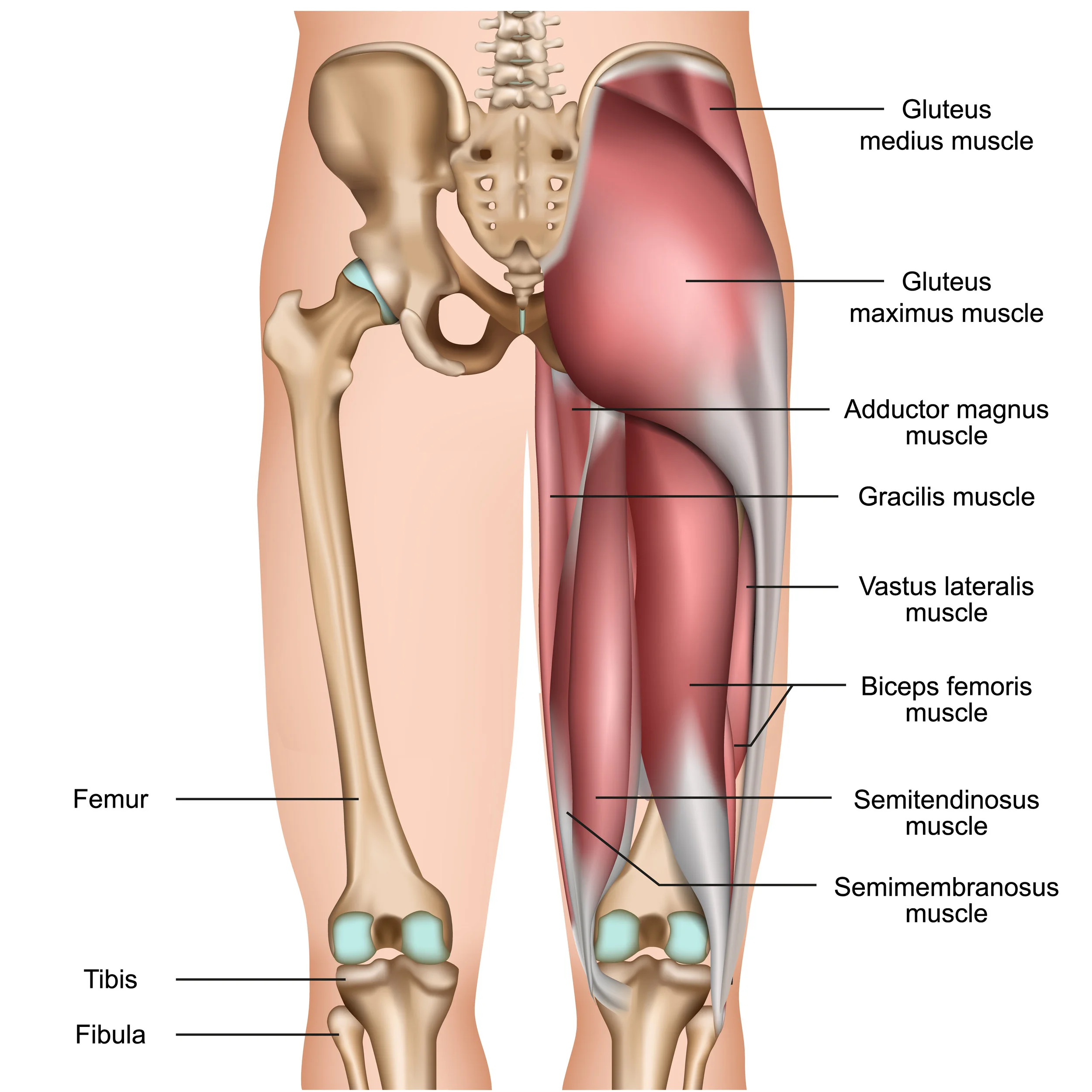
Semitendinosis: The semitendinosis mucles originates from the ischial tuberosity (sit bone) and inserts below the knee on the medial side of the tibia. This orientation causes it to act on two joints meaning it is both a Knee Flexor and Hip Extender. Due to its insertion on the inside of the tibia bone, it can internally/medially rotate the tibia when the knee is bent and also internally rotate the femur when the knee is extended.
Semimembranosis: The semimenbranosis muscle originates and inserts very closely to the semitendinosis and acts similarly as a knee flexor and (poor) hip extender. There are subtle differences in the two ‘semi muscles’ but it’s claim to fame is more along the lines that is may play a role in knee stability given it is suspected to have a functional relationship with the popliteus muscle on the back of the knee and a few fibers supporting the MCL. We learn more about the body everyday, so this may change.
Biceps Femoris: The Biceps Femoris has a similar function as the ‘Semi muscles’ in that it assists in knee flexion, and lower leg deceleration during the runners gain cycle, but it is somewhat special. The biceps femoris muscle has two heads that attach to two different places. The long head comes all the way from ischial tuberosity like the ‘semi brothers’, crossing the hip joint, making it a hip extender. But the short head, it comes off the back of the femur at a spot called the linea aspera. The short head does not cross the hip joint so it does not extend the hip, but it does have a special power. If you are unfortunate enough to experience an avulsion of the hamstring origin off the ischial tuberosity, the short head is still attached and allows you to, albeit weakly, flex the knee. This allows you to maintain some ability of ambulation. Our bodies are smart!
Basic Function Of The Hamstrings In Running
The hamstrings have a very important role in the running gait cycle, but it may not be what you think. As distance runners, our hamstrings are not as strongly used as in our sprinting counterparts, but as we all know after a good speed work session, they are back there serving ther purpose.

To keep this simple. The hamstrings job is to ‘slow’ down the leg as it swings forward. WHAT? SLOW DOWN? Yes! And the faster you run, the harder it works to slow down the leg.
It does this in what is called an eccentric contraction. Simply put, the hamstring fires as the leg swings forward so that your foot and lower leg do not go flying out, causing the knee to fully extend, and then you land on a locked knee. This would cause many injuries, and runners with a lack of control here often have knee and hamstring injuries.
Okay, so lets go a little deeper…nerd-out if you will.

For a great review of the gait cycle, check out the Biomechanic.
When the leg is planted in the stance phase, the hamstring contracts with the quads and adductors to create a stable platform inwhich we can use our momentum to continue to propel forward.
As the leg moves into the toe off phase, the hamstring supports by contracting more concentrically aiding in the push-off that propels us forward..but here is where it gets fun.
During the mid part of the swing phase, the hamstring is passive as the quads and adductors do most of the work bringing the leg foward. The hamstring does work to pull the heel toward the butt in good form, but they do more stretch than anything as studies suggest the hamstring stretches from 50% length to 90% length during this time.
Once we start moving from mid swing to heel contact, the hamstring kicks in eccentrically, and puts the brakes on the lower leg, allowing for a stable platform to land and maintain during the new stance phase.
What Do The Hamstring Do For Distance Runners?
As distance runners, we work through all of theses running phases, just less draumatically than our explosvie sprinter friends. The hamstrings act more in the stability and concentric role during our long outings, which leads way to one theory as to why distance runners deal with more tendinopathy injuries (generally overuse) than strains and avulsion injuries (dynamic and powerful contractions).
What Types Of Hamstring Injuries Do Runners Experience?
Acute Hamstring Strains In Runners:
This is one of the most common overall injuries to plague athletes, for running, it is usually a problem for the sprinter of the group. A muscle strain, or pulled muscle, occurs when a muscle is suddenly overstretched, resulting in the tearing of some of the fibers within the fascicles that make up the larger muscle as a whole. This can be a very small percentage which only causes mild tightness, to a more prominent injury that can range from mild swelling, to complete immobility with bruising and severe swelling.
As a runner, if you are to experience a hamstring injury, a mild strain is preferable. Typically, we can get back out and perform modified running in 2-4 weeks with full healing and return to play in 4-8 weeks.
Hamstring Tendinopathy In Runners:
This is what we see most. As distance runners, we typically run far, make us prone to overuse injuries. Those injuries typically start with a little tightness that goes unaddressed because we are able to continue running. Over time, that muscle tightness begins to place an overload on the tendon, and that tendon begins to get irritated. In can inflame, dehydrate, become sensitive, and eventually make it difficult to run, walk, or sit for long periods.
There are two places this can occur, the lower tendon insertion, which we typically see acutely after a race, fall, or a big downhill effort. This area is often where we see a rupture in sprinters. If you have ever watched a 100m or 200m race and seen a running pull up very quickly and then fall or start hopping, this is what they experienced, and it can be career-ending at the highest level of the sport.
Now, for the upper tendon origin. High hamstring tendinopathy is so common and so frustrating, it has been listed in the runner’s guide of forbidden phrases. High hamstring injuries suck…there is no way around it. These injuries take TIME and often require some time off from running. I told you it was a forbidden term.
High hamstring tendinopathy typically takes 3-6 months for a full recovery and complete release to high volume and high intensity running. Care involves a strict plan for in-office and home care…and even with that, we still send out a good percentage for co-management with an orthopedist.
To summarize this injury. Don’t ignore your hamstring tightness or an injury you believe to be a mild strain. Give it attention, seek help, and rest if necessary. Unfortunately, some runners will press on, and the outcome is very unfortunate.
Hamstring Avulsion Injuries In Runners.
This is a tough one that typically requires surgical intervention. An avulsion injury is when the hamstring tendon pulls away from its attachment on the bone and takes part of the bone with it. These are uncommon without a significant mechanism of injury, we don’t typically see this from just running, but it has happened. This injury will cause severe pain, swelling, and bruising and should be examined by an orthopedist as soon as possible as the muscle can begin to ‘roll-up’ and atrophy shortly after the injury.
Dr. Reheisse is a Board Certified Chiropractic Sports Physician practicing in Cottonwood Heights Utah. Revive Sport & Spine provides evidence-supported chiropractic care and conservative sports injury management.
If you are in the greater Salt Lake City, Utah area and are a runner dealing with a nagging hamstring injury, we are here to help. Click the link below to schedule a consultation appointment and lets get you back out and running.

Spinal Manipulation - Who Benefits Best From This Effective Treatment Option
Spinal manipulation, or the chiropractic adjustment, is the hallmark of Chiropractic Medicine, but what population of patients benefit from this safe and effective treatment option?
Spinal manipulation, the hallmark of Chiropractic Medicine….

First -> Let’s address the elephant in the room! Spinal Manipulation has been touted to help or heal everything from low back pain to the common earache and yearly influenza epidemic. While many practitioners, and patients alike, claim that a chiropractic ‘adjustment’ cured all their ills, current research does not support those claims. We are not here to call those cases out as some people honestly did find an improvement to their conditions through spinal manipulation, we just can not provide consistent results to a large number of subject to clearly understand the mechanism.
However; Low Back Pain, Neck Pain, Muscle and Joint Injuries, Strain/Sprain Injuries…we have mounds of data to support the effectiveness of manipulation and manual therapy in these cases. So much, that we can now predict who will benefit best from this type of care.
What Does Spinal Manipulation Look Like?
Before we jump into what we call ‘Clinical Prediction Rules’ regarding joint manipulation, please realize that each person is an individual, and each condition is as unique as the person who presents with it. Utilizing these rules is not the end all be all; there will be outliers. Some people have tried joint manipulation, or exercise, or dry needling, or a myriad of other therapies with little to no results. Sometimes their condition is passed this type of intervention and needs to bypass conservative care for more invasive options. Moreover, many of these patients either receive ONLY ONE therapy or had the wrong ‘concoction’ of care for their condition, or the phase of healing they were in when the therapy was used was incorrect causing poor timing to be the culprit of poor outcomes. So…if you have tried a few of these, don’t give up and completely write them off. Get a second or third option, look at it with a set of fresh eyes and try a new direction, a new order of care and see how your condition improves.
Now, back to the predictions. Below are what we consider to be the characteristics of patients who research predicts will have the best and fastest outcomes from spinal manipulation.
The Number Of Days With Your Current Low Back Complaint is LESS THAN 16 Days.
Pain & Radiation Of Symptoms (Pain, Numbness, Tingling) Does Not Go Farther Than The Knee.
Fear Avoidance Behavior Assessment. You Do Not Fear That Your Back Pain Will Last Forever and Will Not Keep You From Enjoying Life In The Future.
Through Examination, Movement Assessment, and Provider Palpation, At Least 1 Spinal Segment of the Lumbar Spine is Restricted/Hypomobile.
At Lease 1 Hip Has More Than 35 Degrees of Internal Rotation.
So What Does This Mean?
If you present to an office like ours with ACUTE LOW BACK PAIN that is RADIATING PAIN TO THE GLUTES, RESTRICTED LUMBAR SPINE ROM, and ONE HIP HAS RESTRICTED INTERNAL ROTATION ROM…
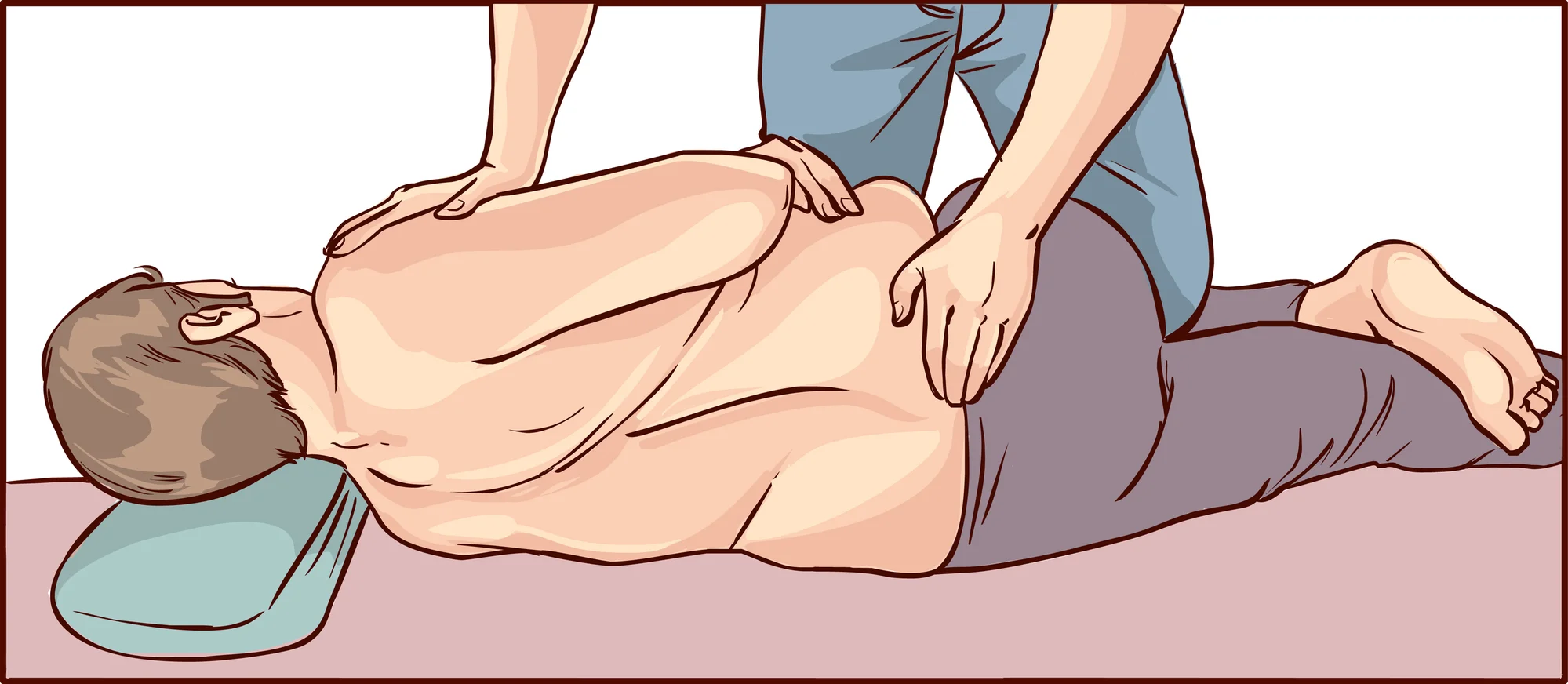
YOU ARE A GOOD CANDIDATE FOR SPINAL MANIPULATION
&
WE SHOULD ANTICIPATE GREAT RESULTS.
Two studies on spinal manipulation, utilizing these Clinical Prediction Rules found:
Patients who presented with less than 4 of the 5 above rules, had a 45% likelihood for a positive response from spinal manipulation.
Positive Response means that after 2-3 treatments with spinal manipulation, patients saw a 50% reduction in symptoms and pain.
A patient who presented WITH at least 4 of the 5 rules, increased their likelihood of a positive outcome to 95%.
Another study, utilizing a side-lying lumbar manipulation technique along with ROM exercises, found a 50% reduction in symptoms in 11 of 12 participants. The one participant who did not respond still found a reduction in symptoms, but did not reach the 50% reduction mark the study considered as a ‘positive outcome.’
In summary, Spinal Manipulation is an effective and safe tool for low back pain. But it is just that, a tool! Care that relies on only one treatment modality will only be somewhat useful to a specific, and small, population. Care that focuses on the patients' individual presentation and goals, and adapts a variety of therapies for that particular condition will typically yield the best results. If you have tried manipulation, PT, massage, dry needling, or any other therapy as a stand-alone treatment option, I invite you to give us a call to see how we can develop a better treatment plan around your personal goals.

Resources:
Cleland, JA et al. The Use of a Lumbar Spine Manipulation Technique by Physical Therapists in Patients Who Satisfy a Clinical Prediction Rule: A Case Series. JOSPT 2006.
Flynn, T et al. A Clinical Prediction Rule For Classifying Patients With Low Back Pain Who Demonstrate Short-Term Improvement With Spinal Manipulation. Spine 2002.
Childs, JD et al. A Clinical Prediction Rule To Identify Patients With Low Back Pain Most Likely To Benefit From Spinal Manipulation: A Validation Study. Annals of Internal Medicine 2004.
Dr. Reheisse is a Board Certified Chiropractic Sports Physician practicing in Cottonwood Heights Utah. Revive Sport & Spine provides evidence-supported chiropractic care and conservative sports injury management.

Sciatica Pain Relief Part 4: Treatment & Rehabilitation
As we gather to close out this series on Sciatica, talking this time on what care looks like in our office when someone presents with Sciatic Nerve pain, you will recognize some similarities from the previous Sciatica-related articles. That is because rehabilitation for Sciatica is similar to the self-care and prevention exercises we shared previously. So…if you haven’t taken a look at our Sciatica Pain Relief series parts 1-3, click the links below and check them out. Our goal is to have you work through those modules before seeking care. You will often find that spending a week on the exercises we shared, might relieve your pain, and if maintained with some frequency, may prevent future occurrences. Nevertheless, if you are here, are located in Salt Lake City and the surrounding area, we are here to help.
As we gather to close out this series on Sciatica, talking this time on what care looks like in our office when someone presents with Sciatic Nerve pain, you will recognize some similarities from the previous Sciatica-related articles. That is because rehabilitation for Sciatica is similar to the self-care and prevention exercises we shared previously. So…if you haven’t taken a look at our Sciatica Pain Relief series parts 1-3, click the links below and check them out. Our goal is to have you work through those modules before seeking care. You will often find that spending a week on the exercises we shared, might relieve your pain, and if maintained with some frequency, may prevent future occurrences. Nevertheless, if you are here, are located in Salt Lake City and the surrounding area, we are here to help.
Treatment surrounding Sciatica takes on two parts: (1) Addressing the low back, regardless if low back pain is present and (2) Addressing the posterior hip, associated musculature, and its interaction with the sciatic nerve. One of these (#2) we can affect directly and often provide immediate relief. The other (#1) can be addressed by focused and modified daily action, joint mobility, decreased muscle tension, and…TIME.
Let's start with the low hanging fruit here. We have already discussed the association of the Sciatic Nerve and the muscles of the posterior hip. When it comes to treatment, our goal is to enact a change as fast as possible. We hope that patients come in having already tried stretching rolling, and increased movement to decrease the tightness and tension of the muscles in the back of the hip. From there, our job is to change the tissue in ways most can not do themselves.
Our typical treatment here is a combination or assisted progressive stretching, active and passive myofascial release movement, and dry needling…almost always dry needling.
To help understand what these treatments look like, check out these video demonstrations. These treatments have proven extremely effective in assisting patients to recover quickly from sciatica and sciatic nerve issues.
When it comes to rehabilitation, it is essential to understand that for the majority of people, even though the sciatic nerve radiating pain down the leg may have come on suddenly, it most likely took months to get to that point, leaving us with a bit of chronic muscle tension to address. THIS TAKES TIME.
When helping patients with their home care exercise plans, we look to address two areas, (#1) The Lumbar Spine, (#2) The Posterior Hip Muscles. If your problem is primarily in the hip/thigh region, exercise and daily life modification (usually sitting less) will bring quick and lasting relief. If your problem is primarily in the lumbar spine, our goal is to keep you as mobile and active as possible while the injury heals. Again…TIME.
POSTERIOR HIP MOBILITY
NERVE FLOSSING: Sciatic Nerve
LUMBAR SPINE MOBILITY & STABILITY
Sciatica is a common complaint, with a wide variety of causes. If you worked through our Sciatica Relief Series here and are still dealing with radiating leg and low back pain, please reach out to us with questions or come in for a consultation to further discuss your condition. If we can help you, we will let you know; if we can’t, we will get you to the best provider for your case.
Dr. Reheisse is a Board Certified Chiropractic Sports Physician practicing in Cottonwood Heights Utah. Revive Sport & Spine provides evidence-supported chiropractic care and conservative sports injury management.

Sciatica Pain Relief Part 3: Self-Care & Everyday Actions That Make Sciatic Pain Worse
If you are tracking along with us on this journey of everything Sciatica, your patience and dedication is about to be rewarded. In Part 1 of our Sciatica Pain Relief series, we discussed what Sciatic Nerve pain is and the associated anatomy (always my favorite part). In Part 2 we went a little deeper with the 5 most common causes of Sciatica and touch on a few of the red flags we want to rule out as soon as possible. Having made it through those two very information-heavy articles, it is time to look at what YOU can do to improve your situation as well as some of the most common everyday actions that may be the primary cause for your Low Back and Sciatic Nerve pain.
If you are tracking along with us on this journey of everything Sciatica, your patience and dedication is about to be rewarded. In Part 1 of our Sciatica Pain Relief series, we discussed what Sciatic Nerve pain is and the associated anatomy (always my favorite part). In Part 2 we went a little deeper with the 5 most common causes of Sciatica and touch on a few of the red flags we want to rule out as soon as possible. Having made it through those two very information-heavy articles, it is time to look at what YOU can do to improve your situation as well as some of the most common everyday actions that may be the primary cause for your Low Back and Sciatic Nerve pain.
EVERYDAY ACTIONS CONTRIBUTING TO SCIATICA PAIN
SITTING:
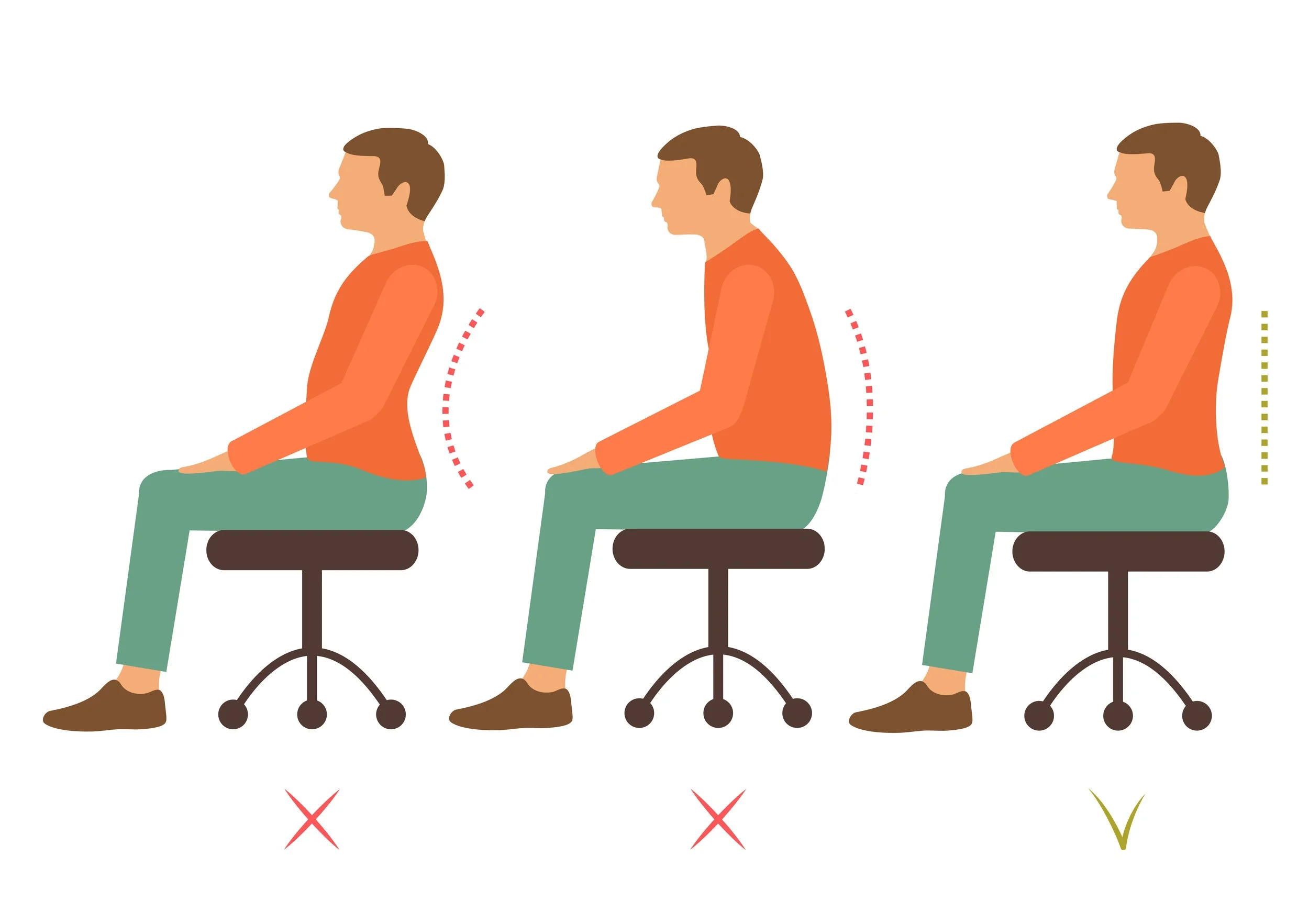
To some, sitting may seem like a crazy thing to make sciatica worse. However, for those who experience this daily, it is a very real thing. To put this simply, sitting compresses the muscles of the posterior hip, possibly putting pressure on the sciatic nerve. Also, the position of sitting puts tension on the entire posterior chain (back, hip, glutes, hamstrings) potentially irritating the sciatic nerve at the spine, hip, or back of the thigh. Many people with sciatica report finding relief by standing and walking around.
TRAVELING:
Traveling is similar to sitting in that you take the nature of sitting and compressing the sciatic nerve, and add in the cramped, tight situation of traveling on a plane or car. In addition to this, a hotel bed, or worse, your second cousins blow up mattress in their spare bedroom is not making the situation any better.
EXERCISE ROUTINE:
Many patients will relate that exercises such as squatting, deadlifting, and rowing can cause their sciatic nerve pain to worsen. The end range of these exercises, tension on the sciatic nerve, and the repetitive nature of exercise all create the perfect storm to irritate a long-standing sciatic nerve issue.
HOME CARE OPTIONS FOR SCIATICA PAIN RELIEF
While many sciatica cases require some formal care, all can benefit from frequent attention through home and office-based stretches and exercises. Below are some of our favorite ‘moves’ to help relieve sciatica pain. The truth here is that sciatica relief and recovery takes time, effort, and focus. Do a stretch one or two times is not enough. You may need to perform one of these every hour. You may have to modify your workspace. Guidance here is one aspect of care in our office but the responsibility to complete these is on the patient. Simply put, the more you focus on care outside of our office, the faster your issue typically resolves.
*NOTE: If any of these stretches increase your symptoms, stop and seek professional care. These exercises are not intended to diagnose any condition. Understanding of these exercises and the prescription of these should be performed by a trained provider.
Seated Sciatica Relief - 2 Best Chair Stretches
Best Sciatica Stretch - Utah Sports Chiropractor
Sciatica Self Release - Foam Roller & LaX Ball
Flexion & Extension For Low Back & Sciatica Relief
RISKS & CONSIDERATION WHEN DEALING WITH SCIATICA
RED FLAGS:
We discussed these in Part 2 of our Sciatica discussion. They are worth reviewing, and if you are experiencing any abnormal or rapid increase in symptoms, professional care and imaging are most likely needed.
STRETCHING:
Something as simple as a hamstring stretch can light up your sciatica like Christmas. As we work through rehabilitative exercises and stretches, gradual progression is a must. Just like any other injury that involves peripheral nerves, more stretching is not always better. Stretching into the pain, or the discomfort zone, when dealing with a nerve issue will likely exacerbate the condition. Start with the above demonstrated exercises, and take it easy!
OCCUPATIONAL & LIFESTYLE MODIFICATION:
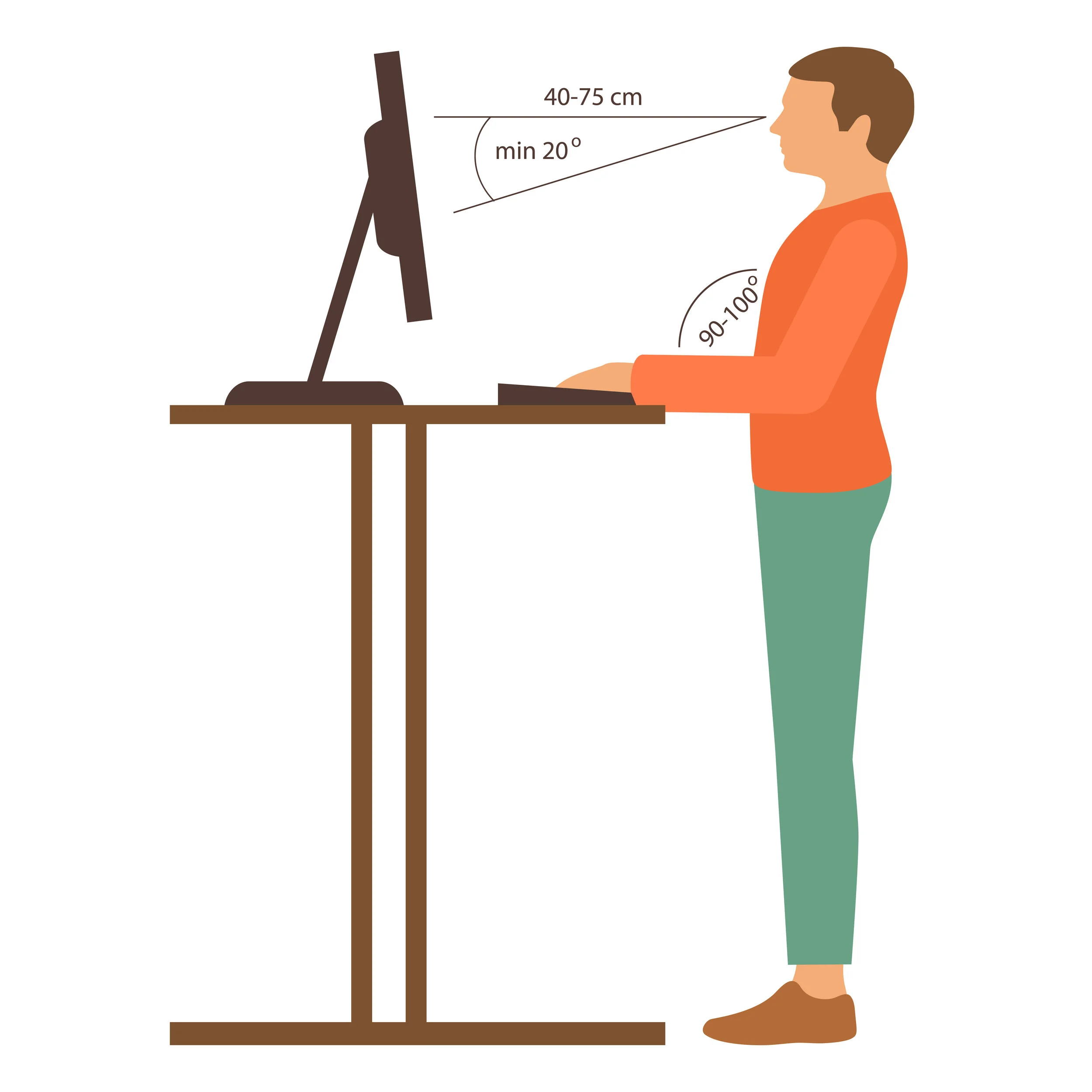
Imagine your workspace. Without going through an extensive ergonomics evaluation, what can you change to help your sciatica? Are you able to stand up and work? Do you have a water cooler to frequent? Can you set an alarm on your phone to remind you to stand up and stretch every hour? It is this type of lifestyle modification that is the long game portion of real sciatica relief.
Dr. Reheisse is a Board Certified Chiropractic Sports Physician practicing in Cottonwood Heights Utah. Revive Sport & Spine provides evidence-supported chiropractic care and conservative sports injury management.

Sciatica Pain Relief Part 2: Common Causes of Sciatica
In part 1 of our Sciatica Pain Relief series, we covered the basics of sciatica, sciatic nerve pain, and the general anatomy involved. While this may not interest everyone, it is useful in understanding the sharp, burning, and often debilitating pain that radiates down the leg that some people experience with low back pain. Our goal in this series is to inform, empower action, and give our fellow Salt Lake City, Utah friends the information and tools to help yourself through this condition as well as the understanding of when to seek care and a trusted source to do so if needed. In part 2, we are going to briefly discuss some of the most common causes of sciatica but before going forward, check out part 1 by clicking the button below.
In part 1 of our Sciatica Pain Relief series, we covered the basics of sciatica, sciatic nerve pain, and the general anatomy involved. While this may not interest everyone, it is useful in understanding the sharp, burning, and often debilitating pain that radiates down the leg that some people experience with low back pain. Our goal in this series is to inform, empower action, and give our fellow Salt Lake City, Utah friends the information and tools to help yourself through this condition as well as the understanding of when to seek care and a trusted source to do so if needed. In part 2, we are going to briefly discuss some of the most common causes of sciatica but before going forward, check out part 1 by clicking the button below.
TOP 5 COMMON CAUSES OF SCIATICA
1) Disc Buldge - Intervertebral Disc Compression
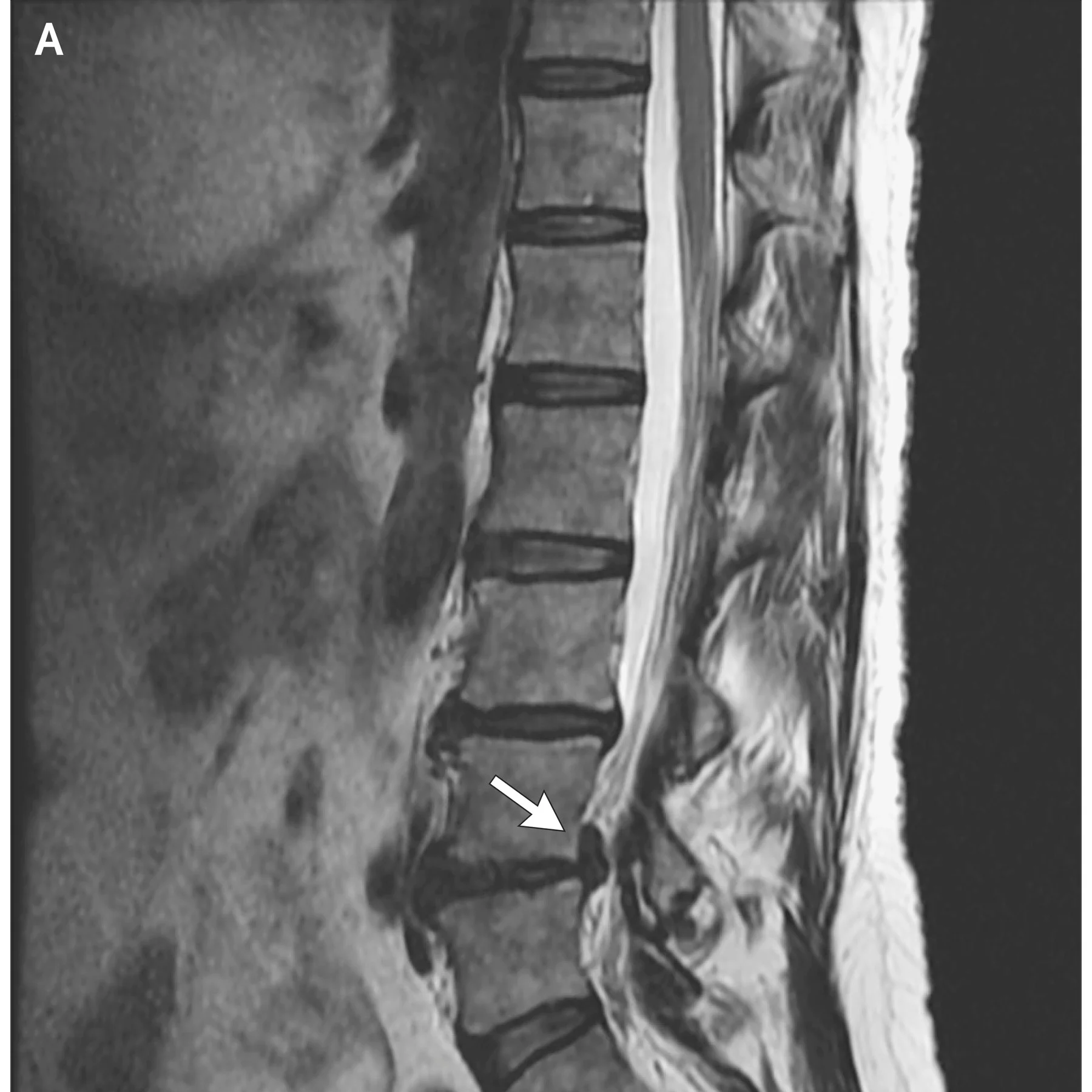
Credit: Allan Ropper, M.D., Ross Zafonte, D.O. Sciatica Review Article. New England Journal of Medicine
Starting with the most common cause makes sense as this is what most literature supports and what most people fear when they have some incident or trauma that leaves them with sciatic nerve pain shooting down their leg. A disc bulge is just that, an outpouching, or bulge, of the disc (compressive and supportive tissue between each vertebrae that acts as a shock absorber and allows for movement of the spine) which then presses up against the spinal cord or a nerve as it exits the spinal column. Compression here can be mild to severe, bringing with it anything from pain, numbness, and tingling, to complete weakness of the muscles and limb supplied by the nerve being compressed.
Note: If you are experiencing the latter of those, please seek help immediately as progressive weakness is a red flag and often requires immediate imaging and intervention.
Now, the debate is out on this as disc, and other lumbar spine pathologies are considered somewhat normal. Chances are, before the injury or event that left you feeling this way, the disc bulge was ALREADY PRESENT! This event just aggravated it enough to cause pain.
For Review: Check out the chart in this article we did on spinal imagining and what the best, most current research supports. You will find that most people are walking around with ‘back issues’ with absolutely no pain or quality of life disruption.
THREE THINGS TO KNOW ABOUT SCIATICA & DISC ISSUES
You are not your image. Chances are, your MRI will show things that were already present and may not be the primary source of your sciatic nerve pain.
A true disc injury and resulting sciatica take time to heal. The body will do most of the work. Chiropractors and therapists are here to help with symptoms, function, and assuring you are in the best position to heal. There is NO magic pill for this, TIME heals.
If you are experiencing sudden weakness or progressive numbness that does not let up, seek care immediately as intervention is most likely needed to assure permanent damage is not experienced.
2) Lumbar Spine Stenosis - Canal & IVF Narrowing

Similar to a disc bulge, Sciatica related to Spinal Stenosis is a physical compression of the nerve roots that make up the sciatic nerve. However, this is more of a slow growing, progressive problem. In most cases, these do not wake up in severe pain overnight, these patients report constant discomfort, on-again-off-again radiation of pain, slow loss of range of motion, and typically do not have a time or event to relate a start of the pain.
As we age, the spine and discs degenerate. In the disc, this happens by a loss of height, dehydration, and loss of flexibility of the tissue. In the spine, and other high-stress bone and joint areas, degeneration happens by bone growth, bone spurs, and rigidity of the joints. This degeneration can cause enough of a response that bone will grow around areas where nerves pass from the spinal cord to the rest of the body (Intervertebral foramen or IFV) taking an already small space and slowly closing it down.
3) Piriformis Syndrome - Posterior Hip Tightness
We hit on this at length in the first part of our sciatica series. The relationship between the sciatic nerve and the piriformis muscle is well established. Most people have a sciatic nerve the tracks superficially (toward the surface) over the top of the piriformis muscle or just inferior to it. However, there is an appreciable percentage of the population where the sciatic nerve or a branch from it, pierces the middle of the piriformis muscle. It is believed to be the main culprit of 2-12% of sciatica pain with research on both sides stating over and under-diagnosis. Either way, anatomical and occupational variants are common causes of sciatic nerve pain as well as low back pain.

Credit: Allan Ropper, M.D., Ross Zafonte, D.O. Sciatica Review Article. New England Journal of Medicine
4) Double Crush Syndrome
Double Crush Syndrome, many of the cases we see fall into this category. Let me explain.
A patient presents after a fall, accident, or just a bad nights sleep with a chief complaint of sciatica with low back pain. An exam reveals a limited range of motion in the lumbar spine, tightness of the muscle in the posterior hip, namely the piriformis muscle, and numbness and tingling down the leg. Let's say that an MRI was ordered and it revealed a mild to moderate disc bulge.
Crush One - The disc bulge, assumed to be caused or irritated by the incident, it mildly compressing the nerve. Crust Two - In response to this injury, the body goes into defense mode and muscles begin to tighten, namely those of the posterior hip.
The initial compression at the spinal level causes a 3/10 pain, when you add in the tightness and compression at the hip, the patient is now up to a 7/10 pain with shocks of pain during specific movements. This is a Double Crush.
As with most, the disc issue is hard to affect with treatment directly, but focus can be directed toward the hip muscles, proper movement of the area and exercises to help with mobility and pain are prescribed, bringing the person back down to a 4/10 pain and allowing them to maintain most daily activities while the disc heals…remember, TIME heals discs.
5) Pregnancy
While this is not a diagnosable cause of Sciatica, sciatica is a very common complaint from expecting mothers. The cause here can be as elusive as any other, but pregnancy, the position of the baby, and the mothers specific size, anatomy, and lifestyle habits and experience with sciatica pain before the pregnancy. While there are many unknowns here, sciatica pain typically affects mothers-to-be in the latter half of the pregnancy, and most will respond to conservative care.
RED FLAGS

Sciatica is a very well described condition. The direct cause can be challenging to uncover, but there are a few things to be aware of if you are suffering from sciatic nerve pain. If you are experiencing any of the below items, we suggest you seek care immediately to assure the condition does not cause long term issues and to direct you to the right healthcare provider. Most cases can be managed conservatively (Chiropractic, Physical Therapy, or At Home) while others require medical intervention (injections, imaging, or surgery).
Progressive neurological symptoms. If you are experiencing numbness, tingling, or weakness that is worsening, please seek help from a trained provider.
If your injury is the result of a fall, auto accident, or home/work accident, consulting with a healthcare provider will help rule out any significant issues and speed our recovery.
As with other serious low back injuries, if you experience any loss of bowel or bladder control, this is an immediate ER referral.
If you have have been dealing with sciatica for more than 1 week without any relief, it is time to get help. Most self-resolving injuries and pain will let up after a couple days.
Dr. Reheisse is a Board Certified Chiropractic Sports Physician practicing in Cottonwood Heights Utah. Revive Sport & Spine provides evidence-supported chiropractic care and conservative sports injury management.

Sciatica Pain Relief - Part 1: Anatomy & Definition
Sciatica is the term used to describe pain that generates from the sciatic nerve. Many of us have felt this pain in the past, are currently experiencing it, or know someone close to us who constantly battles this sometimes debilitation and always frustrating condition.
Sciatic nerve pain is best known as the pain that seems to start at the low back and shoots down the leg, sometimes all the way to the foot. It can range from dull and ache, like a sore muscle, to a very distinct sharp, shooting sensation that can debilitate and stop a person in their tracks immediately. As the condition progresses, numbness, tingling can be present, and in urgent cases, weakness of the let. With that, low back pain with sciatica doesn’t just affect one area; it can radiate pain to the glues, hip, groin, hamstring, knee, calf, and foot…sometime all of them!
WHAT IS SCIATICA?
Sciatica is the term used to describe pain that generates from the sciatic nerve. Many of us have felt this pain in the past, are currently experiencing it, or know someone close to us who constantly battles this sometimes debilitation and always frustrating condition.
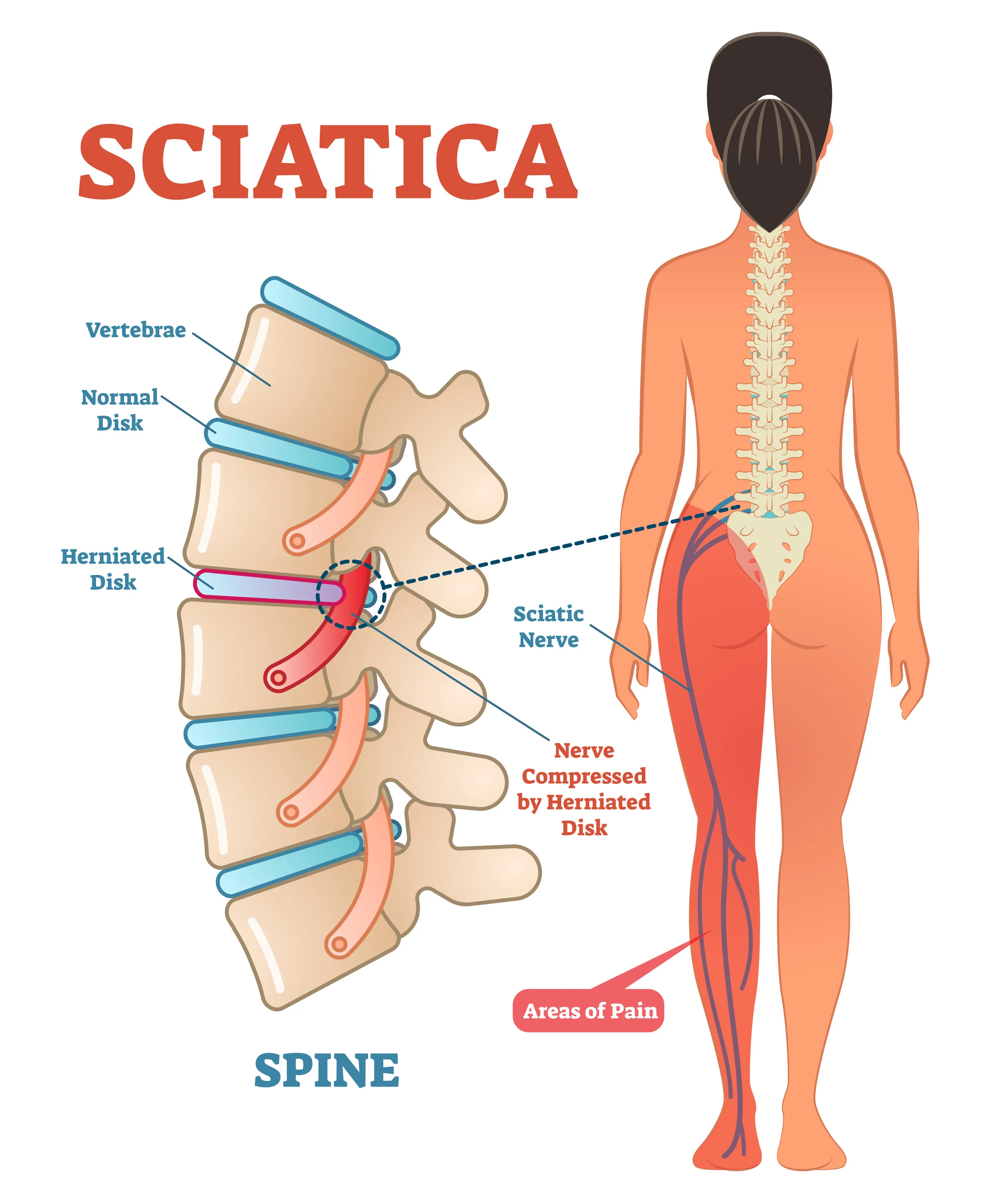
Sciatic nerve pain is best known as the pain that seems to start at the low back and shoots down the leg, sometimes all the way to the foot. It can range from dull and ache, like a sore muscle, to a very distinct sharp, shooting sensation that can debilitate and stop a person in their tracks immediately. As the condition progresses, numbness, tingling can be present, and in urgent cases, weakness of the let. With that, low back pain with sciatica doesn’t just affect one area; it can radiate pain to the glues, hip, groin, hamstring, knee, calf, and foot…sometime all of them!
Now that we have a common, agreed upon definition, our purpose with this part of our Sciatica Pain Relief Series is to understand the anatomy involved, which we will review now.
BASIC ANATOMY OF SCIATICA
Ideally, sciatica would have one cause, but with everything else, it just can’t be that easy. While some believe that sciatic nerve pain comes from the back (it can and does), some tend to think it is from muscle and nerve ‘interaction’ somewhere along the course of the nerve as it exits the spine (it can and does that too). But with our hectic lives; the sedentary weeks to weekend warrior type lifestyle, sciatica is typically a combination of the two in what we typically refer to as a double crush injury. We will talk more on this in part two, but for now, let’s look at the anatomy of the lumbar spine and follow the sciatic nerve as it courses down the leg.

The Sciatic Nerve begins in the lower lumbar spine and is made up of nerves from multiple levels of the lower spine in what is called the sacral plexus. Having this many levels of nerves associated with one big nerve gives room for many areas for disruption. As the spinal cord courses through the spinal column, it can be compressed by a damaged intervertebral disc, bulging or herniated, if occurring at the lower levels (L4/L5/S1). From here, the nerve exit the spine through what is called an intervertebral foramen (or a hole in between the vertebrae), where discs, degeneration, and other pathology which we will discuss in part 2. As the nerves begin to come together, the sciatic nerve (now as big around as your thumb) courses through the posterior hip and down the leg.
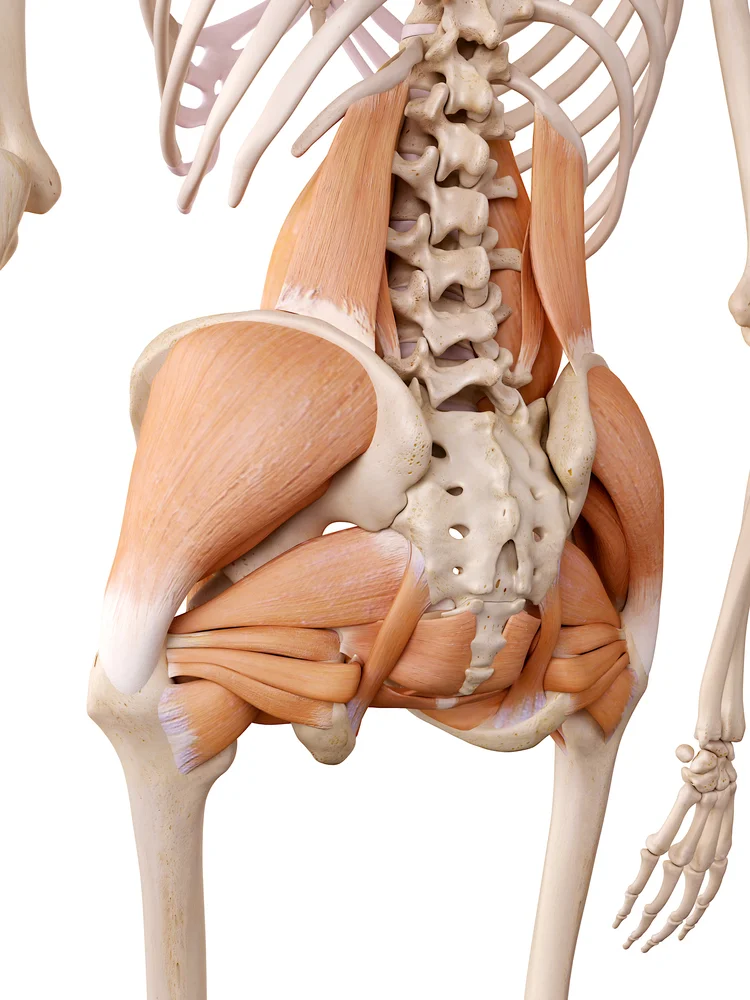
When we work with patients dealing with sciatica, we give attention to the posterior hip because of the piriformis muscle and its relation to the sciatic nerve. Everyone and their grandmother have been diagnosed with ‘piriformis syndrome’, while an easy diagnosis to give, it is rarely the only reason for the pain we are experiencing. The reason for all the attention though is that sciatic nerve either courses over, pops out underneath, or in 12-17% of the population, pierces right through the piriformis muscle. From here it travels down the posterior compartment of the thigh to the knee where it splits into the tibial and common peroneal nerve, both of which have their challenges.
While this may be overkill for some, it is prudent to know that the likelyhood of your sciatica ONLY being a spine issue is dubious.
Enjoy this brief and basic anatomy lesson, let us know if you have any questions. We will tackle some of the most common causes and daily actions that make sciatica pain worse in part two of our Sciatica Pain Relief Series.
Dr. Reheisse is a Board Certified Chiropractic Sports Physician practicing in Cottonwood Heights Utah. Revive Sport & Spine provides evidence-supported chiropractic care and conservative sports injury management.

Resolve Low Back Issues Part 7: What Happens When You Need To Seek Care?
Our intention with this series on Low Back Pain has been to inform and empower you, or your loved ones, to take action and realize that movement can help, as well as, prevent low back pain. That your low back pain is not a life sentence.
Care & Rehab For Low Back Pain
Supporting The Greater Salt Lake Valley. Helping You Get Back To The Activities You Enjoy.
Our intention with this series on Low Back Pain has been to inform and empower you, or your loved ones, to take action and realize that movement can help, as well as, prevent low back pain. That your low back pain is not a life sentence.
While all of this information is useful and should be utilized before, during, and after a Back Pain episode, the reality is that some people will need to seek care.
You have had a front-row seat to one pillar of our care, the education and exercise component. When seeking care for low back pain, putting your faith solely in one person, and relying on them for everything is not advised and will severely hinder your progress.
YOU (YES, YOU) HAVE TO PUT IN THE WORK, TIME, & EFFORT!
As a Sports Chiropractor that treats low back pain every single day…we see it time and again in our patients… If home care is not adhered to and a person does not take their situation seriously and put in the effort, back pain will take forever (or it seems that way) to resolve.
Today we are going to give you another up-close look at our care process, this time what we actually do here in the office. Our goals are to (1) Determine the cause of your pain/injury (2) Provide care in the office that helps you toward your goal of running, golfing, sleeping, moving again…pain-free, and (3) Give you the tools and education to help yourself.
We structure our care around 3 pillars: Soft Tissue, Joint Motion, Exercise. We have exhausted our opinion and writing on exercise, please refer to parts 1-6 for direction. Now, lets briefly take a look at what care looks like inside the office.
SOFT TISSUE CARE
JOINT MANIPULATION
Dr. Reheisse is a Board Certified Chiropractic Sports Physician practicing in Cottonwood Heights Utah. Revive Sport & Spine provides evidence-supported chiropractic care and conservative sports injury management.

Resolve Low Back Issues Part 6: Self-Care - What You Can Do For Low Back Pain
Over the last 5 weeks, we have discussed everything from what low back pain is, most common causes, some of the most common myths associated with low back pain, and when to consider imaging studies (x-ray, MRI, CT) due to red flags that lead us to something more severe being the cause. We even covered a few tips to help when you find yourself traveling for work or vacation.
We have been building up toward the actual care of low back pain but wanted to fully educate on how common low back pain is, what we know about low back pain at this time, and help you focus on life outside of back pain.
Low Back Pain Self-Care
Over the last 5 weeks, we have discussed everything from what low back pain is, most common causes, some of the most common myths associated with low back pain, and when to consider imaging studies (x-ray, MRI, CT) due to red flags that lead us to something more severe being the cause. We even covered a few tips to help when you find yourself traveling for work or vacation.
We have been building up toward the actual care of low back pain but wanted to fully educate on how common low back pain is, what we know about low back pain at this time, and help you focus on life outside of back pain.
Today, we are going to do just that.
When we look to decrease disability from low back pain and encourage and support patients back to an active lifestyle, this is done in two ways. EDUCATION & EXERCISE. We have already discussed the education component. Now it is time for exercise. Below are 5 ways to help manage and prevent your low back pain with exercise and stretching routines that can be done at home, the gym, or even at the office.
Side Bar -> If anyone gives you a hard time, or tosses a laugh in your way for stretching at the office, I will leave it up to you to either invite them to join (because they need to do this too), or, wait until they start having an issue with low back pain and then pass them our card! Seriously though, invite your co-works to join in, make it an office party, it will be fun.
Fix Your Low Back With These 5 Easy Exercises & Stretches You Can Do At Home or Work.
STEP 1: Get Out Of Bed With Our Morning Routine.
After a good night’s sleep, it is common for our muscles to want to remain in bed. Because of this, early morning activities can challenge our bodies more than they are ready to handle, resulting in a nice low back strain injury. If you are already dealing with low back pain, you know that morning stiffness can prevent you from even rolling over, not to mention actually get up out of said bed.
STEP 2: Desk Sitters - Get Up & Move
While things are improving, the seats we subject ourselves too in our cars, on the train, and at the office are just comfortable enough to keep you seated for an extensive period of time, but provide little support to keep you from tightening up in the process. Start this NOW -> Set an alarm on your phone that goes off every 1-2 hours. Walk around the office, hand-deliver a message, and then take 30 seconds and perform these stretches.
STEP 3: Pre-Workout Hip Mobility
We are going to assume you have a daily routine of some exercise? If you do not, reset, and start adding some exercise to your life, no other method is as impactful on helping your low back issues. Once you get to the gym, or home if you prefer, go through a GOOD HIP MOBILITY routine. We know that the more we improve the mobility of our hips, the less our low back has to work…overwork.
STEP 4: Post-Workout Core Strength
The same goes for core strength as hip mobility. The stronger our core, the less our low backs have to work. Now…I don’t mean getting down on the floor and performing a half-hearted set or some sorry excuse for crunch/sit-up type exercise. We are talking functional here. Planks, Side Planks, Plank Rolls, Heavy Farmer and Suitcase Walks, as well as The Big 3.
STEP 5: Strength For Life
Most people who have dealt with low back pain have since, and forever will, shy away from true strength movements. But let me just plug that as humans, you should be able to squat as well as pick something heavy off the ground without fear of hurting yourself. As you work on hip mobility and core strength, you have to start working in squats and dead-lifts. Start with these modifications and work on control and endurance.
Exercise is considered the best medicine for low back pain. While this is true and I strongly support this. Our actual goal with care is to get our patients back to these activities. But often, patients present in enough pain that they are unable to run, ski, bike, weight lift, etc. With that said, most can start with basic stretching and mobility until the pain is relieved. From there, exercise can prevent flair-ups, or at least decrease their intensity and length of the episode. Either way, low back pain has to have a component that includes YOU doing some, if not most, of the work.

Next week we will look at some of the traditional, as well as, new developments in conservative care low back pain. Until then, and if you are craving more reading, check out our ‘12 Ways..’ Tips guide to further help your low back pain.
Dr. Reheisse is a Board Certified Chiropractic Sports Physician practicing in Cottonwood Heights Utah. Revive Sport & Spine provides evidence-supported chiropractic care and conservative sports injury management.