
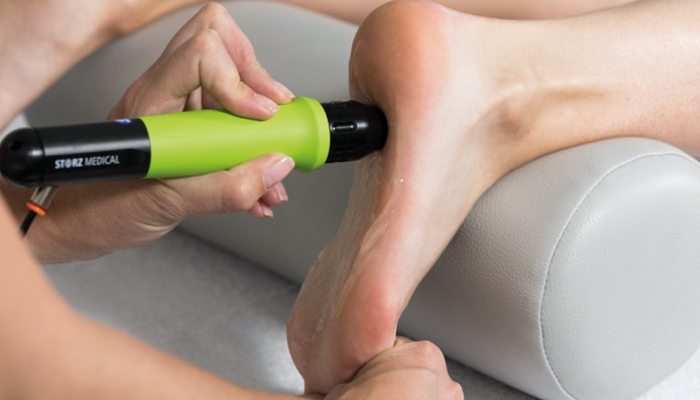
If your first steps in the morning feel like stepping on a nail, you are not alone. Plantar fasciitis is one of the most common causes of heel pain, affecting roughly one in ten people at some point in their lives. Most patients who walk or run into our Murray, Utah, sports chiropractic office have already tried rest, new shoes, and stretching, only to find the pain keeps coming back or really never left. The good news is that heel pain is highly treatable once you understand what is actually happening in the tissue, what actions can help you improve and get back to your favorite activities, and where extracorporeal shockwave therapy (ESWT) fits in the care plan.
The Anatomy: What Is the Plantar Fascia?
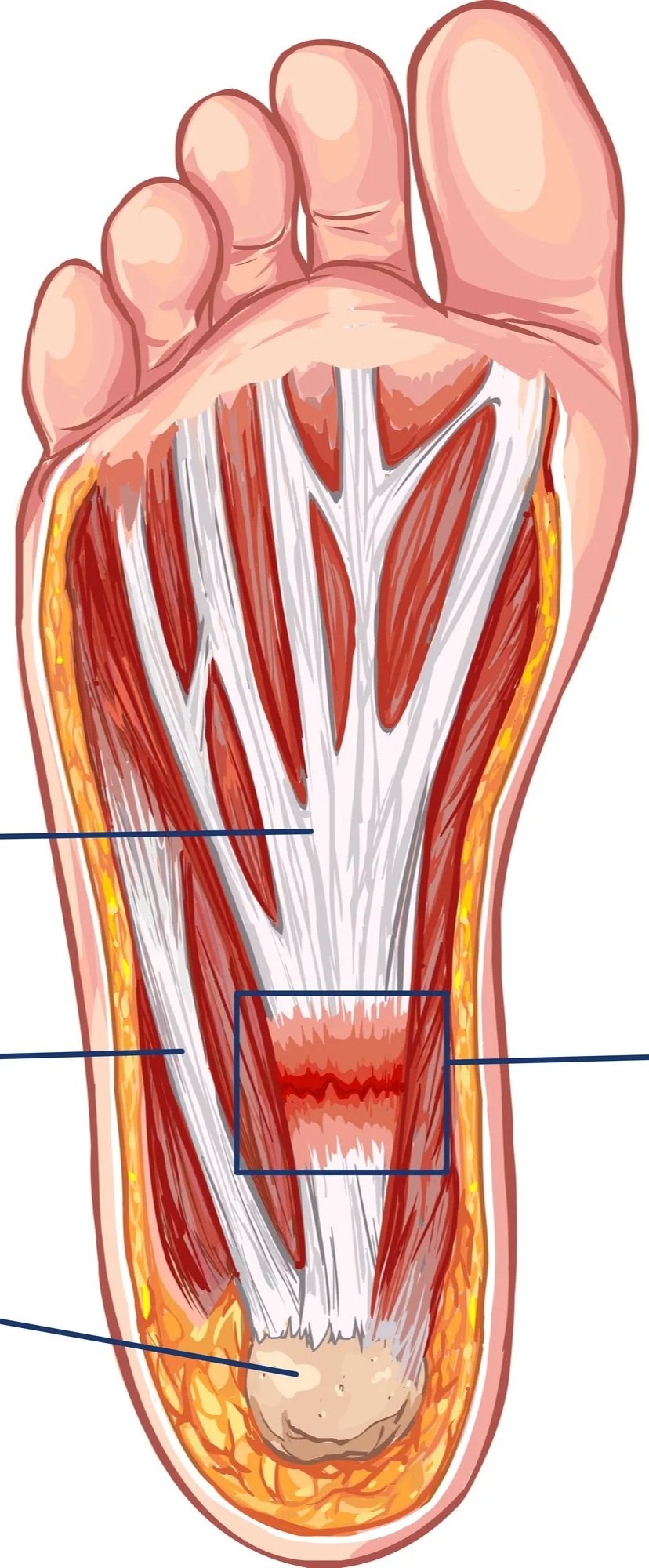
Before we start to attack this common issue, knowing the anatomy involved is important. The plantar fascia is a thick, fibrous band of connective tissue that runs along the sole of your foot, connecting your heel bone (the calcaneus) to the base of your toes. Think of it as a strong bowstring that supports the arch of your foot and absorbs shock every time your foot strikes the ground. When you walk, run, or jump, this tissue stretches and recoils thousands of times a day, storing and releasing energy to make each step efficient.
Despite the "-itis" in its name, plantar fasciitis is now understood to be less about acute inflammation and more about degeneration and disorganized tissue repair. Under repeated overload, tiny tears form where the fascia attaches to the heel, and the body's healing response falls behind the damage. Because this is a degenerative process rather than a simple inflammatory one, researchers increasingly use the term "plantar fasciopathy." [2] That distinction matters because it explains why anti-inflammatory measures alone often fail and why treatments that stimulate healing and increase tissue capacity tend to work better.
Common Causes of Plantar Fasciitis
Plantar fasciitis develops when the repetitive load on the fascia outpaces its ability to recover. Common contributors include a sudden increase in running or walking mileage, spending long hours on your feet on hard surfaces, tight calf muscles and Achilles tendons that limit ankle mobility, flat feet or high arches that change how load is distributed across the foot, unsupportive footwear, and carrying extra body weight. Age plays a role too, with cases peaking between 40 and 60 years old. Often it is not one factor but several stacking together over weeks or months.
How Plantar Fasciitis Limits Your Favorite Activities
The hallmark of plantar fasciitis is sharp, stabbing heel pain with your first steps in the morning or after sitting for a while, which may ease as you warm up and then return later in the day. For active people, the impact goes far beyond discomfort. Runners find their mileage cut short or their training halted entirely. Hikers hesitate before tackling the trails in the Wasatch. Parents, nurses, teachers, and tradespeople who are on their feet all day dread the end-of-shift ache. Many people unconsciously alter their gait to avoid the pain, which can trigger new problems in the knees, hips, and lower back. Left unaddressed, plantar fasciitis can linger for a year or more, quietly eroding the activities that keep you healthy and happy.
Why Shockwave Therapy Is a Leading Option for Plantar Fasciitis Relief
When rest, stretching, and orthotics have not solved the problem, extracorporeal shockwave therapy has emerged as one of the best-supported non-surgical treatments for chronic plantar fasciitis. ESWT delivers focused acoustic pressure waves into the affected tissue. These mechanical pulses are thought to work by stimulating new blood vessel formation (neovascularization), triggering collagen production and tissue remodeling, and disrupting the pain signals that keep the cycle going, essentially prompting a stalled healing process to restart.
The evidence is strong. In a landmark randomized, placebo-controlled, multicenter trial, Gerdesmeyer and colleagues found that shockwave therapy produced significantly greater improvements in heel pain and function than placebo in patients with chronic recalcitrant plantar fasciitis. [1] Multiple systematic reviews and meta-analyses of randomized controlled trials have since confirmed that ESWT is both effective and safe for chronic plantar fasciitis. [3] [4] Compared with corticosteroid injections, shockwave delivers similar or better relief without the risk of fascia thinning or rupture that comes with repeated steroids. [5]
Importantly, shockwave works best as part of a comprehensive plan. At Revive Sport & Spine, ESWT is combined with progressive loading exercises, targeted calf and plantar fascia stretching, and gait retraining. The research is consistent on this point: addressing the underlying tissue capacity through loading, alongside shockwave to jump-start healing, gives the most durable results, far greater than rest alone. [4]
What to Expect with Shockwave Therapy for Plantar Fasciitis
A typical shockwave session lasts about 5 to 15 minutes, requires no anesthesia, and lets you walk out the door immediately. Most patients complete a series of 4 to 8 sessions spaced 7 to 10 days apart, with continued improvement often seen up to 12 weeks after treatment as the tissue remodels. You may feel a deep tapping or mild discomfort during the session, and the intensity is adjustable to your comfort. To support your body's natural healing response, research recommends limiting anti-inflammatory medication (as directed by your PCP; do not stop prescribed medications without talking with your doctor) and icing for 48 hours after each session.
Take the First Step Toward Relief from Plantar Fasciitis
You do not have to let heel pain sideline your runs, hikes, and daily life. Call Revive Sport & Spine at 801-944-1855 or schedule online to find out whether shockwave therapy is right for you. We are located at 1996 E 6400 S, Suite 260, in Murray, Utah, proudly serving Salt Lake City, Holladay, Midvale, Sandy, Cottonwood Heights, Millcreek, and the greater Salt Lake Valley.
Frequently Asked Questions
Does shockwave therapy for plantar fasciitis hurt?
Most patients describe it as a tolerable deep tapping sensation. Intensity is adjusted to your comfort, and there is no downtime afterward.
How many sessions will I need?
Most people benefit from 4 to 8 sessions, though your exact plan depends on how long you have had symptoms and how you respond.
Is shockwave therapy for plantar fasciitis better than a cortisone shot?
Research shows shockwave delivers comparable or better long-term relief without the risk of fascia thinning or rupture associated with repeated steroid injections. [5]
How does shockwave therapy work for plantar fasciitis?
Shockwave therapy uses focused acoustic pressure waves at the painful plantar fascia and its attachment to the heel. The goal is to reduce pain sensitivity and support tissue remodeling without an injection or surgery. Because plantar fasciitis is often related to the tissue’s ability to tolerate load, shockwave therapy is usually paired with exercises and activity changes rather than used alone.
Is shockwave therapy appropriate for acute plantar fasciitis, or is it mainly for chronic heel pain?
Shockwave therapy is most commonly considered for persistent or chronic plantar fasciitis that has not improved with an appropriate conservative care plan. New heel pain may first respond to reduced aggravating activity, progressive foot and calf exercises, and footwear changes. An evaluation is important because not every case of heel pain is plantar fasciitis. Your evaluation will allow us to best determine a care plan that fits your individual circumstances and goals.
How long does it take for shockwave therapy to relieve plantar fasciitis pain?
Some patients notice improvement during the treatment series, but results are not always immediate. Improvement may continue for several weeks after treatment as the tissue adapts and remodels. Your timeline depends on how long you have had symptoms, your daily activity level, exercise participation, and other factors identified during the evaluation.
Can I walk or run after shockwave therapy for plantar fasciitis?
Most patients can walk immediately after a shockwave therapy session. Returning to running or other high-impact activity should depend on your symptoms and individualized loading plan. We suggest taking a rest day after treatment, giving your body 24 hours to adjust and adapt to the healing process. You may need to temporarily adjust mileage, speed, hills, or jumping while the plantar fascia builds tolerance.
Is shockwave therapy for plantar fasciitis safe, and what side effects can occur?
Shockwave therapy is generally well tolerated, but temporary tenderness, soreness, redness, or bruising can occur around the treatment area. Treatment intensity can be adjusted during the session. Before treatment, a clinician should review your symptoms, medical history, medications, and whether another condition could be causing your heel pain.
How do I know whether my heel pain is plantar fasciitis?
Plantar fasciitis commonly causes pain on the bottom or inside of the heel with the first steps after waking or sitting. It may also worsen with prolonged standing, walking, or running. Stress injuries, nerve irritation, Achilles problems, and other conditions can feel similar. Severe swelling, numbness, fever, night pain, or an inability to bear weight warrants prompt medical evaluation.
References
[1] Gerdesmeyer L, Frey C, Vester J, et al. Radial extracorporeal shock wave therapy is safe and effective in the treatment of chronic recalcitrant plantar fasciitis: results of a confirmatory randomized placebo-controlled multicenter study. The American Journal of Sports Medicine. 2008;36(11):2100-2109. https://pubmed.ncbi.nlm.nih.gov/18832341/
[2] Rompe JD, Furia J, Weil L, Maffulli N. Shock wave therapy for chronic plantar fasciopathy. British Medical Bulletin. 2007;81-82:183-208. https://pubmed.ncbi.nlm.nih.gov/17456546/
[3] Sun J, Gao F, Wang Y, Sun W, Jiang B, Li Z. Extracorporeal shock wave therapy is effective in treating chronic plantar fasciitis: a meta-analysis of RCTs. Medicine (Baltimore). 2017;96(15):e6621. https://pubmed.ncbi.nlm.nih.gov/28403111/
[4] Lou J, Wang S, Liu S, Xing G. Effectiveness of extracorporeal shock wave therapy without local anesthesia in patients with recalcitrant plantar fasciitis: a meta-analysis of randomized controlled trials. American Journal of Physical Medicine & Rehabilitation. 2017;96(8):529-534. https://pubmed.ncbi.nlm.nih.gov/27977431/
[5] Xiong Y, Wu Q, Mi B, et al. Comparison of efficacy of shock-wave therapy versus corticosteroids in plantar fasciitis: a meta-analysis of randomized controlled trials. Archives of Orthopaedic and Trauma Surgery. 2019;139(4):529-536. https://pubmed.ncbi.nlm.nih.gov/30426211/