THOUGHTS ON:
Training, Rehabilitation,
&
Best Care Practices

New Year - New Goals: Setting & Achieving Your Goals This Year.
If you are like me, you love to set goals, spend hours on action plans to achieve those goals, and ponder on the impact and improvements you can make to yourself, your company, your family, your health, and everything else around you.
Fast forward from when we originally posted this blog, it is now 2020! Wow!
If you are like me, you love to set goals, spend hours on action plans to achieve those goals, and ponder on the impact and improvements you can make to yourself, your company, your family, your health, and everything else around you.
While you will not find a shortage of articles telling you how to set goals. Or how by February 1st, over 80% of people will have already abandoned their resolutions, let’s just keep this short and to the point in hopes that you are aiming to be part of the 20% who holds on, pushes through, and progresses not just your life, but your family’s, and everyone you interact with.
When gearing up for the new year, or getting back on track, set your aim high and work these 3 steps.
BE SMART
We have all heard of the ‘SMART’ acronym about goal setting.
Specific: Be as specific as possible with your goals, they are easier to break up and achieve if they are clearly defined.
Measurable: This is usually the easiest part. How will you know when you have achieved your goal? When you hit your mark. 1000 miles running - $100K in growth - 2 full weeks of vacation time with your family. Put a number to it!
Attainable: Don’t make your goals too easy. Set your goals just at the end of your reach. Goals that make you work and dig down deep create the best feelings of accomplishment when completed.
Relevant: Is this goal important to you? Does it help you become a better person? Can accomplishing this goal help and serve others?
Time-Based: Every goal must have a deadline, or it is just a thought; a dream; an everyday task.
Break down each goal you have set into smaller, workable, SMART pieces.
THE ONE THING - BUILD YOUR FOUNDATION
Studies have shown that we are incapable of multi-tasking! Don’t believe me, just try to do three things at once and see how well they are completed, if at all. The new year brings about much excitement about the possibilities and opportunities ahead, but if our focus shifts to too many things at once, it will all quickly fall apart. Start by reading ‘The One Thing’ by Gary Keller and focus all of your attention on one goal at a time. See it through to completion and then move on to the next.
When I sit down to plan out my year, quarter, or week, I review my One Thing, that big goal for the year. But, it has to be broken down further than that. Humans simply can’t focus on one thing for an entire year! You know the saying, ‘The way to eat an elephant is one bite at a time,’ it’s true. If you want to reach your BIG goal, break it down.
I have shifted my life, personal and professional, to ROCKS. This isn’t a fancy acronym, but I do like to think of these rock as the material needed to build the foundation of what I hope to achieve and provide to the world during my life. ROCKS are 2-3 small steps that can be taken each 90 days that move you a step closer to your ONE BIG THING. Science has shown us that the extent of our ability to focus on a task is 90 days, so this method works perfectly. Break your big goal down into 10-12 steps and put all your focus into 2 or 3 of them every quarter.
This works the same in business as it does running—every quarter, you have to change cycles. You may want to run a 3:30 marathon this year. You have four macrocycles of training to complete this year, each composed of 2-3 microcycles. Just going out and haphazardly running will not get you to your goal, you have to plan and focus.
10X EVERYTHING
Look at your goals. Look at the energy, time, commitment, and focus it will require, and 10 X it! In Grant Cardone’s ‘The 10X Rule’, he discusses that anything worth accomplishing will require ten times more time, energy, and resources than you initially thought. How do you attack this, with massive action.
In summary, take an hour this week, work through your goals and develop an action plan. Assure they are SMART, begin by focusing on just one, and TAKE MASSIVE ACTION!
- Happy New Year -
Dr. Reheisse is a Board Certified Chiropractic Sports Physician practicing in Cottonwood Heights Utah. Revive Sport & Spine provides evidence-supported chiropractic care and conservative sports injury management. If you have an injury that is preventing you from doing the things you enjoy, call or schedule now.

Medial Tibial Stress Syndrome Part 3 - Treatment and Rehabilitation
So we have made it to this point. You have been rolling, stretching, warming up before your runs, but your nagging shin splint pain will not go away. Maybe it has improved 50%, but as you continue to train for your upcoming event, the pain has plateaued. Sound familiar?
So we have made it to this point. You have been rolling, stretching, warming up before your runs, but your nagging shin splint pain will not go away. Maybe it has improved 50%, but as you continue to train for your upcoming event, the pain has plateaued. Sound familiar?
I know it has for me. As we discuss treatment options here in part three of our Medial Tibial Stress Syndrome series, a few of the techniques we show that are commonly used here in the office were used to help me overcome my battle with shin splints when I was working toward my first marathon.
Just with any other injury, if you are truly doing everything you can (allowing ample time to warm-up before exercise, training within your limits and not hanging too long in the upper limits as you progress, you are stretching, rolling, and giving constant attention to recovery and rest) and you can not shake the pain after 10-14 days, YOU NEED HELP! Our goal with this series is to give you options, ideas, and a direct path of the things you should be doing, but if they don’t get you to where you need to be, or out of pain…that is why we are here!
Below are a few of the treatment options we typically utilize when caring for medial tibial stress syndrome, as well as a basic return to running rehab protocol that not only provides strength in needed areas but is aimed at preventing future injuries.
NOTE: The care we provide is adapted to each individual person and their presenting condition. What works for one athlete may not work for another. This is where the exam and functional analysis come in. If any of these exercises cause pain, STOP, and seek care from licensed professionals. (Like Us!)
SHIN SPLINTS: IN OFFICE TREATMENT
MYOFASCIAL RELEASE
IASTM - Instrument Assisted Soft Tissue Mobilization
DYNAMIC CUPPING THERAPY
DRY NEEDLING THERAPY
KINESIO TAPING
SHIN SPLINT REHABILITATION PROTOCOLS
Medial Tibial Stress Syndrome - Rehabilitation Exercises - Phase 1
Medial Tibial Stress Syndrome - Rehabilitation Exercises - Phase 2
Dr. Reheisse is a Board Certified Chiropractic Sports Physician practicing in Cottonwood Heights Utah. Revive Sport & Spine provides evidence-supported chiropractic care and conservative sports injury management.

Medial Tibial Stress Syndrome Part 1 - What Are Shin Splints and Why Runners?
Springtime is here! The weather is warming up, the sun is starting to shine on those early morning runs, and we can finally shed many of those heavy layers of clothes for our preferred running shorts and singlet top!
But…spring time also means something else for runners.
Springtime is here! The weather is warming up, the sun is starting to shine on those early morning runs, and we can finally shed many of those heavy layers of clothes for our preferred running shorts and singlet top!
But…spring time also means something else for runners.
For most runners, it means it is time to come out of the pain cave, get off the globogym cardio theater dreadmill, and start hitting the roads again. For some, it means it is time to come out of hibernation and begin training again. While this all seems well and good, the road can cause some aches and pains that the somewhat forgiving treadmill or cushy couch hid from you all winter long.

You know what I am talking about. That all too familiar pain down the inside of shin bone that can also sometimes radiate into the foot and seems to intensify with every run. Road running in the spring can be wonderful, but it can also be painful. The road is an unforgiving surface (part of the reason our treatment plans include running on a track or trail) that can bring even a veteran runner to their knees in frustrating agony with each run.
Yes, I’m talking about Shin Splints!
Today we are beginning our Shin Splint Relief & Prevention series by discussing what ‘shin splints’ are, how they occur, who is more likely to experience shin splints, as well as a few other complicating factors. We will follow this up with self-care in Part 2, and Treatment & Rehabilitation options in Part 3.
WHAT ARE SHIN SPLINTS: MEDIAL TIBIAL STRESS SYNDROME
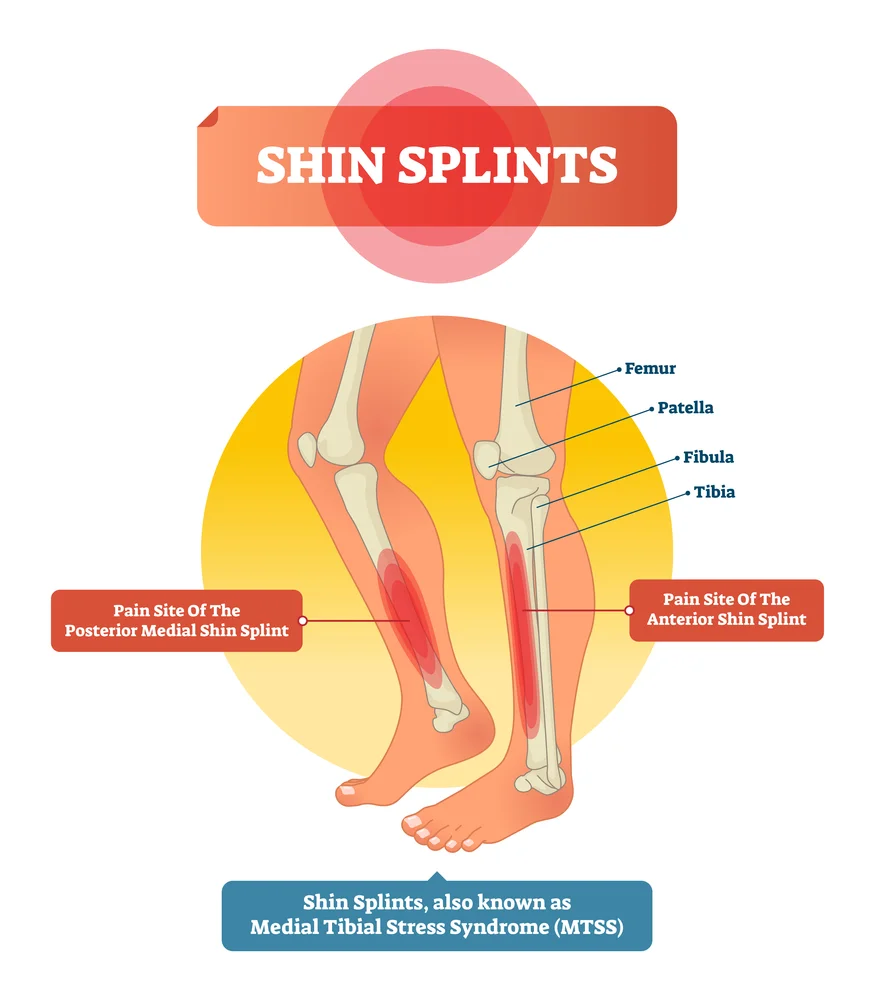
From an anatomical perspective, shin splints are a condition where there is pain, tenderness, and sometimes swelling along the middle, inside of the tibia (shin) bone. While the cause is debated as to whether this pain comes from a muscle and tendon response to doing too much too soon, the tibia bones inability to handle the stress and pounding from running, or damage to the connective tissue that wraps and supports all of these structures in the lower leg and foot.
The hallmark sign of Shin Splints is the extreme tenderness along the inside of the shin that seems to improve as a runner warms up, but begins to worsen, last longer, and eventually prevent running as time passes without care. From this, this condition is more aptly named Medial Tibial Stress Syndrome.
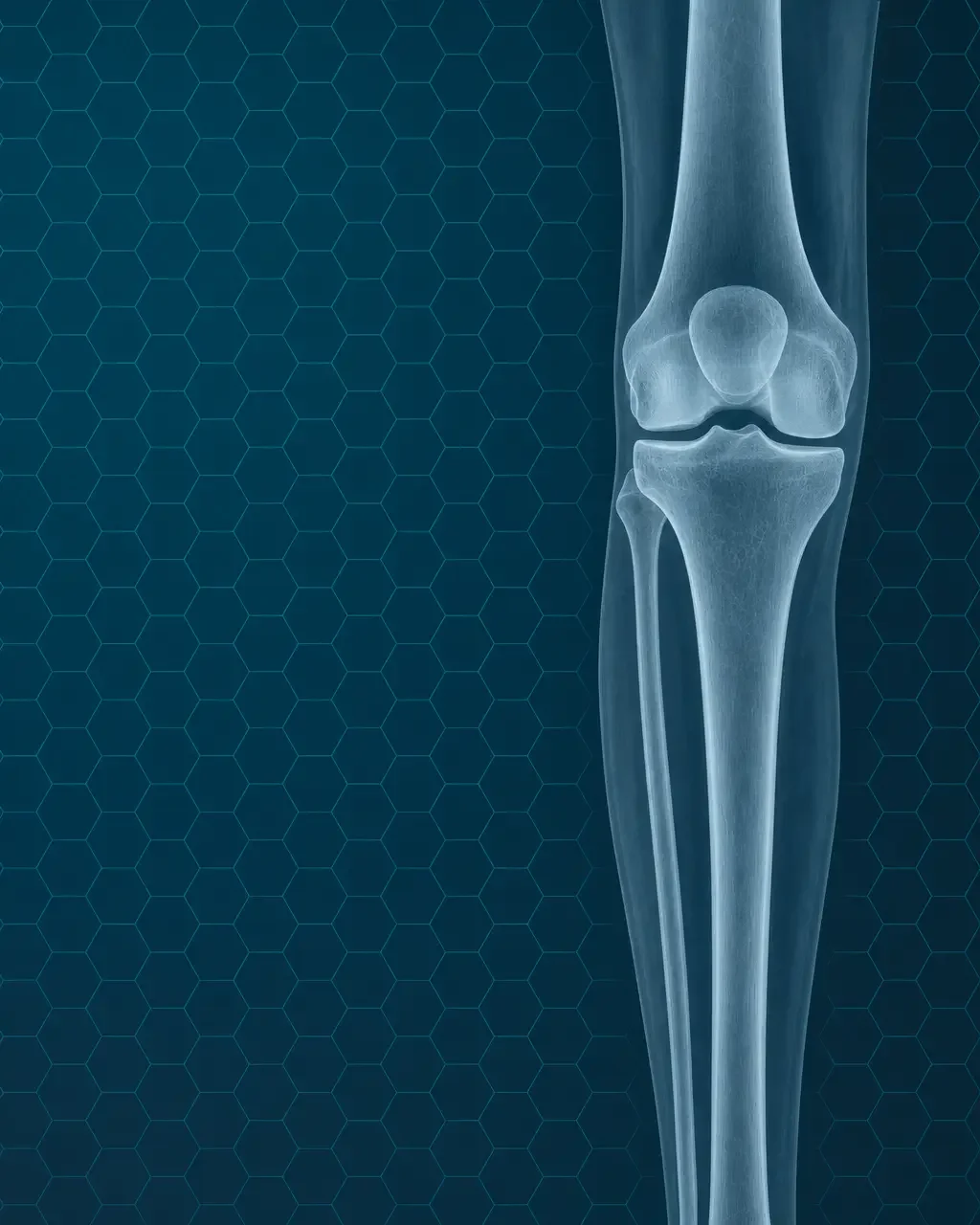
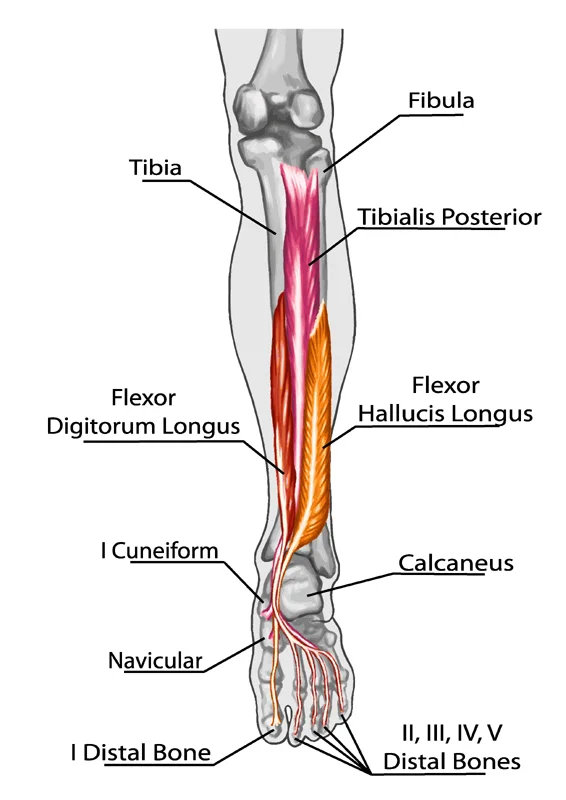
Before we discuss why this condition plagues runners, and what we in the medical community think is actually happening, let’s look at the important anatomy involved.
WHY RUNNERS & WHAT FACTORS LEAD TO SHIN SPLINTS
Running injury statistics are horrifying, with studies estimating that anywhere from 40-80% of runners experience an injury EVERY YEAR. I am not going to bother trying to track down the actual number because it changes montlhy as new research comes out, but the fact is that as runners, we run a high risk of injury. From that, it is estimated that 1 in 5 are dealing with shin splints. Since this is such great news, let’s look at some reasons why this injury is so common and who could be at higher risk.
New Runners - If you are truly new to running, Shin Splints are almost a right of passage. In the process of your body adapting to this new stress, figuring out your form, and slowly increasing your mileage, your body will get to the point where it starts to scream…’why are you doing this to me’. As we progress through this series, you will find ways to build up your body, more specifically your legs, so that it can handle this new stress of running.
Running Biomechanics - The Tibia bone is believed to absorb 2-3x’s your body weight with each step. Take into account that the average runner has a cadence (steps per minute) of 140-180, it is no wonder we begin breaking down at the tibia.
Higher BMI/Body Weight - Looking at the last statement, if you have higher body weight, and you are new to running, forcing your tibia to withstand the pounding from running should be a slow process with ample recovery.
Training Volume - Just like new runners, if you are a veteran with a solid training base of 30-35 miles per week and you sharply bump up to 55-60 miles per week, you are essentially treating your body like a newbie with a very unfamiliar stress.
SIMILAR PROBLEM: Too Much Too Soon & Classic Overtraining
Form - Forefoot, Midfoot, or Heel Striker, you efficiency within that form and allowance for adaptation to stress is what either prevents or causes injury. I have seen all forms present with shin splints, and it is usually a combination of the above causes.
WHAT ACTUALLY CAUSES SHIN SPLINTS
While the cause of Medial Tibial Stress Syndrome is still debated, with research naming a different cause. It is likely a combination of the factors we are going to cover. This is why, if you have been suffering from shin splints for a month or so and are just trying to run through them, it is important to get an evaluation, a structured plan around your goals, and some treatment to get you over the hump.
Weak Ankle Dorsiflexion - Loss of eccentric control.
One issue that many believe to be a cause, or at least a contributor to shin splints is poor control of the anterior leg muscles, or weakness of the Tibialis Anterior muscle. This one stands out in newer runners because it is responsible for the slapping sound one makes when their foot hits the ground. This comes from weak eccentric control of the muscle, or the ability to slowly let it down to the ground. Our bodies are amazing, so when one area fails, another area takes the load…
Poor Pronation Control & Tight Posterior Tibialis Muscle
Lets first start by reminding everyone that pronation is a normal part of the gait cycle, but poor control of the speed of pronation can cause problems. If we have excessive tightness through the posterior tibialis muscles, either due to overuse or poor adaptation to load, it is unable to respond well enough when the foot hits the ground, causing the foot to crash in during pronation. If this is the case, we see each step pulling on this already tightened muscle, as well as the facia that wraps it and attached to the inside of the tibia bone (that spot where you are tender), inflaming the area, damaging the muscle, and leading to poor mechanics while running.
Bowing of the Tibia Bone
To further the case of this mid-shin bone pain where the posterior tibial muscle lies, we have data that shows the Tibia bone actually bowing during running. While our bodies are adaptive and resilient, we believe this bowing to be minimal, undetectable without fancy equipment, but a natural part of our body handling the forces the road gives back with each step. Where this comes in to play is with a young or new-to-running runner who decides to run through their pain. If this goes on long enough, and the runner overtrains, this can lead to a stress fracture injury.
Over Training - Too Much Too Soon
This is probably the most common reason runners experience shin splints, and most other injuries for that matter. Over-training is the common factor of the 3 potential causes we mentioned above. As a new runner or an experienced one looking to increase mileage, a plan that not only includes a structured running plan, but strength training, cross training, and rest must be considered.
SUMMARY
Shins Splints are most known to cause pain along the inner edge of the tibia bone that is tender to the touch. Swelling may or may not be present.
While many causes are debated, one thing holds true. Whether you are a new runner or a veteran. Doing too much too soon will likely lead injury.
Runners are most at risk due to the repetitive nature of running. Add in volume changes, the pounding of the road, lack of self-care and warming up before each run..it all adds up.
Dr. Reheisse is a Board Certified Chiropractic Sports Physician practicing in Cottonwood Heights Utah. Revive Sport & Spine provides evidence-supported chiropractic care and conservative sports injury management.

New Year - New Goals: Running To Better Health
Improved health tops nearly every new year's resolution list ever made, 2019 will be no different. From this, running comes to the forefront of our ‘get in shape’ plan because of its ease (almost everyone can shuffle one foot in front of the other, not saying it is easy) and relatively low cost (a decent pair of shoes and some running gear is all you need). While this plan seems fool-proof, there is a reason 60%+ of the people we see in our clinic are runners, new and old.
Improved health tops nearly every new year's resolution list ever made, 2019 will be no different. From this, running comes to the forefront of our ‘get in shape’ plan because of its ease (almost everyone can shuffle one foot in front of the other, not saying it is easy) and relatively low cost (a decent pair of shoes and some running gear is all you need). While this plan seems fool-proof, there is a reason 60%+ of the people we see in our clinic are runners, new and old.

While running seems easy to do, there are many things to consider. Are you a runner? Have you ran since high school, or ever? Did you know your body type matters? Can you cover 1-2 miles and not be in misery the next day? Do you have good shoes? Do you have a partner to run with, accountability is essential for follow-through? You didn’t think about any of that, did you? While we will have more running and running-related injury articles to share with you in 2019, let’s start with some current research (Nerd-Alert).
Who:
In this study, the authors gave 914 novice runners a GPS watch and tracked them over a year to study their habits and direction of their running habits. The group was divided into 3 groups based on their BMI (Normal, Overweight, & Obese) to help determine if there were any differences and similarities in their training selection.
What They Found:
The first interesting finding was that in this self-guided exercise program, all categories selected similar training doses. The authors suggest that this may explain the higher injury risk among overweight and obese runners compared with normal-weight runners.
Normal weight runners ran faster and farther than their overweight and obese counterparts. This is anticipated as these are all novice runners, but the perceived effort was not established and could be an interesting metric to develop.
Suggestions:
Starting a new exercise program is exciting, but one must also be willing to understand and see that they are at a starting point. Novice runners are at high risk of injury if they start too fast, or do too much too soon. An initial dose of high volume can lead to an injury that causes you to become inactive, losing any benefits you sought to gain in the first place.
BMI is important to consider. Have a higher BMI does not mean you can or should not run, it means that the programming must be different. Training has to do with ‘load,’ and by that, we mean that if you are 200 lbs, it is a bit more challenging and harder on your body to run 3 miles than for someone who is 150 lbs. This changes as we continue training and adapt, but at first, we must take things slow.
Any activity is better than a sedentary lifestyle! Remember to take things slowly. Your body will be sore, but that is to be expected. If you have pain, or your soreness lasts longer than a few days after exercise, seek professional guidance on preparing your body and running programming.
Who:
The authors of this study followed 447 runners over a 24-week running program. Their goal was to determine the risk associated with high-intensity running plans and high-volume running plans.
Before the study began, they hypothesized that runners on the high-intensity program would have higher rates of Achilles tendinopathy, calf injuries, and plantar fasciitis while runners on the high-volume program would experience more runners knee, iliotibial band syndrome, and patellar tendinopathy.
What they found:
Over the 24-week training program, 80 runners sustained an injury. However, the authors found no difference in the risk of injuries related to training volume or intensity.
Suggestions:
The others suggest this discrepancy between these results and other related studies and running-related injury beliefs are related to the periodization of the running schedules, the scheduled running intensities, and the categorizations of injuries.
Runners or all shape, sizes, and abilities will eventually run into injury. Prevention by adhering to a solid warm-up routine, frequent attention to weaknesses and immobilities, while also modifying a training plan to one's abilities can help prevent injury.
When beginning a new running plan, or increasing your volume or intensity, it is suggested to do one at a time. Listen to your body and take time off as needed.
If you are taking up running again, or for the first time, and you have questions, we are here to help. Running injuries are common. You often do not have to stop running, just a rework and refocus of your training plan. Train Hard & Train Smart.
Happy & Healthy 2019!
Dr. Reheisse is a Board Certified Chiropractic Sports Physician practicing in Cottonwood Heights Utah. Revive Sport & Spine provides evidence-supported chiropractic care and conservative sports injury management.

Iliotibial Band Syndrome: Anatomy & Symptoms Of The Most Common Running Injury
You are out on another long run. It is a mid-Saturday morning, the weather is a cool 50 degrees, clear skies, and your focus is on the audiobook or podcast playing through your headphones. All of a sudden, out of nowhere, you get this sharp, STABBING, pain on the outside of your knee. Where did this come from? Did you do something wrong? What the heck is happening?
If this is your first time dealing with Iliotibial band syndrome, or you are remembering your first experience with it right now, the feeling is all too real. IT Band issues are a frequent occurrence for runners of all abilities, one of the most common conditions we relieve in our office and feel so prevalent that it is almost a ‘right of passage’ of sorts for new runners.
You are out on another long run. It is a mid-Saturday morning, the weather is a cool 50 degrees, clear skies, and your focus is on the audiobook or podcast playing through your headphones. All of a sudden, out of nowhere, you get this sharp, STABBING, pain on the outside of your knee. Where did this come from? Did you do something wrong? What the heck is happening?

If this is your first time dealing with Iliotibial band syndrome, or you are remembering your first experience with it right now, the feeling is all too real. IT Band issues are a frequent occurrence for runners of all abilities, one of the most common conditions we relieve in our office and feel so prevalent that it is almost a ‘right of passage’ of sorts for new runners.
In this series, we are going to dive into the details of IT band issues, what causes this dreaded running injury, what you can do about it when it happens to you (It Will!), and when you need to seek care to help get your training back on track. I can tell you from experience, as a past sufferer of IT band issues myself, it can be stubborn, frustrating, and damaging to your confidence as a runner…but it does not have to be.
I tell patients daily that IT Band syndrome is a relatively easy condition to treat…but it requires time, effort, and a change of routine. We start here today by understanding what it is and move through this series to self-treatment and prevention.
WHAT MAKES UP THE IT BAND…
… and why you can’t just stretch the Iliotibial band and make it better.
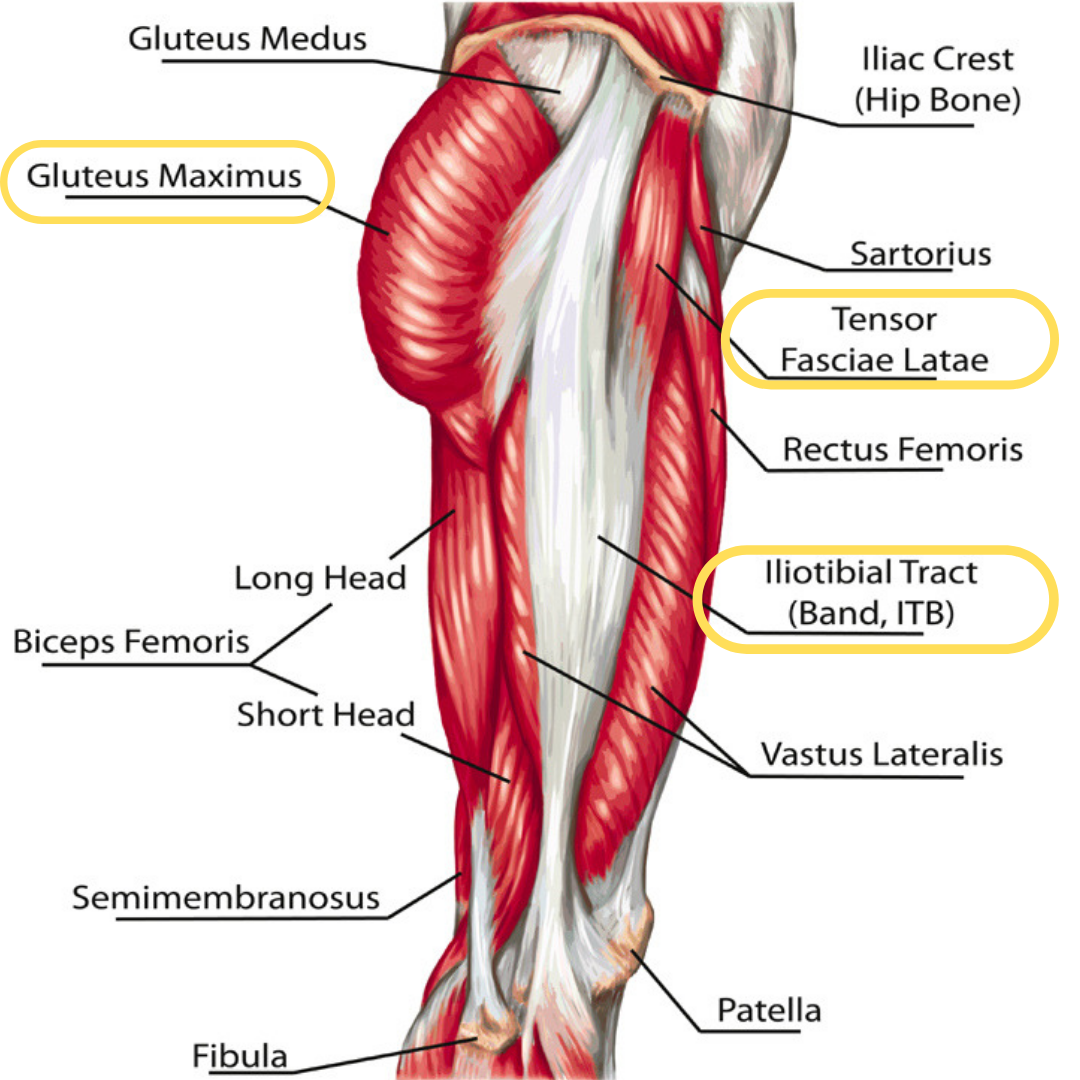
IMPORTANT ANATOMY:
Insertion Points: Iliac Crest, Knee
Muscles Involved & To Know:
Tensor Fascia Latae
Gluteus Maximus
Gluteus Medius
The Iliotibial tract runs from the hip (iliac crest) to the knee with insertion on the tibia at Gerdy’s Tubercle (trivia!) and is believed to also span some fibers to the outside of the kneecap and head of the fibula. The IT band itself acts as a stabilizer of the lateral knee while also extending, abduct, and laterally rotate the hip when the associated muscles are functioning properly.
If you notice, the band itself is fibrous, meaning…
it is not designed to stretch.
Attention must be given to the muscles that make up and act on the IT band. Those would be the Tensor Fascia Latae (TFL) and the Gluteus Maximus (G. Max). If attention is not given to these essential muscles for running that are involved in stability, pelvic balance, and propulsion, they will slowly tighten up, eventually leading to a - multiple month long - process to rid yourself of the stabbing knee pain it can cause. We will discuss the biomechanics and how to address these muscles later in this series, but this is the basics that you must know to help relieve Iliotibial band pain while running. Focus on the muscles…not the band and the site of pain.
SIGNS, SYMPTOMS, & PREVALENCE
As described at the beginning of this article, Iliotibial Band Syndrome has a very distinct presentation of pain and discomfort. While the hip tightness is often not recognized, appreciated, or correlated until after we exam someone and describe the nature of their injury, the pain at the side of the knee is unmistakable. So that we have a more tangible understanding of this pain, here is a more succinct description.
sharp or burning pain at the lateral joint line of the knee.
How common is Iliotibial Band Syndrome? With injury prevalence in runners nearly 50% (Studies suggest 25-65%), IT Band Syndrome is the most common lateral knee injury.
IT Band Syndrome makes up nearly 15% off all running injuries.
Studies suggest it is slightly more common in male runners, new runners, and higher volume runners.
Clinical experience suggests it is one of the most common injuries runners present to a sports chiropractic office with.
Now that we have some understanding of the anatomy and prevalence of Iliotibial Band Syndrome in runners, we will progress our conversation to risks, common causes, and the biomechanics associated with ITBS.
Dr. Reheisse is a Board Certified Chiropractic Sports Physician practicing in Cottonwood Heights Utah. Revive Sport & Spine provides evidence-supported chiropractic care and conservative sports injury management.

Resolve Low Back Issues Part 7: What Happens When You Need To Seek Care?
Our intention with this series on Low Back Pain has been to inform and empower you, or your loved ones, to take action and realize that movement can help, as well as, prevent low back pain. That your low back pain is not a life sentence.
Care & Rehab For Low Back Pain
Supporting The Greater Salt Lake Valley. Helping You Get Back To The Activities You Enjoy.
Our intention with this series on Low Back Pain has been to inform and empower you, or your loved ones, to take action and realize that movement can help, as well as, prevent low back pain. That your low back pain is not a life sentence.
While all of this information is useful and should be utilized before, during, and after a Back Pain episode, the reality is that some people will need to seek care.
You have had a front-row seat to one pillar of our care, the education and exercise component. When seeking care for low back pain, putting your faith solely in one person, and relying on them for everything is not advised and will severely hinder your progress.
YOU (YES, YOU) HAVE TO PUT IN THE WORK, TIME, & EFFORT!
As a Sports Chiropractor that treats low back pain every single day…we see it time and again in our patients… If home care is not adhered to and a person does not take their situation seriously and put in the effort, back pain will take forever (or it seems that way) to resolve.
Today we are going to give you another up-close look at our care process, this time what we actually do here in the office. Our goals are to (1) Determine the cause of your pain/injury (2) Provide care in the office that helps you toward your goal of running, golfing, sleeping, moving again…pain-free, and (3) Give you the tools and education to help yourself.
We structure our care around 3 pillars: Soft Tissue, Joint Motion, Exercise. We have exhausted our opinion and writing on exercise, please refer to parts 1-6 for direction. Now, lets briefly take a look at what care looks like inside the office.
SOFT TISSUE CARE
JOINT MANIPULATION
Dr. Reheisse is a Board Certified Chiropractic Sports Physician practicing in Cottonwood Heights Utah. Revive Sport & Spine provides evidence-supported chiropractic care and conservative sports injury management.

Resolve Low Back Issues Part 6: Self-Care - What You Can Do For Low Back Pain
Over the last 5 weeks, we have discussed everything from what low back pain is, most common causes, some of the most common myths associated with low back pain, and when to consider imaging studies (x-ray, MRI, CT) due to red flags that lead us to something more severe being the cause. We even covered a few tips to help when you find yourself traveling for work or vacation.
We have been building up toward the actual care of low back pain but wanted to fully educate on how common low back pain is, what we know about low back pain at this time, and help you focus on life outside of back pain.
Low Back Pain Self-Care
Over the last 5 weeks, we have discussed everything from what low back pain is, most common causes, some of the most common myths associated with low back pain, and when to consider imaging studies (x-ray, MRI, CT) due to red flags that lead us to something more severe being the cause. We even covered a few tips to help when you find yourself traveling for work or vacation.
We have been building up toward the actual care of low back pain but wanted to fully educate on how common low back pain is, what we know about low back pain at this time, and help you focus on life outside of back pain.
Today, we are going to do just that.
When we look to decrease disability from low back pain and encourage and support patients back to an active lifestyle, this is done in two ways. EDUCATION & EXERCISE. We have already discussed the education component. Now it is time for exercise. Below are 5 ways to help manage and prevent your low back pain with exercise and stretching routines that can be done at home, the gym, or even at the office.
Side Bar -> If anyone gives you a hard time, or tosses a laugh in your way for stretching at the office, I will leave it up to you to either invite them to join (because they need to do this too), or, wait until they start having an issue with low back pain and then pass them our card! Seriously though, invite your co-works to join in, make it an office party, it will be fun.
Fix Your Low Back With These 5 Easy Exercises & Stretches You Can Do At Home or Work.
STEP 1: Get Out Of Bed With Our Morning Routine.
After a good night’s sleep, it is common for our muscles to want to remain in bed. Because of this, early morning activities can challenge our bodies more than they are ready to handle, resulting in a nice low back strain injury. If you are already dealing with low back pain, you know that morning stiffness can prevent you from even rolling over, not to mention actually get up out of said bed.
STEP 2: Desk Sitters - Get Up & Move
While things are improving, the seats we subject ourselves too in our cars, on the train, and at the office are just comfortable enough to keep you seated for an extensive period of time, but provide little support to keep you from tightening up in the process. Start this NOW -> Set an alarm on your phone that goes off every 1-2 hours. Walk around the office, hand-deliver a message, and then take 30 seconds and perform these stretches.
STEP 3: Pre-Workout Hip Mobility
We are going to assume you have a daily routine of some exercise? If you do not, reset, and start adding some exercise to your life, no other method is as impactful on helping your low back issues. Once you get to the gym, or home if you prefer, go through a GOOD HIP MOBILITY routine. We know that the more we improve the mobility of our hips, the less our low back has to work…overwork.
STEP 4: Post-Workout Core Strength
The same goes for core strength as hip mobility. The stronger our core, the less our low backs have to work. Now…I don’t mean getting down on the floor and performing a half-hearted set or some sorry excuse for crunch/sit-up type exercise. We are talking functional here. Planks, Side Planks, Plank Rolls, Heavy Farmer and Suitcase Walks, as well as The Big 3.
STEP 5: Strength For Life
Most people who have dealt with low back pain have since, and forever will, shy away from true strength movements. But let me just plug that as humans, you should be able to squat as well as pick something heavy off the ground without fear of hurting yourself. As you work on hip mobility and core strength, you have to start working in squats and dead-lifts. Start with these modifications and work on control and endurance.
Exercise is considered the best medicine for low back pain. While this is true and I strongly support this. Our actual goal with care is to get our patients back to these activities. But often, patients present in enough pain that they are unable to run, ski, bike, weight lift, etc. With that said, most can start with basic stretching and mobility until the pain is relieved. From there, exercise can prevent flair-ups, or at least decrease their intensity and length of the episode. Either way, low back pain has to have a component that includes YOU doing some, if not most, of the work.

Next week we will look at some of the traditional, as well as, new developments in conservative care low back pain. Until then, and if you are craving more reading, check out our ‘12 Ways..’ Tips guide to further help your low back pain.
Dr. Reheisse is a Board Certified Chiropractic Sports Physician practicing in Cottonwood Heights Utah. Revive Sport & Spine provides evidence-supported chiropractic care and conservative sports injury management.

Resolve Low Back Issues Part 4: Most Common Myths Of Low Back Pain
Few musculoskeletal conditions have a cult-like following of myths as Low Back Pain, many of which have been said by various healthcare providers across all specialties. To help clear the air, let's take a look at the 5 most common misunderstandings and myths that we encounter in our chiropractic clinic that could actually make your low back pain worse.
Low Back Pain Myths
Few musculoskeletal conditions have a cult-like following of myths as Low Back Pain, many of which have been said by various healthcare providers across all specialties. To help clear the air, let's take a look at the 5 most common misunderstandings and myths that we encounter in our chiropractic clinic that could actually make your low back pain worse.
Before we get started…
These myths and misunderstandings are not aimed at making low back pain seem 'made-up,’ it is a very real and challenging condition. These myths are just folklore passed down from old, unsubstantiated in the research, ways of thinking. Our truth is that, if you believe one thing and that makes you feel that your low back is wrecked for life, a long road of pain is what you are in store for. We call this fear-avoidance and catastrophizing, the medicalization of a condition. We will touch more on this when we cover imaging next week. But a big part of recovering from low back pain is believing that you can get better. It may sound silly, but no more ridiculous than believing these myths below!
NUMBER 1: Your back pain is from a misalignment, bone out of place, or a ‘subluxation.’

We don’t practice this way any longer, stop using explanations from this era.
These are common descriptions patients and doctors alike will give when describing their back pain. The most common being...you threw your back out, and it is now misaligned...commonly spoken by chiropractors of a generation ago or current doctors, chiropractors, and physical therapists that have not caught up with current research. The truth to this is that your spine is a dynamic structure designed to move, what we ACTUALLY find is that the pain you are feeling is often associated with immobility, or areas of the spine that should be moving, but due to tight muscles and previous injury, may not be moving well or correctly anymore. Spinal manipulation or an ‘adjustment’ is designed to restore normal motion to these restricted areas.
A bone did not shift out of place and therefore needs to be put back in! That’s not how it works.
NUMBER 2: Arthritis is the root of all evil!

Arthritis is like wrinkles on your face…lets just keep it nice and say they are signs of wisdom. Truthfully, if you live and play hard and long enough, we will all experience some degree of degeneration. However, and please understand this, it is a natural process and does not necessarily equate to pain! When conditions present that are more challenging, using arthritis as the ‘fall guy’ is the easy way out for a provider and an often acceptable answer for the patient.
NUMBER 3: “But…I have scoliosis and a short leg” that is the cause of my back pain.

Just like arthritis, scoliosis and an actual short leg (1cm or shorter than the other) are comfortable areas to place blame when someone presents with back pain. Both can absolutely lead to dysfunction, and if unaddressed, pain and discomfort. To a certain degree, uneven leg lengths and spinal rotation/curvature are normal variants, meaning most people have these at a mild level and are unlikely to be a pain generator. For most (not all) look to place the blame elsewhere.
NUMBER 4: Rest is what I need to recover, right?

The days of ‘take 2 of these, rest, and call me in the morning’ are long gone. You likely have a relative who spent a good amount of their life with back pain that limited some or all of their activity. When you see a case like this or someone who is much too young to be experiencing recurrent back pain, it may seem like the right thing to do is rest up for a while. Fortunately, we now have stacks of research that supports the fact that bed rest is the worst (top 3 at least) idea when it comes to low back pain. The new adage is ‘Movement is Medicine.’ When someone presents to our office, we are not only just trying to relieve pain, but to relieve pain SO THEY CAN GET OUT AND MOVE. Even walking, WALKING, has been shown to reduce low back discomfort and be a great tool to prevent future occurrences.
NUMBER 5: Slap a brace on it & it will be fine.

Brace low back pain long term & you should join the circus with that thinking.
This is excellent advice if you are looking to weaken your core muscles completely. Did you know that powerlifters use the belt to their advantage to complete amazing feats of strength not to brace their low back, but to give their stomach something to press in to, creating intraabdominal pressure (think bracing your stomach if someone was to punch you) that stabilizes the spine from the inside? Our bodies are amazing, it has its own ‘weight belt’ built-in. Using straps, belts, or any other contraption like this for extended periods of time tells your body that you do not need it to do its job anymore. This core weakness and inability to naturally brace yourself through muscle control —> LEADS TO CHRONIC LOW BACK PAIN.
In summary, things change. Our treatment methods and your outlook on your condition must change. Every single one of these five myths is still spouted today in an office somewhere near you. Knowing the validity of that is often more important than the care you receive. While in certain circumstances, these can be valid reasons for low back pain. For most, especially those who come through our Cottonwood Heights, Utah Chiropractic and Rehabilitation clinic, we want a better answer. One that helps address and correct the dysfunction. One that promotes confidence and encourages the patient to try harder, that they can feel better and live a life they enjoy.
Next week, in part 5 of our Fix Your Low Back Series, we are going to discuss red flags, when you need imagining, and why you shouldn’t always rest your diagnosis and pain on those images.
Dr. Reheisse is a Board Certified Chiropractic Sports Physician practicing in Cottonwood Heights Utah. Revive Sport & Spine provides evidence-supported chiropractic care and conservative sports injury management.

Resolve Low Back Issues Part 1: What Is Low Back Pain?
Low back issues are one of the most common causes of disability worldwide, responsible for BILLIONS of dollars spent on health care and lost time at work annually. If you have ever experienced low back pain, you know that it can not only impact your hobbies and ability to remain active, but it can make even the most common of daily activities challenging. Our goal with this series is to help you better understand the cause of your low back pain, provide real solutions to help you manage it, and show you that there are many care options out there, some you can do at home, that allow you to remain free of prescription drugs and surgery.
Back pain is not a one-size-fits-all problem, there are most commons, but your approach to care needs to be as individual as you. Without a proper and thorough assessment, it is hard to say which approach will work best for you, but through the experience of helping hundreds of people alleviate their low back pain every day, we can focus on a few of the most common causes and their proven strategies for relief.
What Is Low Back Pain?
Low back issues are one of the most common causes of disability worldwide, responsible for BILLIONS of dollars spent on health care and lost time at work annually. If you have ever experienced low back pain, you know that it can not only impact your hobbies and ability to remain active, but it can make even the most common of daily activities challenging. Our goal with this series is to help you better understand the cause of your low back pain, provide real solutions to help you manage it, and show you that there are many care options out there, some you can do at home, that allow you to remain free of prescription drugs and surgery.
Back pain is not a one-size-fits-all problem, there are most commons, but your approach to care needs to be as individual as you. Without a proper and thorough assessment, it is hard to say which approach will work best for you, but through the experience of helping hundreds of people alleviate their low back pain every day, we can focus on a few of the most common causes and their proven strategies for relief.
HOW COMMON IS LOW BACK PAIN?
When we talk about low back pain and its prevalence, you are more like to experience low back pain multiple times in your life than to never experience it at all. That being said, the presentation can vary from stabbing, shooting, and radiating type pain to a more dull, achy, and feeling of tightness. However you choose to describe this feeling, the trust is that it can and will disrupt your sleep, daily routines, and your desired recreational activities. There is good news at the end of this rope, and this is that the majority of low back pain sufferers have pain related to posture, overtraining, muscle tightness and is usually our body’s protective response to something it does not like, meaning it is treatable and preventable!
To lay some foundation for our low back pain discussion, here are a few current statistics:
Low Back Pain is the leading cause of disability worldwide, costing nearly $100 Billion in heatlhcare cost and lost wages.
It is estimated that 80% of people will expereience back pain during their life with over 50% having an episode this year.
Over 90% of low back pain complaints are mechanical in nature and do NOT require drugs or surgery.
Of those who have back surgery, around 27% will require another surgery within 5 years.
It is estimated that 60-75% of back pain is preventable through exercise, education, and proper work ergonomics.
WHAT CAUSES LOW BACK PAIN?
Back pain, although extremely common, is a somewhat complicated complaint where one very important thing must be understood before we move forward...
…back pain is a SYMPTOM, not a diagnosis.
Back pain can be debilitating, but the real goal here is to understand the cause of your back pain so that we can determine what factors need to be modified in your life to prevent future episodes.
To look at this through a simple analogy, let’s say you go out to your car tomorrow and it doesn’t start. Now, if you called your spouse, friend, or mechanic, you would tell them your car won’t start (I have back pain), but the real question is WHY doesn’t your car start? It could be from a dead battery, empty gas tank, or something more severe and deep within the engine. Regardless, your car still will not start. Using this analogy, would you treat each of the above-mentioned problems the same? No! Now, does it make sense to take the same approach when treating low back pain?
Looking at back pain, we typically break it down into 3 categories: Functional, Structural, and Pathological.
Functional: Simply put, how you move, or don’t move at all, is causing repeated stress and now you are pain sensitive, stiff, and infrequent or constant pain. This is the most common group. Letting a condition in this category go unaddressed too long can cause it to spill over into our structural category.
Structural: Structural conditions include the things you can see on x-rays and MRI’s. This is the category that includes arthritis (we all get it, you’re not special), disc bulges and disc herniations. These can absolutely cause pain but are usually the result of some long term dysfunction. NOTE: As we will discuss later, just because something shows up on an x-ray or MRI, does not mean it is the cause of your pain!
Pathological: This is the least common of the group, making up about 1-1.4% of back pain complaints. This is often the result of bowel diseases, kidney stones, long term unhealthy habits, and cancer. These are very rare and should not get your attention at first. Dr. Google will lead you this way but he is very deceptive!
These groups interact with each other frequently. For example, let’s say you sit at a desk 8 hours each and every day of the week. From here, you like to lift weights. It has been shown that repeatedly lifting heavy objects with a rounded spine (functional), can lead to disc bulges (structural).
IMPORTANT ANATOMICAL FEATURES OF THE LOW BACK
When we look at the structures of the low back, it is easy to get lost in what all is there. Once we take into account how the core and hip muscles interact and support the low back, it can get pretty complicated.

Most are familiar with the vertebrae, and even more with the disc between each vertebrae. Each of these form a pseudo-joint, and along with the pillars of facet joints down each side, we have the vertebral collumn. We know that muscles move and stabilize joints and restriction, tightness, or a strain/sprain type injury to these tissue can cause a cycle of pain, one caused by the other, and so on.

Looking at the muscles, there are too many to mention for our purposes here, but as mentioned above, when looking at low back pain, you must include the core and hip musculature in the conversation and not just the commonly blamed errector spinae and multifidi muscles of the low back. Honestly, there is so much more to low back pain than this, but to stay on track and address the most commons, understanding where the facet joints are, how the hip muscles and core muscles support the low back complex will suffice for our lesson.
LET’S REVIEW WHAT WE LEARNED HERE IN PART 1:
Low Back Pain is one of the most common reasons a person presents to a doctors office and results in over $100 Billion in healthcare costs and lost work time.
Of all the structurs associated with the low back, we can break most complaints down into 3 categories: Structural, Functional, Pathological.
Low Back Pain is NOT a diagnosis, it is a SYMPTOM!
Not that we have the basics down, look out for part 2 of our Low Back Pain series where we will cover the most common causes and basic self-treatment options. -> Part 2 <-
Dr. Reheisse is a Board Certified Chiropractic Sports Physician practicing in Cottonwood Heights Utah. Revive Sport & Spine provides evidence-supported chiropractic care and conservative sports injury management.

Runner's Knee Part 2: Hip & Ankle Mobility - How It Relates To Patellofemoral Pain Syndrome
In part 1 of our runner’s knee series, we discussed the specific anatomy involved, how and why we experience pain over/in the front of the knee, and most importantly, how running, and specifically downhill running, can hasten your onset of patellofemoral pain syndrome. ->Read Part 1 Here <-
Today, in part 2, we are going to move away from the knee and look at the friendly joints above and below. As we know, and you will soon find out, the hip and the ankle are in control of the knee and more times than not, pain at the knee is caused by faulty mechanics, immobility, or strength and stability deficiencies at either or both of these joints. Read on!
In part 1 of our runner’s knee series, we discussed the specific anatomy involved, how and why we experience pain over/in the front of the knee, and most importantly, how running, and specifically downhill running, can hasten the onset of patellofemoral pain syndrome. ->Read Part 1 Here <-
Today, in part 2, we are going to move away from the knee and look at the friendly joints above and below. As we know, and you will soon find out, the hip and the ankle are in control of the knee, and more often than not, pain at the knee is caused by faulty mechanics, immobility, or strength and stability deficiencies at either or both of these joints. Read on!
HIP FUNCTION IN RUNNING AND ITS RELATION TO KNEE PAIN
So that we have a starting point, we are going to travel from the hip down. Mainly because it is more commonly the culprit of running-associated knee pain (my own clinical experience), but also because it is the bigger joint with more opportunity for complications.
To help explain how the hip acts on the knee, I commonly tell patients in the clinic that we have no ‘knee muscle’, but that everything controlling the knee comes from the hip. While this is not exactly true, we have some very important muscles, like the VMO and popliteus, that act strongly on the knee without originating from the hip. Hopefully, you can read through that and see my point here. Control at the knee is primarily governed by the hip.
When we encounter a runner with patellofemoral pain, we will ‘treat’ the knee… but the majority of our work is spent on improving hip mobility, strength, and stability. We find that issues here can lead to compensations, deficiencies, and imbalances that contribute to Runner’s Knee.
IT band tightness pulls on the patella causing it to track laterally, or to the outside.
Hip tightness can cause an anterior pelvic stance. This can inhibit and tighten the hamstrings causing an altered gait that is ‘quad heavy’. This tilt and tightening can lead to altered mechanics at the knee and also lead to patellofemoral pain.
Hip drop due to a weakness of the glute muscles can lead to what we are now calling the Miserable Malalignment Syndrome.
Let's talk about that last one for a minute as this is becoming more and more common in running associated knee pain. Miserable Malalignment Syndrome is the name now given to the cascading breakdown when the hip and ankle fail. Essentially, when our foot is planted, the glute medius muscle of the foot planted holds our pelvis level. When this weakens, the hip drops, causing the other side to respond. This response causes an inward rotation of the femur bone, an outward rotation of the tibia (shin bone) in an attempt to compensate, and lastly, a turning out of the foot resulting in a crashing in of the inside of the foot.
Guess which joint is in the middle taking all of that rotation torque?
I explain this in the video and picture below. Now, this condition got its name, not necessarily for runners, but for those who sit too much and exhibit the same pattern, but it fits here. If anything, this helps explain how important our hip mobility and strength is to the health of our knees. If you remember, as runners, we load the knee with 5-6 times our body weight with each and every step. Rotation in a joint NOT designed for rotation is destined to cause problems.
ANKLE FUNCTION IN RUNNING AND ITS RELATION TO KNEE PAIN

Now that we better understand the hip and its relation to knee pain, let's travel down the road a little to the ankle joint. Without getting into the kinematics of the ankle and the joints that make up this complex area of the body, let's just try to understand one thing...DORSIFLEXION.
Dorsiflexion is your ability to bring the top of your foot toward your shin. When we run, dorsiflexion allows us to strike the ground, react, and toe-off properly, pushing from our big and second toes. To help understand this, lets picture what poor dorsiflexion looks like. The next time you are walking around, look for someone who walks with their feet turned outward. What is usually happening here is that their hip tightness causes their posterior hip muscles (glutes, piriformis, etc.) to pull on the femur, resulting in an outward turned leg and foot. And...Unless they rode in on a horse, they are not walking with their kneecaps over their feet in this position which leads us to what we just discussed, the foot crashes inward, the kneecap points a different direction of the foot, and we now have pain. You can now imagine that there is no way this person is walking properly, meaning they are not actually toeing off correctly, but the inside of their foot, now...IMAGINE THIS PERSON RUNNING.
You may have realized that poor ankle dorsiflexion and the lack of hip mobility and stability can cause the same problem. The truth is, they tend to run together. While we will always treat any and all problems presented to us, it is my job to find the key that unlocks the whole system and more times than not, it is the hips!

TIME TO REVIEW WHAT WE LEARNED TODAY
Most of the muscular control of the knee comes from the hip. Lack of mobility and strength here can contribute to patellofemoral pain syndrome.
Lack of ankle dorsiflexion (the ability to bring the foot toward the shin) can cause outward rotation of the foot and undue rotational strain on the knee.
Issues at the hip and knee can lead to what we are now calling the Miserable Malalignment Syndrome. Essentially, when we run, our hips drop, causing an inward rotation of the femur, a counter-outward rotation of the shin bone, turning out of the foot, and caving in of the inner foot, leaving the stress on the knee.
To properly address runner’s knee, we must address these deficiencies at the hip and ankle.
Once you have digested the information we discussed in these last two articles, keep your eyes peeled for part 3 next week, as we will begin discussing what to do if you already have patellofemoral pain and when you should seek care so you can continue, or return to, training.
Dr. Reheisse is a Board-Certified Chiropractic Sports Physician practicing in Murray, Utah. Revive Sport & Spine provides evidence-supported chiropractic care and conservative sports injury management.