THOUGHTS ON:
Training, Rehabilitation,
&
Best Care Practices

Spinal Manipulation - Who Benefits Best From This Effective Treatment Option
Spinal manipulation, or the chiropractic adjustment, is the hallmark of Chiropractic Medicine, but what population of patients benefit from this safe and effective treatment option?
Spinal manipulation, the hallmark of Chiropractic Medicine….

First -> Let’s address the elephant in the room! Spinal Manipulation has been touted to help or heal everything from low back pain to the common earache and yearly influenza epidemic. While many practitioners, and patients alike, claim that a chiropractic ‘adjustment’ cured all their ills, current research does not support those claims. We are not here to call those cases out as some people honestly did find an improvement to their conditions through spinal manipulation, we just can not provide consistent results to a large number of subject to clearly understand the mechanism.
However; Low Back Pain, Neck Pain, Muscle and Joint Injuries, Strain/Sprain Injuries…we have mounds of data to support the effectiveness of manipulation and manual therapy in these cases. So much, that we can now predict who will benefit best from this type of care.
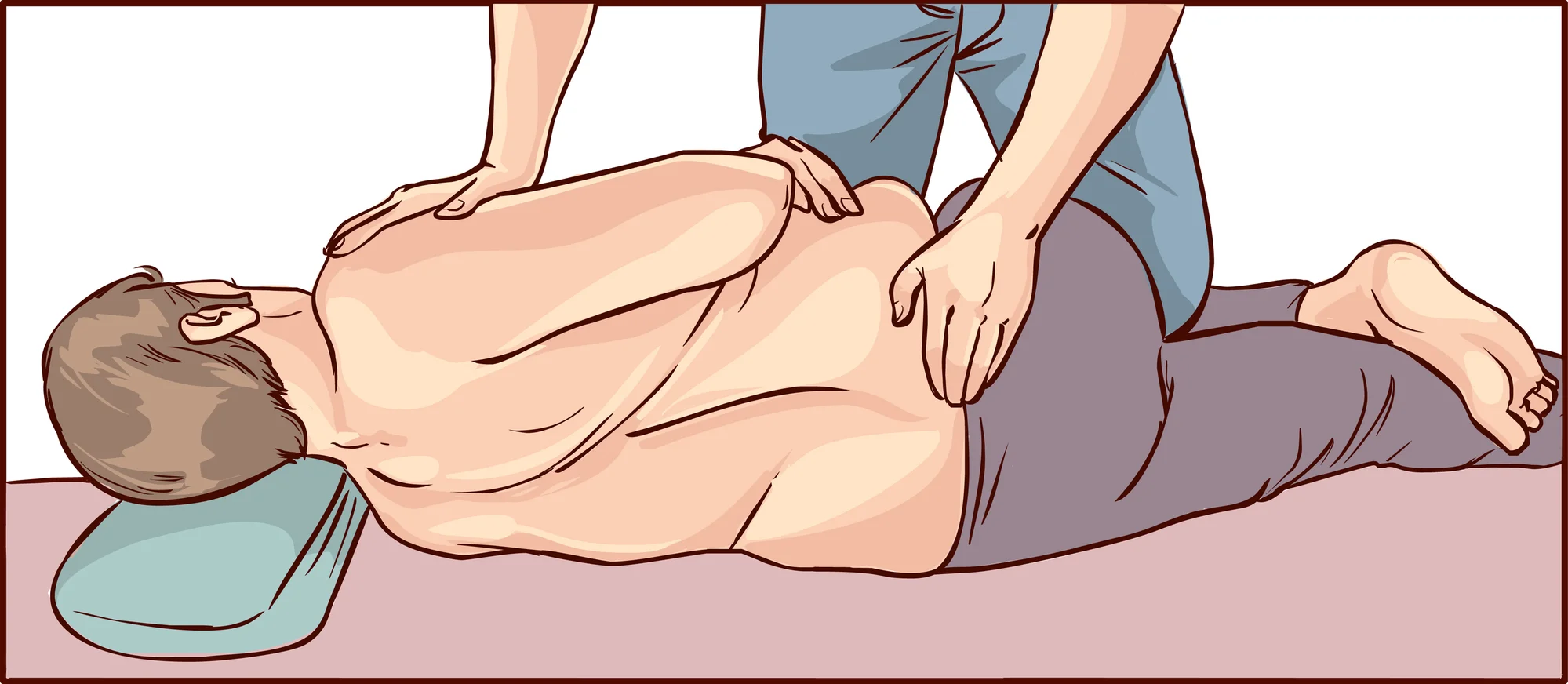
What Does Spinal Manipulation Look Like?
Before we jump into what we call ‘Clinical Prediction Rules’ regarding joint manipulation, please realize that each person is an individual, and each condition is as unique as the person who presents with it. Utilizing these rules is not the end all be all; there will be outliers. Some people have tried joint manipulation, or exercise, or dry needling, or a myriad of other therapies with little to no results. Sometimes their condition is passed this type of intervention and needs to bypass conservative care for more invasive options. Moreover, many of these patients either receive ONLY ONE therapy or had the wrong ‘concoction’ of care for their condition, or the phase of healing they were in when the therapy was used was incorrect causing poor timing to be the culprit of poor outcomes. So…if you have tried a few of these, don’t give up and completely write them off. Get a second or third option, look at it with a set of fresh eyes and try a new direction, a new order of care and see how your condition improves.
Now, back to the predictions. Below are what we consider to be the characteristics of patients who research predicts will have the best and fastest outcomes from spinal manipulation.
The Number Of Days With Your Current Low Back Complaint is LESS THAN 16 Days.
Pain & Radiation Of Symptoms (Pain, Numbness, Tingling) Does Not Go Farther Than The Knee.
Fear Avoidance Behavior Assessment. You Do Not Fear That Your Back Pain Will Last Forever and Will Not Keep You From Enjoying Life In The Future.
Through Examination, Movement Assessment, and Provider Palpation, At Least 1 Spinal Segment of the Lumbar Spine is Restricted/Hypomobile.
At Lease 1 Hip Has More Than 35 Degrees of Internal Rotation.
So What Does This Mean?
If you present to an office like ours with ACUTE LOW BACK PAIN that is RADIATING PAIN TO THE GLUTES, RESTRICTED LUMBAR SPINE ROM, and ONE HIP HAS RESTRICTED INTERNAL ROTATION ROM…
YOU ARE A GOOD CANDIDATE FOR SPINAL MANIPULATION
&
WE SHOULD ANTICIPATE GREAT RESULTS.
Two studies on spinal manipulation, utilizing these Clinical Prediction Rules found:
Patients who presented with less than 4 of the 5 above rules, had a 45% likelihood for a positive response from spinal manipulation.
Positive Response means that after 2-3 treatments with spinal manipulation, patients saw a 50% reduction in symptoms and pain.
A patient who presented WITH at least 4 of the 5 rules, increased their likelihood of a positive outcome to 95%.
Another study, utilizing a side-lying lumbar manipulation technique along with ROM exercises, found a 50% reduction in symptoms in 11 of 12 participants. The one participant who did not respond still found a reduction in symptoms, but did not reach the 50% reduction mark the study considered as a ‘positive outcome.’
In summary, Spinal Manipulation is an effective and safe tool for low back pain. But it is just that, a tool! Care that relies on only one treatment modality will only be somewhat useful to a specific, and small, population. Care that focuses on the patients' individual presentation and goals, and adapts a variety of therapies for that particular condition will typically yield the best results. If you have tried manipulation, PT, massage, dry needling, or any other therapy as a stand-alone treatment option, I invite you to give us a call to see how we can develop a better treatment plan around your personal goals.

Resources:
Cleland, JA et al. The Use of a Lumbar Spine Manipulation Technique by Physical Therapists in Patients Who Satisfy a Clinical Prediction Rule: A Case Series. JOSPT 2006.
Flynn, T et al. A Clinical Prediction Rule For Classifying Patients With Low Back Pain Who Demonstrate Short-Term Improvement With Spinal Manipulation. Spine 2002.
Childs, JD et al. A Clinical Prediction Rule To Identify Patients With Low Back Pain Most Likely To Benefit From Spinal Manipulation: A Validation Study. Annals of Internal Medicine 2004.
Dr. Reheisse is a Board Certified Chiropractic Sports Physician practicing in Cottonwood Heights Utah. Revive Sport & Spine provides evidence-supported chiropractic care and conservative sports injury management.

Sciatica Pain Relief Part 4: Treatment & Rehabilitation
As we gather to close out this series on Sciatica, talking this time on what care looks like in our office when someone presents with Sciatic Nerve pain, you will recognize some similarities from the previous Sciatica-related articles. That is because rehabilitation for Sciatica is similar to the self-care and prevention exercises we shared previously. So…if you haven’t taken a look at our Sciatica Pain Relief series parts 1-3, click the links below and check them out. Our goal is to have you work through those modules before seeking care. You will often find that spending a week on the exercises we shared, might relieve your pain, and if maintained with some frequency, may prevent future occurrences. Nevertheless, if you are here, are located in Salt Lake City and the surrounding area, we are here to help.
As we gather to close out this series on Sciatica, talking this time on what care looks like in our office when someone presents with Sciatic Nerve pain, you will recognize some similarities from the previous Sciatica-related articles. That is because rehabilitation for Sciatica is similar to the self-care and prevention exercises we shared previously. So…if you haven’t taken a look at our Sciatica Pain Relief series parts 1-3, click the links below and check them out. Our goal is to have you work through those modules before seeking care. You will often find that spending a week on the exercises we shared, might relieve your pain, and if maintained with some frequency, may prevent future occurrences. Nevertheless, if you are here, are located in Salt Lake City and the surrounding area, we are here to help.
Treatment surrounding Sciatica takes on two parts: (1) Addressing the low back, regardless if low back pain is present and (2) Addressing the posterior hip, associated musculature, and its interaction with the sciatic nerve. One of these (#2) we can affect directly and often provide immediate relief. The other (#1) can be addressed by focused and modified daily action, joint mobility, decreased muscle tension, and…TIME.
Let's start with the low hanging fruit here. We have already discussed the association of the Sciatic Nerve and the muscles of the posterior hip. When it comes to treatment, our goal is to enact a change as fast as possible. We hope that patients come in having already tried stretching rolling, and increased movement to decrease the tightness and tension of the muscles in the back of the hip. From there, our job is to change the tissue in ways most can not do themselves.
Our typical treatment here is a combination or assisted progressive stretching, active and passive myofascial release movement, and dry needling…almost always dry needling.
To help understand what these treatments look like, check out these video demonstrations. These treatments have proven extremely effective in assisting patients to recover quickly from sciatica and sciatic nerve issues.
When it comes to rehabilitation, it is essential to understand that for the majority of people, even though the sciatic nerve radiating pain down the leg may have come on suddenly, it most likely took months to get to that point, leaving us with a bit of chronic muscle tension to address. THIS TAKES TIME.
When helping patients with their home care exercise plans, we look to address two areas, (#1) The Lumbar Spine, (#2) The Posterior Hip Muscles. If your problem is primarily in the hip/thigh region, exercise and daily life modification (usually sitting less) will bring quick and lasting relief. If your problem is primarily in the lumbar spine, our goal is to keep you as mobile and active as possible while the injury heals. Again…TIME.
POSTERIOR HIP MOBILITY
NERVE FLOSSING: Sciatic Nerve
LUMBAR SPINE MOBILITY & STABILITY
Sciatica is a common complaint, with a wide variety of causes. If you worked through our Sciatica Relief Series here and are still dealing with radiating leg and low back pain, please reach out to us with questions or come in for a consultation to further discuss your condition. If we can help you, we will let you know; if we can’t, we will get you to the best provider for your case.
Dr. Reheisse is a Board Certified Chiropractic Sports Physician practicing in Cottonwood Heights Utah. Revive Sport & Spine provides evidence-supported chiropractic care and conservative sports injury management.

Sciatica Pain Relief Part 3: Self-Care & Everyday Actions That Make Sciatic Pain Worse
If you are tracking along with us on this journey of everything Sciatica, your patience and dedication is about to be rewarded. In Part 1 of our Sciatica Pain Relief series, we discussed what Sciatic Nerve pain is and the associated anatomy (always my favorite part). In Part 2 we went a little deeper with the 5 most common causes of Sciatica and touch on a few of the red flags we want to rule out as soon as possible. Having made it through those two very information-heavy articles, it is time to look at what YOU can do to improve your situation as well as some of the most common everyday actions that may be the primary cause for your Low Back and Sciatic Nerve pain.
If you are tracking along with us on this journey of everything Sciatica, your patience and dedication is about to be rewarded. In Part 1 of our Sciatica Pain Relief series, we discussed what Sciatic Nerve pain is and the associated anatomy (always my favorite part). In Part 2 we went a little deeper with the 5 most common causes of Sciatica and touch on a few of the red flags we want to rule out as soon as possible. Having made it through those two very information-heavy articles, it is time to look at what YOU can do to improve your situation as well as some of the most common everyday actions that may be the primary cause for your Low Back and Sciatic Nerve pain.
EVERYDAY ACTIONS CONTRIBUTING TO SCIATICA PAIN
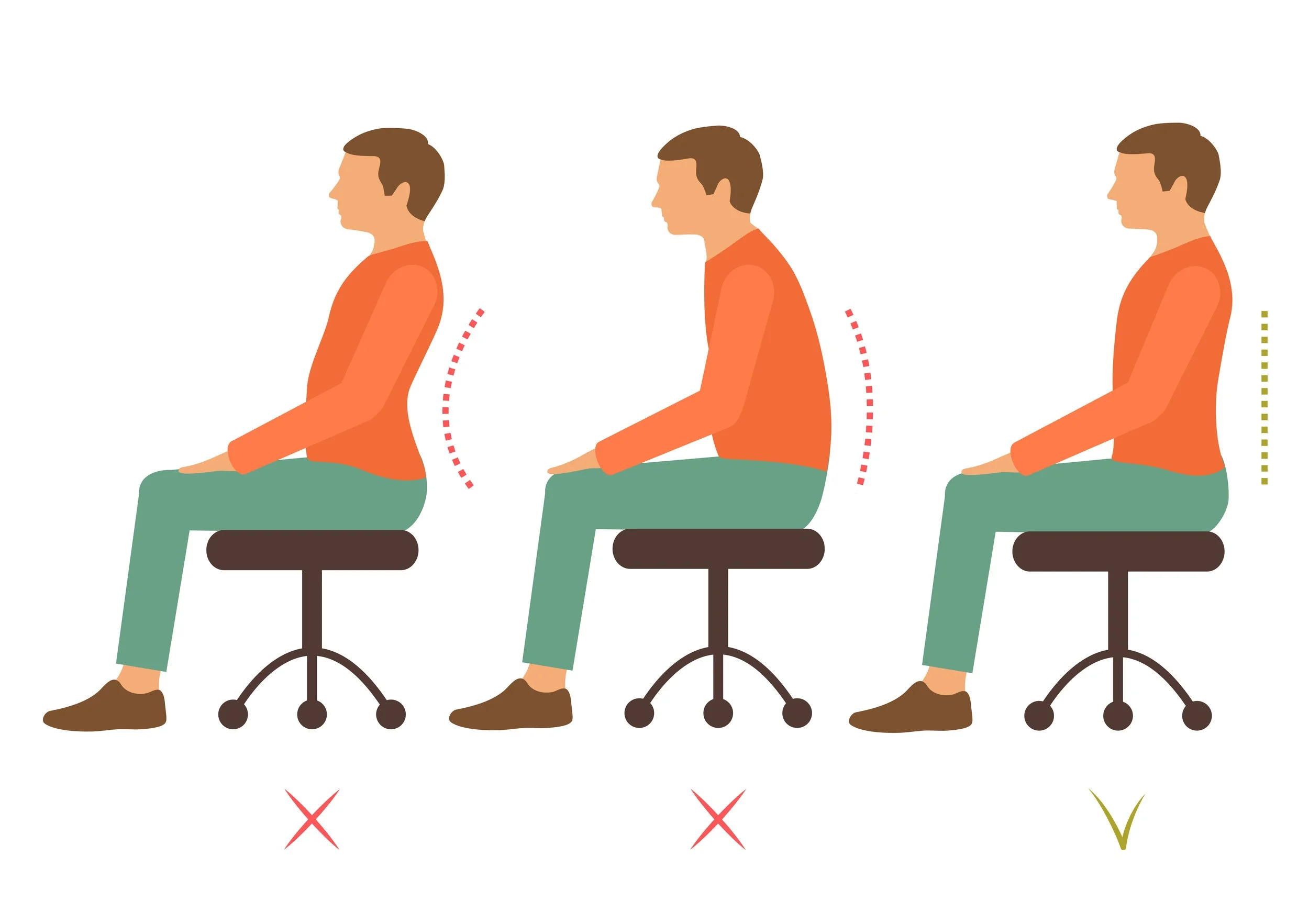
SITTING:
To some, sitting may seem like a crazy thing to make sciatica worse. However, for those who experience this daily, it is a very real thing. To put this simply, sitting compresses the muscles of the posterior hip, possibly putting pressure on the sciatic nerve. Also, the position of sitting puts tension on the entire posterior chain (back, hip, glutes, hamstrings) potentially irritating the sciatic nerve at the spine, hip, or back of the thigh. Many people with sciatica report finding relief by standing and walking around.
TRAVELING:
Traveling is similar to sitting in that you take the nature of sitting and compressing the sciatic nerve, and add in the cramped, tight situation of traveling on a plane or car. In addition to this, a hotel bed, or worse, your second cousins blow up mattress in their spare bedroom is not making the situation any better.
EXERCISE ROUTINE:
Many patients will relate that exercises such as squatting, deadlifting, and rowing can cause their sciatic nerve pain to worsen. The end range of these exercises, tension on the sciatic nerve, and the repetitive nature of exercise all create the perfect storm to irritate a long-standing sciatic nerve issue.
HOME CARE OPTIONS FOR SCIATICA PAIN RELIEF
While many sciatica cases require some formal care, all can benefit from frequent attention through home and office-based stretches and exercises. Below are some of our favorite ‘moves’ to help relieve sciatica pain. The truth here is that sciatica relief and recovery takes time, effort, and focus. Do a stretch one or two times is not enough. You may need to perform one of these every hour. You may have to modify your workspace. Guidance here is one aspect of care in our office but the responsibility to complete these is on the patient. Simply put, the more you focus on care outside of our office, the faster your issue typically resolves.
*NOTE: If any of these stretches increase your symptoms, stop and seek professional care. These exercises are not intended to diagnose any condition. Understanding of these exercises and the prescription of these should be performed by a trained provider.
Seated Sciatica Relief - 2 Best Chair Stretches
Best Sciatica Stretch - Utah Sports Chiropractor
Sciatica Self Release - Foam Roller & LaX Ball
Flexion & Extension For Low Back & Sciatica Relief
RISKS & CONSIDERATION WHEN DEALING WITH SCIATICA
RED FLAGS:
We discussed these in Part 2 of our Sciatica discussion. They are worth reviewing, and if you are experiencing any abnormal or rapid increase in symptoms, professional care and imaging are most likely needed.
STRETCHING:
Something as simple as a hamstring stretch can light up your sciatica like Christmas. As we work through rehabilitative exercises and stretches, gradual progression is a must. Just like any other injury that involves peripheral nerves, more stretching is not always better. Stretching into the pain, or the discomfort zone, when dealing with a nerve issue will likely exacerbate the condition. Start with the above demonstrated exercises, and take it easy!
OCCUPATIONAL & LIFESTYLE MODIFICATION:
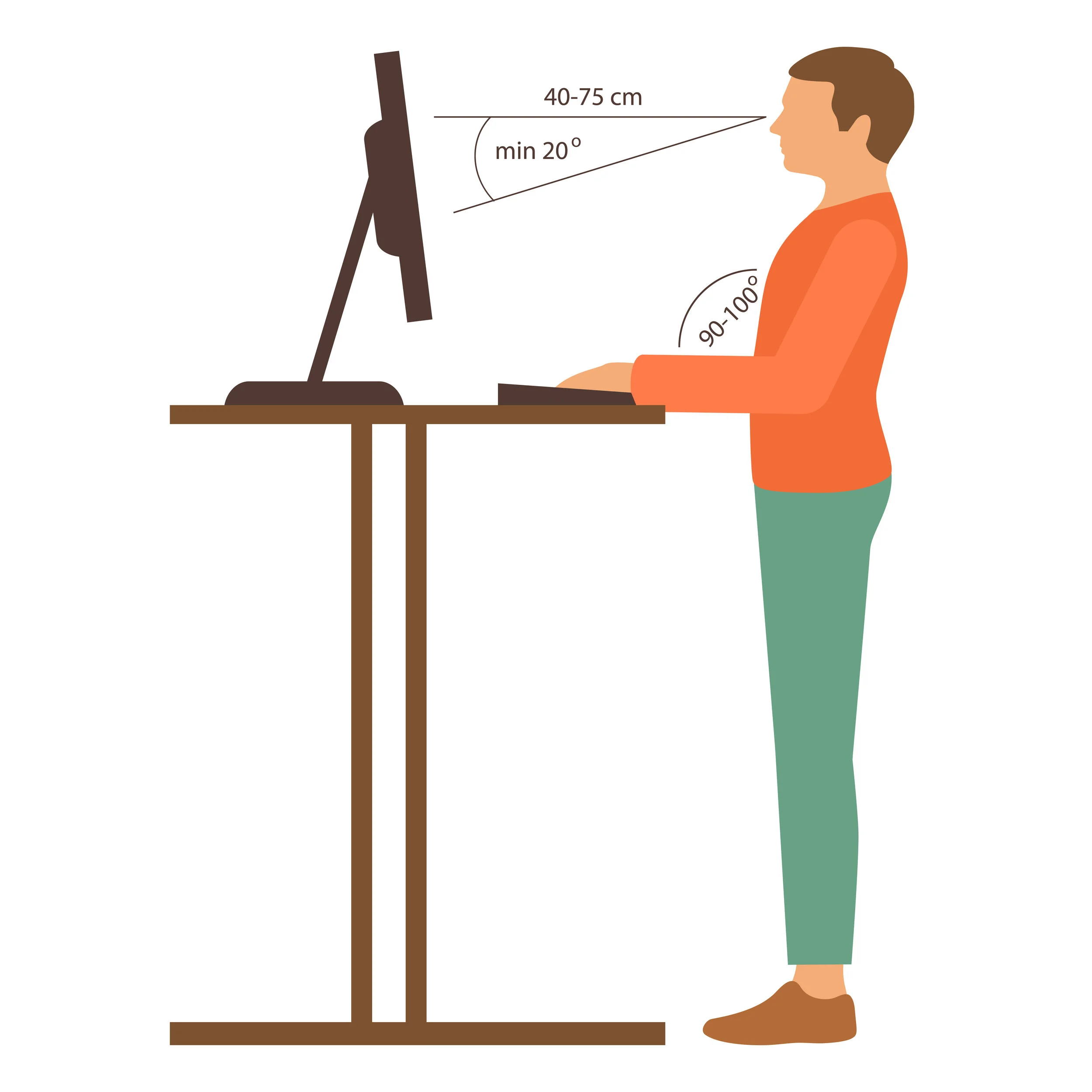
Imagine your workspace. Without going through an extensive ergonomics evaluation, what can you change to help your sciatica? Are you able to stand up and work? Do you have a water cooler to frequent? Can you set an alarm on your phone to remind you to stand up and stretch every hour? It is this type of lifestyle modification that is the long game portion of real sciatica relief.
Dr. Reheisse is a Board Certified Chiropractic Sports Physician practicing in Cottonwood Heights Utah. Revive Sport & Spine provides evidence-supported chiropractic care and conservative sports injury management.

Sciatica Pain Relief Part 2: Common Causes of Sciatica
In part 1 of our Sciatica Pain Relief series, we covered the basics of sciatica, sciatic nerve pain, and the general anatomy involved. While this may not interest everyone, it is useful in understanding the sharp, burning, and often debilitating pain that radiates down the leg that some people experience with low back pain. Our goal in this series is to inform, empower action, and give our fellow Salt Lake City, Utah friends the information and tools to help yourself through this condition as well as the understanding of when to seek care and a trusted source to do so if needed. In part 2, we are going to briefly discuss some of the most common causes of sciatica but before going forward, check out part 1 by clicking the button below.
In part 1 of our Sciatica Pain Relief series, we covered the basics of sciatica, sciatic nerve pain, and the general anatomy involved. While this may not interest everyone, it is useful in understanding the sharp, burning, and often debilitating pain that radiates down the leg that some people experience with low back pain. Our goal in this series is to inform, empower action, and give our fellow Salt Lake City, Utah friends the information and tools to help yourself through this condition as well as the understanding of when to seek care and a trusted source to do so if needed. In part 2, we are going to briefly discuss some of the most common causes of sciatica but before going forward, check out part 1 by clicking the button below.
TOP 5 COMMON CAUSES OF SCIATICA
1) Disc Buldge - Intervertebral Disc Compression
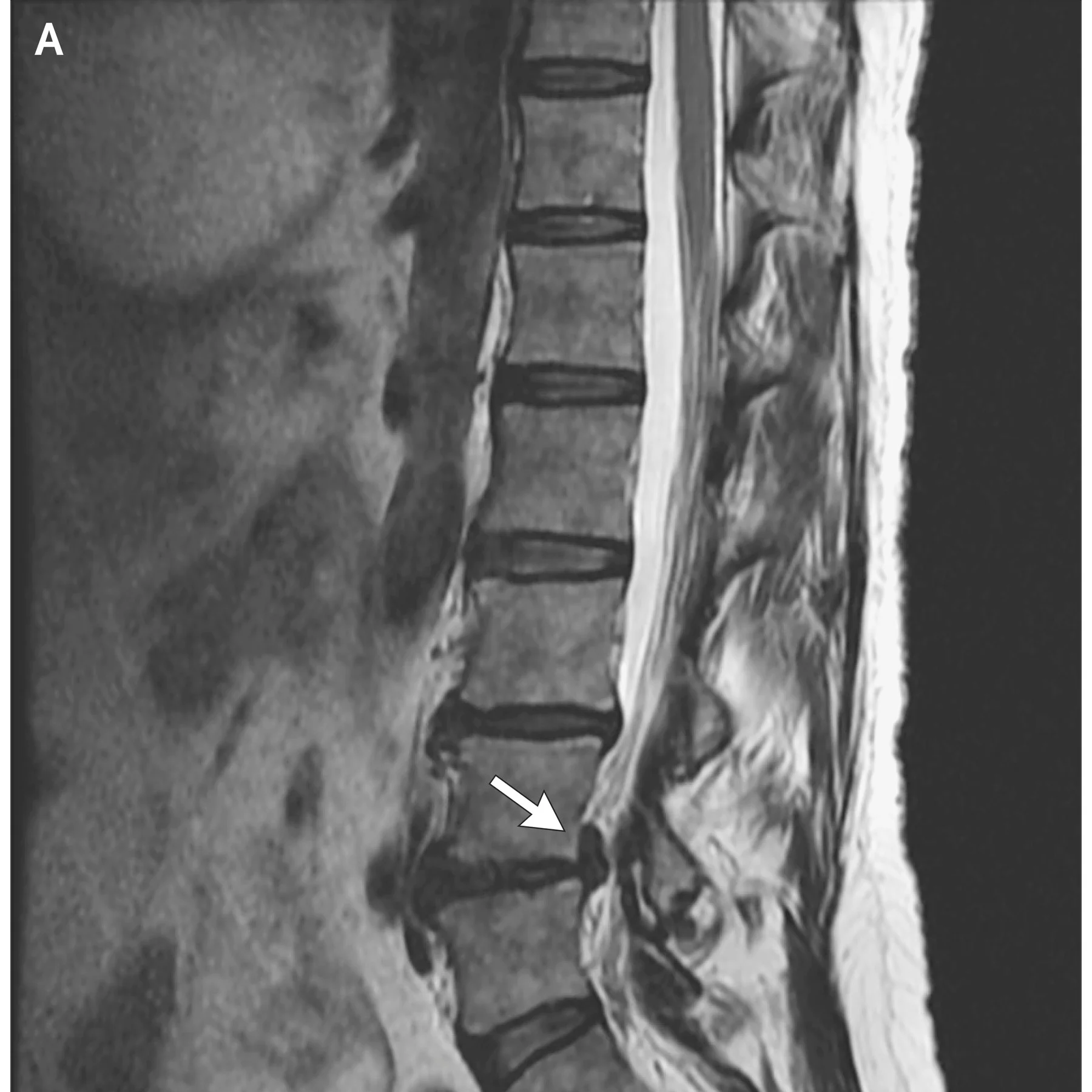
Credit: Allan Ropper, M.D., Ross Zafonte, D.O. Sciatica Review Article. New England Journal of Medicine
Starting with the most common cause makes sense as this is what most literature supports and what most people fear when they have some incident or trauma that leaves them with sciatic nerve pain shooting down their leg. A disc bulge is just that, an outpouching, or bulge, of the disc (compressive and supportive tissue between each vertebrae that acts as a shock absorber and allows for movement of the spine) which then presses up against the spinal cord or a nerve as it exits the spinal column. Compression here can be mild to severe, bringing with it anything from pain, numbness, and tingling, to complete weakness of the muscles and limb supplied by the nerve being compressed.
Note: If you are experiencing the latter of those, please seek help immediately as progressive weakness is a red flag and often requires immediate imaging and intervention.
Now, the debate is out on this as disc, and other lumbar spine pathologies are considered somewhat normal. Chances are, before the injury or event that left you feeling this way, the disc bulge was ALREADY PRESENT! This event just aggravated it enough to cause pain.
For Review: Check out the chart in this article we did on spinal imagining and what the best, most current research supports. You will find that most people are walking around with ‘back issues’ with absolutely no pain or quality of life disruption.
THREE THINGS TO KNOW ABOUT SCIATICA & DISC ISSUES
You are not your image. Chances are, your MRI will show things that were already present and may not be the primary source of your sciatic nerve pain.
A true disc injury and resulting sciatica take time to heal. The body will do most of the work. Chiropractors and therapists are here to help with symptoms, function, and assuring you are in the best position to heal. There is NO magic pill for this, TIME heals.
If you are experiencing sudden weakness or progressive numbness that does not let up, seek care immediately as intervention is most likely needed to assure permanent damage is not experienced.
2) Lumbar Spine Stenosis - Canal & IVF Narrowing

Similar to a disc bulge, Sciatica related to Spinal Stenosis is a physical compression of the nerve roots that make up the sciatic nerve. However, this is more of a slow growing, progressive problem. In most cases, these do not wake up in severe pain overnight, these patients report constant discomfort, on-again-off-again radiation of pain, slow loss of range of motion, and typically do not have a time or event to relate a start of the pain.
As we age, the spine and discs degenerate. In the disc, this happens by a loss of height, dehydration, and loss of flexibility of the tissue. In the spine, and other high-stress bone and joint areas, degeneration happens by bone growth, bone spurs, and rigidity of the joints. This degeneration can cause enough of a response that bone will grow around areas where nerves pass from the spinal cord to the rest of the body (Intervertebral foramen or IFV) taking an already small space and slowly closing it down.
3) Piriformis Syndrome - Posterior Hip Tightness
We hit on this at length in the first part of our sciatica series. The relationship between the sciatic nerve and the piriformis muscle is well established. Most people have a sciatic nerve the tracks superficially (toward the surface) over the top of the piriformis muscle or just inferior to it. However, there is an appreciable percentage of the population where the sciatic nerve or a branch from it, pierces the middle of the piriformis muscle. It is believed to be the main culprit of 2-12% of sciatica pain with research on both sides stating over and under-diagnosis. Either way, anatomical and occupational variants are common causes of sciatic nerve pain as well as low back pain.
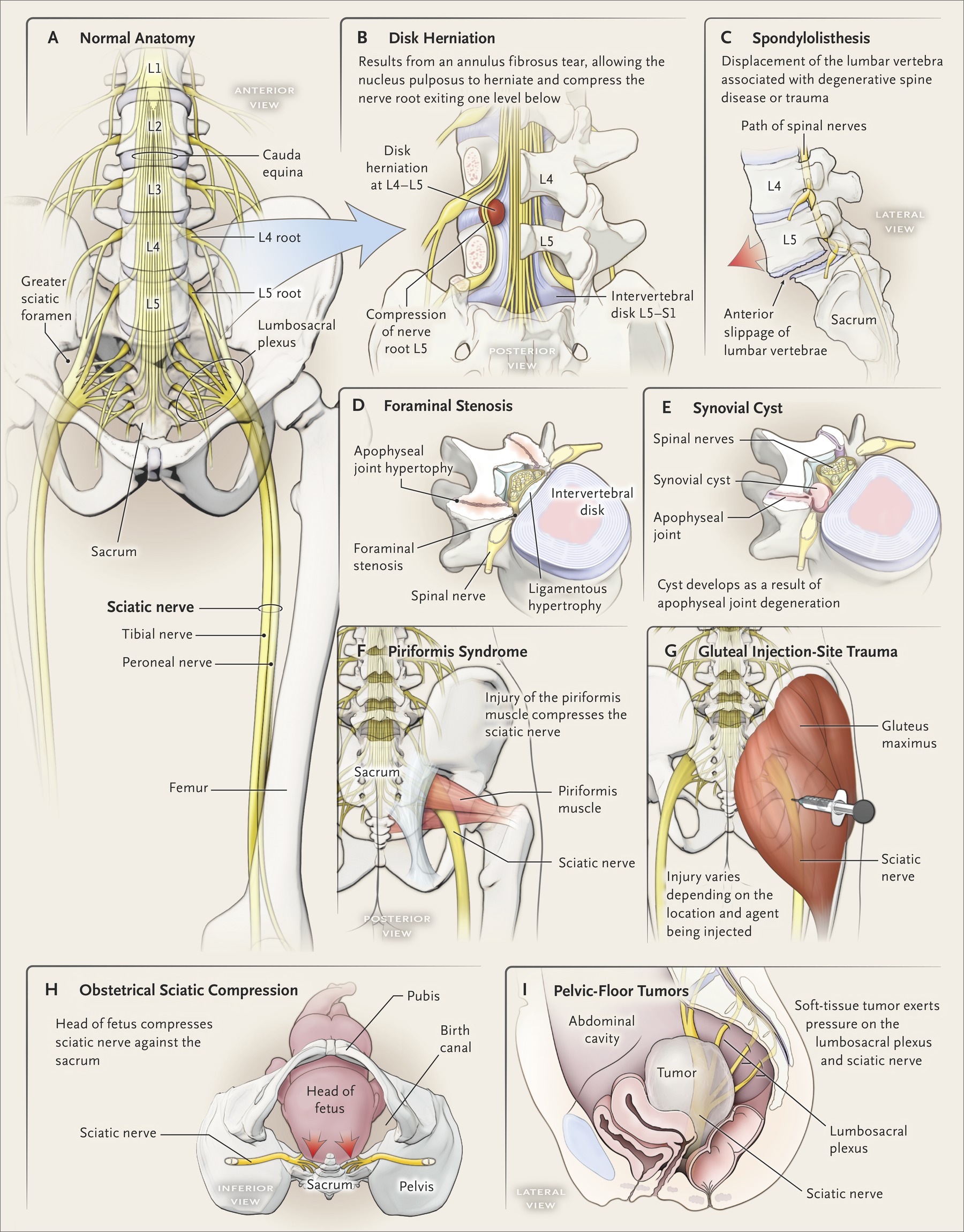
Credit: Allan Ropper, M.D., Ross Zafonte, D.O. Sciatica Review Article. New England Journal of Medicine
4) Double Crush Syndrome
Double Crush Syndrome, many of the cases we see fall into this category. Let me explain.
A patient presents after a fall, accident, or just a bad nights sleep with a chief complaint of sciatica with low back pain. An exam reveals a limited range of motion in the lumbar spine, tightness of the muscle in the posterior hip, namely the piriformis muscle, and numbness and tingling down the leg. Let's say that an MRI was ordered and it revealed a mild to moderate disc bulge.
Crush One - The disc bulge, assumed to be caused or irritated by the incident, it mildly compressing the nerve. Crust Two - In response to this injury, the body goes into defense mode and muscles begin to tighten, namely those of the posterior hip.
The initial compression at the spinal level causes a 3/10 pain, when you add in the tightness and compression at the hip, the patient is now up to a 7/10 pain with shocks of pain during specific movements. This is a Double Crush.
As with most, the disc issue is hard to affect with treatment directly, but focus can be directed toward the hip muscles, proper movement of the area and exercises to help with mobility and pain are prescribed, bringing the person back down to a 4/10 pain and allowing them to maintain most daily activities while the disc heals…remember, TIME heals discs.
5) Pregnancy
While this is not a diagnosable cause of Sciatica, sciatica is a very common complaint from expecting mothers. The cause here can be as elusive as any other, but pregnancy, the position of the baby, and the mothers specific size, anatomy, and lifestyle habits and experience with sciatica pain before the pregnancy. While there are many unknowns here, sciatica pain typically affects mothers-to-be in the latter half of the pregnancy, and most will respond to conservative care.
RED FLAGS

Sciatica is a very well described condition. The direct cause can be challenging to uncover, but there are a few things to be aware of if you are suffering from sciatic nerve pain. If you are experiencing any of the below items, we suggest you seek care immediately to assure the condition does not cause long term issues and to direct you to the right healthcare provider. Most cases can be managed conservatively (Chiropractic, Physical Therapy, or At Home) while others require medical intervention (injections, imaging, or surgery).
Progressive neurological symptoms. If you are experiencing numbness, tingling, or weakness that is worsening, please seek help from a trained provider.
If your injury is the result of a fall, auto accident, or home/work accident, consulting with a healthcare provider will help rule out any significant issues and speed our recovery.
As with other serious low back injuries, if you experience any loss of bowel or bladder control, this is an immediate ER referral.
If you have have been dealing with sciatica for more than 1 week without any relief, it is time to get help. Most self-resolving injuries and pain will let up after a couple days.
Dr. Reheisse is a Board Certified Chiropractic Sports Physician practicing in Cottonwood Heights Utah. Revive Sport & Spine provides evidence-supported chiropractic care and conservative sports injury management.

Sciatica Pain Relief - Part 1: Anatomy & Definition
Sciatica is the term used to describe pain that generates from the sciatic nerve. Many of us have felt this pain in the past, are currently experiencing it, or know someone close to us who constantly battles this sometimes debilitation and always frustrating condition.
Sciatic nerve pain is best known as the pain that seems to start at the low back and shoots down the leg, sometimes all the way to the foot. It can range from dull and ache, like a sore muscle, to a very distinct sharp, shooting sensation that can debilitate and stop a person in their tracks immediately. As the condition progresses, numbness, tingling can be present, and in urgent cases, weakness of the let. With that, low back pain with sciatica doesn’t just affect one area; it can radiate pain to the glues, hip, groin, hamstring, knee, calf, and foot…sometime all of them!
WHAT IS SCIATICA?
Sciatica is the term used to describe pain that generates from the sciatic nerve. Many of us have felt this pain in the past, are currently experiencing it, or know someone close to us who constantly battles this sometimes debilitation and always frustrating condition.
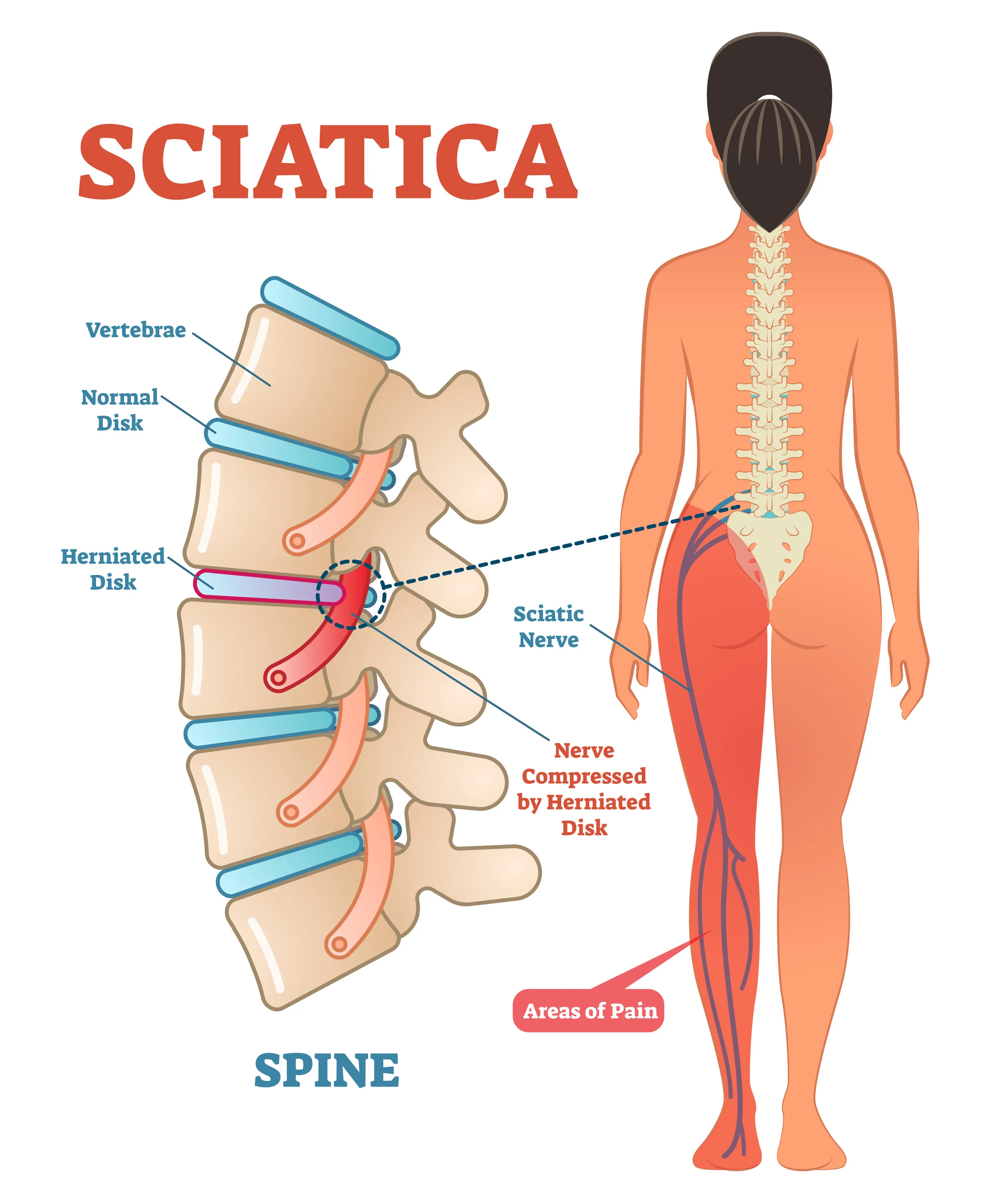
Sciatic nerve pain is best known as the pain that seems to start at the low back and shoots down the leg, sometimes all the way to the foot. It can range from dull and ache, like a sore muscle, to a very distinct sharp, shooting sensation that can debilitate and stop a person in their tracks immediately. As the condition progresses, numbness, tingling can be present, and in urgent cases, weakness of the let. With that, low back pain with sciatica doesn’t just affect one area; it can radiate pain to the glues, hip, groin, hamstring, knee, calf, and foot…sometime all of them!
Now that we have a common, agreed upon definition, our purpose with this part of our Sciatica Pain Relief Series is to understand the anatomy involved, which we will review now.
BASIC ANATOMY OF SCIATICA
Ideally, sciatica would have one cause, but with everything else, it just can’t be that easy. While some believe that sciatic nerve pain comes from the back (it can and does), some tend to think it is from muscle and nerve ‘interaction’ somewhere along the course of the nerve as it exits the spine (it can and does that too). But with our hectic lives; the sedentary weeks to weekend warrior type lifestyle, sciatica is typically a combination of the two in what we typically refer to as a double crush injury. We will talk more on this in part two, but for now, let’s look at the anatomy of the lumbar spine and follow the sciatic nerve as it courses down the leg.

The Sciatic Nerve begins in the lower lumbar spine and is made up of nerves from multiple levels of the lower spine in what is called the sacral plexus. Having this many levels of nerves associated with one big nerve gives room for many areas for disruption. As the spinal cord courses through the spinal column, it can be compressed by a damaged intervertebral disc, bulging or herniated, if occurring at the lower levels (L4/L5/S1). From here, the nerve exit the spine through what is called an intervertebral foramen (or a hole in between the vertebrae), where discs, degeneration, and other pathology which we will discuss in part 2. As the nerves begin to come together, the sciatic nerve (now as big around as your thumb) courses through the posterior hip and down the leg.
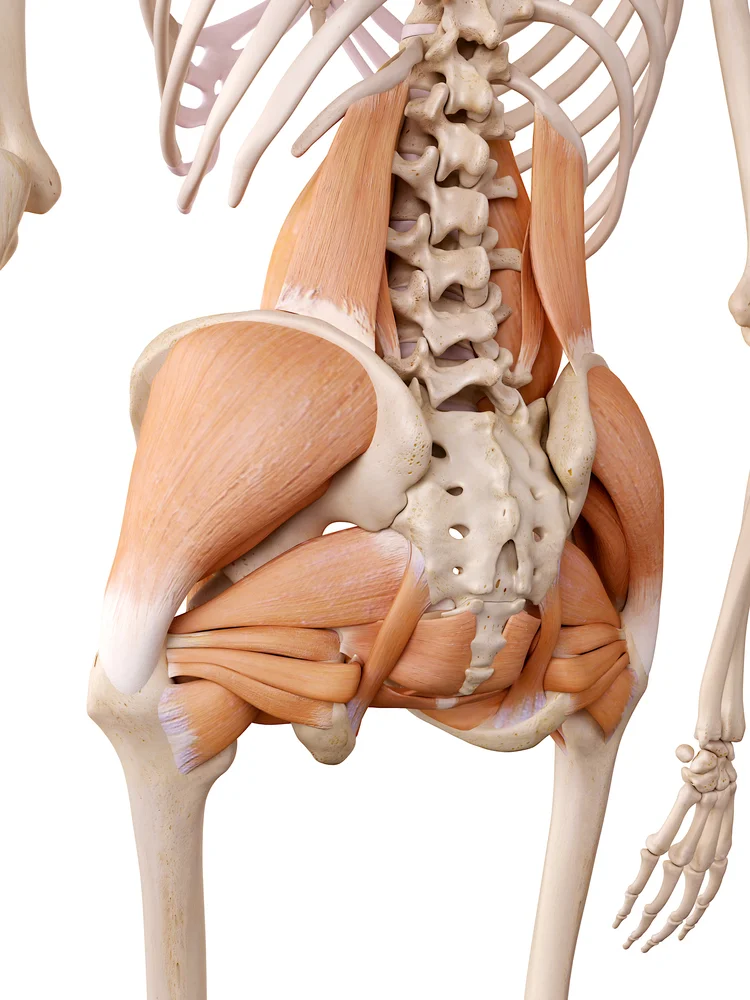
When we work with patients dealing with sciatica, we give attention to the posterior hip because of the piriformis muscle and its relation to the sciatic nerve. Everyone and their grandmother have been diagnosed with ‘piriformis syndrome’, while an easy diagnosis to give, it is rarely the only reason for the pain we are experiencing. The reason for all the attention though is that sciatic nerve either courses over, pops out underneath, or in 12-17% of the population, pierces right through the piriformis muscle. From here it travels down the posterior compartment of the thigh to the knee where it splits into the tibial and common peroneal nerve, both of which have their challenges.
While this may be overkill for some, it is prudent to know that the likelyhood of your sciatica ONLY being a spine issue is dubious.
Enjoy this brief and basic anatomy lesson, let us know if you have any questions. We will tackle some of the most common causes and daily actions that make sciatica pain worse in part two of our Sciatica Pain Relief Series.
Dr. Reheisse is a Board Certified Chiropractic Sports Physician practicing in Cottonwood Heights Utah. Revive Sport & Spine provides evidence-supported chiropractic care and conservative sports injury management.

New Year - New Goals: Running To Better Health
Improved health tops nearly every new year's resolution list ever made, 2019 will be no different. From this, running comes to the forefront of our ‘get in shape’ plan because of its ease (almost everyone can shuffle one foot in front of the other, not saying it is easy) and relatively low cost (a decent pair of shoes and some running gear is all you need). While this plan seems fool-proof, there is a reason 60%+ of the people we see in our clinic are runners, new and old.
Improved health tops nearly every new year's resolution list ever made, 2019 will be no different. From this, running comes to the forefront of our ‘get in shape’ plan because of its ease (almost everyone can shuffle one foot in front of the other, not saying it is easy) and relatively low cost (a decent pair of shoes and some running gear is all you need). While this plan seems fool-proof, there is a reason 60%+ of the people we see in our clinic are runners, new and old.

While running seems easy to do, there are many things to consider. Are you a runner? Have you ran since high school, or ever? Did you know your body type matters? Can you cover 1-2 miles and not be in misery the next day? Do you have good shoes? Do you have a partner to run with, accountability is essential for follow-through? You didn’t think about any of that, did you? While we will have more running and running-related injury articles to share with you in 2019, let’s start with some current research (Nerd-Alert).
Who:
In this study, the authors gave 914 novice runners a GPS watch and tracked them over a year to study their habits and direction of their running habits. The group was divided into 3 groups based on their BMI (Normal, Overweight, & Obese) to help determine if there were any differences and similarities in their training selection.
What They Found:
The first interesting finding was that in this self-guided exercise program, all categories selected similar training doses. The authors suggest that this may explain the higher injury risk among overweight and obese runners compared with normal-weight runners.
Normal weight runners ran faster and farther than their overweight and obese counterparts. This is anticipated as these are all novice runners, but the perceived effort was not established and could be an interesting metric to develop.
Suggestions:
Starting a new exercise program is exciting, but one must also be willing to understand and see that they are at a starting point. Novice runners are at high risk of injury if they start too fast, or do too much too soon. An initial dose of high volume can lead to an injury that causes you to become inactive, losing any benefits you sought to gain in the first place.
BMI is important to consider. Have a higher BMI does not mean you can or should not run, it means that the programming must be different. Training has to do with ‘load,’ and by that, we mean that if you are 200 lbs, it is a bit more challenging and harder on your body to run 3 miles than for someone who is 150 lbs. This changes as we continue training and adapt, but at first, we must take things slow.
Any activity is better than a sedentary lifestyle! Remember to take things slowly. Your body will be sore, but that is to be expected. If you have pain, or your soreness lasts longer than a few days after exercise, seek professional guidance on preparing your body and running programming.
Who:
The authors of this study followed 447 runners over a 24-week running program. Their goal was to determine the risk associated with high-intensity running plans and high-volume running plans.
Before the study began, they hypothesized that runners on the high-intensity program would have higher rates of Achilles tendinopathy, calf injuries, and plantar fasciitis while runners on the high-volume program would experience more runners knee, iliotibial band syndrome, and patellar tendinopathy.
What they found:
Over the 24-week training program, 80 runners sustained an injury. However, the authors found no difference in the risk of injuries related to training volume or intensity.
Suggestions:
The others suggest this discrepancy between these results and other related studies and running-related injury beliefs are related to the periodization of the running schedules, the scheduled running intensities, and the categorizations of injuries.
Runners or all shape, sizes, and abilities will eventually run into injury. Prevention by adhering to a solid warm-up routine, frequent attention to weaknesses and immobilities, while also modifying a training plan to one's abilities can help prevent injury.
When beginning a new running plan, or increasing your volume or intensity, it is suggested to do one at a time. Listen to your body and take time off as needed.
If you are taking up running again, or for the first time, and you have questions, we are here to help. Running injuries are common. You often do not have to stop running, just a rework and refocus of your training plan. Train Hard & Train Smart.
Happy & Healthy 2019!
Dr. Reheisse is a Board Certified Chiropractic Sports Physician practicing in Cottonwood Heights Utah. Revive Sport & Spine provides evidence-supported chiropractic care and conservative sports injury management.

Iliotibial Band Syndrome: Treatment & Rehabilitation
What happens when stretching and strengthening are not enough to get you out of the Iliotibial Band Syndrome rut? What happens when you are like me, and you can’t get past that 5-mile threshold without the following days being painful to walk, much less get to run on back-to-back days? You seek care. You find a provider that understands running mechanics, realistic time frames and does everything possible to help you maintain some running while recovering from the injury.
What happens when stretching and strengthening are not enough to get you out of the Iliotibial Band Syndrome rut? What happens when you are like me, and you can’t get past that 5-mile threshold without the following days being painful to walk, much less get to run on back-to-back days? You seek care. You find a provider that understands running mechanics, realistic time frames and does everything possible to help you maintain some running while recovering from the injury.
Side note before we start, if you are picking up this series right now and have not read and worked through parts 1-3, do so now. The understanding you will gain will help this part be that much more helpful.
TIME FRAME TO RUNNING RECOVERY
Let's start by setting realistic goals. IT Band pain rarely, if ever, comes on overnight. It may seem like it was the ‘last run’ or the race that caused the pain, but if you reviewed the anatomy, mechanics, and nature of the injury, we know it was a long time coming. That alone, in addition to attempting to maintain some running through rehabilitation, means this will take longer than a couple of weeks.

Quick Lesson On Tissue Healing.
While bruising, swelling, and pain may subside, tissue damage can take weeks to months to fully remodel and heal to a fully functioning tissue that can handle the stress imposed by endurance training. The biggest mistake we see is when patients decide to quickly ramp up training and stop working as diligently on their rehab and mobility because they had a good run or two without pain. Don’t be fooled, routines matter and healing takes time.
We runners are just an impatient bunch.
With a realistic time frame in mind, care will typically range from 4-8 weeks. Holy cow you say? I think the same, but think about how long you tolerated the little ‘twinge’ at the side of your knee, how long your hip had to be tight and inefficient to cause that pain at the knee. Keep in mind, most doctors and therapists are going to try and keep you running and are talented in their craft, but just as a broken bone has to heal and remodel, so does our soft tissue; and it - just - takes - TIME.
WHAT DOES CARE LOOK LIKE?

Soft Tissue:
As Iliotibial Band Syndrome is an overuse injury affecting the soft tissues of the hip, lateral thigh, and lateral knee, addressing the involved muscles is priority number one! As in other conditions, utilizing treatment methods that have been proven to help relieve symptoms, improve mechanics, and help you return to running faster is our aim. Clinically, therapies such as dry needling, IASTM, cupping, and active & passive myofascial releases have shown to be useful in the treatment of IT Band Syndrome.
Joint Mobility
Manipulation is a great treatment option, especially when you look at the complexity of running mechanics. We have discussed in other conditions how one area of the body can affect another. When someone presents with IT Band Syndrome, we not only address the area of pain, the anatomy involved, but we also look at the whole chain. Assessing the movement of the foot, ankle, knee, hip, pelvis, and low back are all important in healing an Iliotibial Band issue. Restoring normal movement can be achived through manipulation of the joint. Determining which areas of the body that need this treatment comes from an exam focused on making you a better runner.
Rehabilitation & Home Care
EXERCISE REHABILITATION PROGRAM
Coming back as a better, stronger, bulletproof runner.
RETURN TO RUNNING
This is the most common question asked by runners once we finish discussing the problem and how we are going to address it. While most runners have a VERY hard time taking a step back, our goal is to maintain some form of running. Rehab requires a load, and as runners, running is our ‘load.’ Over time it is the capacity of this ‘load’ that has to expand. Too rapid an increase in volume or intensity, and we are back where we started. When it comes to a return to running program after an injury, just follow the fantastic advice of the Beastie Boys…slow and low, that is the tempo!
Assumptions:
While in an active treatment plan, cut the running volume 50% and take out the hard intensity work for the time being.
What other activities can you add in to maintain your cardiovascular effort while allowing your body to heal? Biking, swimming, aqua-jogging, weight training, etc.
WEEKS 1 & 2:
Run:
50% of the volume that preceded the IT Band pain.
Avoid down-hills & alter the terrain you run on (track, trail, road).
Take a break from any speed work/tempo/interval runs. Treat this time as base mileage. Our goal here is to maintain some load (running) while allowing the body to heal and adapt to care. Be Patient!
No back-to-back days or running. At this stage, rest time to recover between runs is the most essential part of your recovery time.
Rehab:
Start with our Best Running Warm-Up 1 before each of your runs these 2 weeks.
Foam Roll, Foam Roll, FOAM ROLL!
Work through the IT Band Phase 1 Rehab above. Perform these on non-running days. Slow & controlled movements are best.
Alternatives For Training:
Runners, it is okay to do something else every once in a while to replace and let your body rest from running. Bike, swim, zumba, pilates, yoga….
Take one ‘running’ day each week and get your cardio in some other way.
WEEKS 3 & 4:
Run:
Have you been able to get one pain-free run? If so, increase the volume of your long run by 10% over these next 2 weeks.
Introduce some basic ‘pick-ups’ in one of your runs. I suggest starting with 5-6, 30-second pickups over a 4-6 mile run. Easy, but it allows you to work on your turn-over, form, and increase your heart rate a little.
Rehab:
If you have yet to do so, start adding in bands to your warm up and to our IT Band Running Rehab Phase 1. Work on endurance with those exercises, beginning with 1x10, working up over the next 6 months to 2-3x15.
If you have been able to cruise through Phase 1 of your rehab exercises and have already introduced bands to each exercise, start working on Phase 2.
Alternative To Training:
Continue to do ‘something else’ for one of your running days. We are trying to change and reinforce good habits here for long-term injury-free running.
WEEK 5 & 6:
Run:
By now, we should be having a few runs each week that are pain-free with minimal soreness after. Time to progress!
The body responds to load, increasing the load is part of the progress. Start ramping up 10% in volume each week.
Ramping volume and intensity at the same time are often difficult, even for those who are not coming off an injury. Work on your volume before you drastically increase your intensity.
Bring hills, repeats, speed work, and tempo in gradually. See the point directly above this.
Lastly, time to start running back-to-back days. Let’s not get too excited here, keep it to one 2 day block each week.
Rehab:
If you haven’t started yet, it’s time to begin Phase 2 of our IT Band Syndrome Rehab Exercises. Same protocol as before. Perform these on non-running days.
Running warm-up. Work through parts 2 & 3 of our Best Running Warm-Up Series.
Alternative To Training:
Now that the habits are formed. Weight training, cross training for endurance, and other methods to improve your overall athleticism as a runner are vital to remaining injury-free. Keep it up!
Dr. Reheisse is a Board Certified Chiropractic Sports Physician practicing in the Greater Salt Lake City Area of Utah. Revive Sport & Spine provides evidence-supported chiropractic care and conservative sports injury management.

Iliotibial Band Syndrome: Self-Care & Training Modification
As we work our way through this series, let not forget what we have learned so far.
Iliotibial band syndrome is a common overuse injury plaguing runners of all abilities. The most common offense is trying to increase your volume too soon while also increasing the intensity without cross-training or varying surfaces.
The Iliotibial band DOES NOT STRETCH! The tension we feel is caused by the muscles that support the IT band, Tensor Fascia Latae and Gluteus Maximus.
The stabbing pain we experiences as runners suffering from IT band syndrome is thought to be caused by the band itself shifting forward and backward as the knee flexes and extends. The research is out on that one…if we ever reach a consensus, I will let you all know!
Where are we now? Well…if you have made it this far, you are probably dealing with IT band syndrome and wondering if it will ever go away and let you get back to running the way you would like.
For this, we are going to discuss self-care. What you can do about the knee pain and tight hips at home while also mentioning a few stretches you can do at work or out on a run. Our goal is simple - Allow you to continue to train, modified while improving your IT band syndrome pain week-to-week.
What we are talking about today, where the real work takes place, the day in and day out self-care. And the big question….can you continue training?
SELF CARE PART 1 - START WITH A BETTER WARM-UP
I can not stress this enough! As you are working through an injury, maintaining some kind of load (training volume) is important, but you are better served spending time on a proper warm up, running just a few miles, then spending a good amount of time on the cool down. With just about every running injury we deal with, runners have a dismal warm-up if one at all. Most are so pressed for time, they lace up the shoes, run out the door, only to return and head straight to work. Most of us are not teenagers anymore, our bodies just can’t do this…not for long periods anyway. Start with a thorough warm-up - we will emphasize this again in our next article where we talk rehab and return to running so prepare yourself!
SELF CARE PART 2 - SELF MYOFASCIAL RELIEF
Understanding that foam rolling and stretching of the IT band itself is ineffective, where do we focus our attention? The hips…it is always the hips! But some attention at the knee can be beneficial while appropriate rest and recovery are always suggested after an acute flair-up or long run.
Rest & Recovery:
Traditional pain relievers for running related pain include ice, heat, topical creams like biofreeze, and some good old-fashioned rest. Today we have an array of tools that can aid in recovery, one we like to use frequently are compression boots from Rapid Reboot. We don’t expect everyone just to have these lying around, but they sure feel great after some dry needling, IASTM, and manipulation in the clinic.
Rolling & Stretching:
Now that we understand what anatomy we need to address, it is time to get your roll on! If we are able to continue to train, we suggest rolling and stretching 4-5 times each day. Before you lose it, these sessions are only 3-4 minutes each. If you are a frequent runner, or just starting out, here are the basics.
Rollers should be in your home, office, and car. You should have at least 3 lacrosse balls around, purse, cup holder in your car, in your desk, and your gym bag.
Roll in the morning, pre and post run, after your lunch break, when you get home, and then a good session before bed.
Cupping & Flossing:
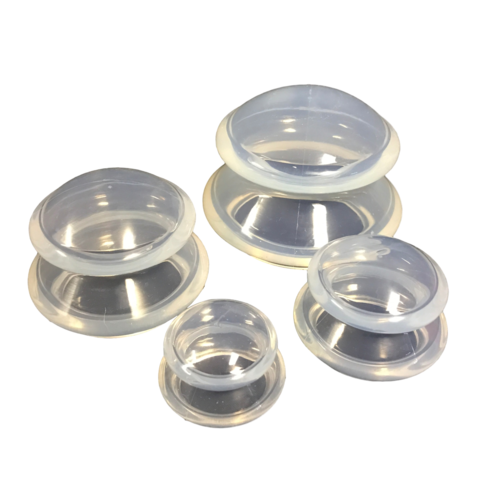
These may not be tools accessible to all, but they help you achieve stretching in ways that are difficult to do on your own. One of my personal approaches to provide relief to the knee pain we experience with IT Band syndrome is to place a few cups (I have a few sets of these) around the lateral knee and lateral quadricep muscle, walk about for a few minutes, perform a few squats, rinse and repeat 2-3 times per week.


SELF CARE PART 3 - TRAINING MODIFICATION
Training modification is the hardest part to address. For most, the ability to continue training toward your race is almost as important as fixing the injury. While maintaining some load is ideal, there are instances where a total shut-down is necessary for a few weeks. If you are a typical runner, meaning that you are going to run through the injury, we must modify. Here are the basics. Remember that Iliotibial band syndrome is the result of too much mileage or intensity, too soon in your training plan. Not having a proper base as you head into a 20-week marathon training plan is a recipe for disaster.
Our first suggestion is to cut your volume by 50% and decrease your intensity for the next 2-4 weeks. Our goal is to maintain some running, but the speed work and downhill bombs need to take a backseat for a while.
Please, cross-train! As runners, we think that running is it, period. When we are injured, and more so when we are not so that we can prevent injury, we must cross train. If you have been battling IT band syndrome for more than a few weeks, it is time to work in some biking, swimming and weightlifting. This allows you to maintain most of your cardiovascular capacity while taking out the pounding associated with running.
Lastly, look at your running form. Can it be cleaned up a bit? For most of us, that is a very strong, Yes! I’m not saying to go out and get an extensive running evaluation to change the subtle nuances of your stride, most of us just are not at that level, but shortening your stride, increasing your cadence, and working on your running drills can provide a needed boost in your running efficiency.
Cadence should be upwards of 170-180 steps per minute.
Perform drills on a soft surface (track or field) 2-3 times per week.
More on this in the rehab portion next week.
Dr. Reheisse is a Board Certified Chiropractic Sports Physician practicing in the Greater Salt Lake City Area of Utah. Revive Sport & Spine provides evidence-supported chiropractic care and conservative sports injury management.

Iliotibial Band Syndrome: Why Runners? Understanding Biomechanics & Common Risk Factors.
Knowing more about the anatomy associated with the Iliotibial band (IT Band Article #1) is a great start, but that alone will not decrease the stabbing feeling you had on the outside of your knee as you attempted a long run this past weekend.
We are moving forward with our IT Band Syndrome Relief series. This time we aim at the biomechanics (boring for some, but very important) of the Iliotibial band and why it is causing you pain. From there, we are going to look at some common risk factors and other things you are doing every time you go out to run that is making it worse.
Knowing more about the anatomy associated with the Iliotibial band (IT Band Article #1) is a great start, but that alone will not decrease the stabbing feeling you had on the outside of your knee as you attempted a long run this past weekend.
We are moving forward with our IT Band Syndrome Relief series. This time we aim at the biomechanics (boring for some, but very important) of the Iliotibial band and why it is causing you pain. From there, we are going to look at some common risk factors and other things you are doing every time you go out to run that is making it worse.
BASIC BIOMECHANICS
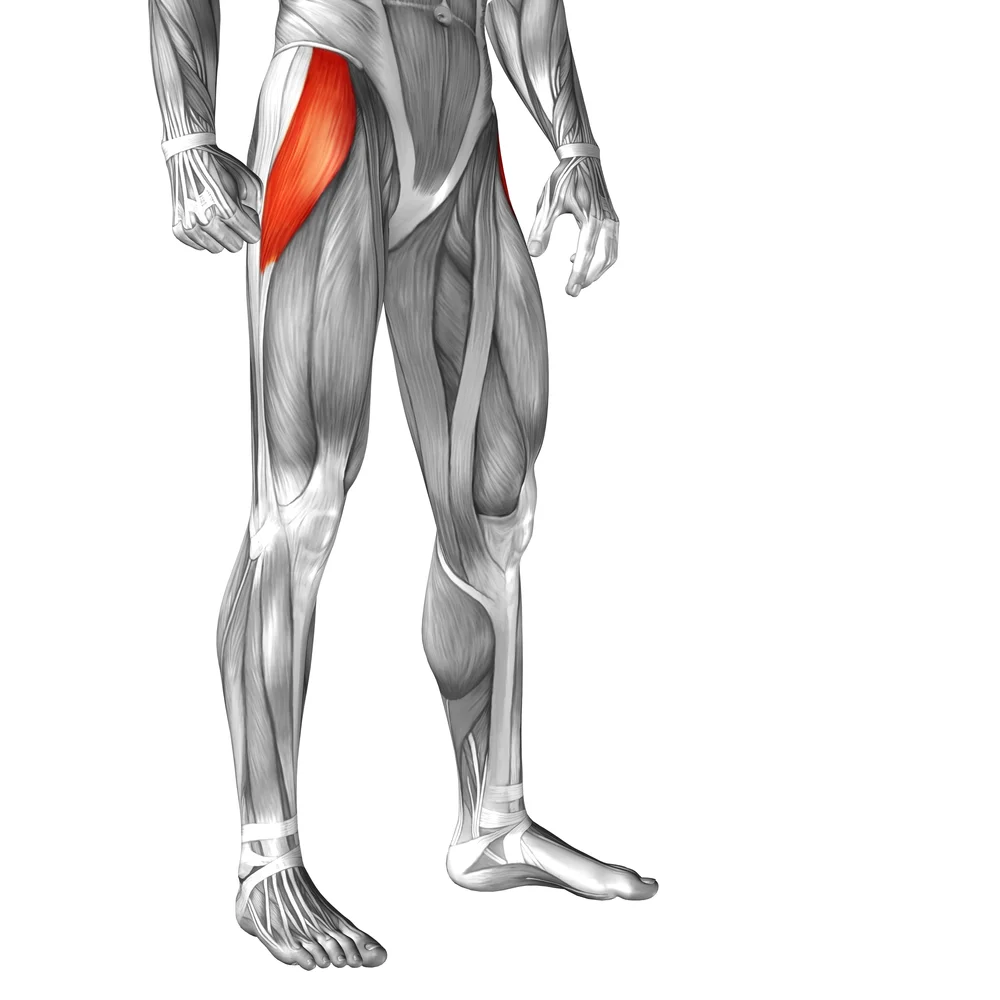
When we look at the function of the Iliotibial Band, it primarily assumes the role of lateral knee stability. Understanding that it originates from the Iliac crest and inserts on the tibia (Gerdy’s tubercle, remember?) we realize that it is a two joint muscle. When a muscle crosses and acts on two joints, in this case, the hip and knee, the likelihood of injury dramatically increases, especially when it is subjected to overuse overload.
With this setup, the IT Band also acts to extend, abduct (raise the leg out to the side), and externally rotate out the hip. As we will discuss in our next article about self-care for the IT Band, we know the muscle of the hip are the primary culprit and where we will focus our attention during clinical and home care.
BUT WHY THE PAIN AT THE KNEE?
While the Iliotibial band crosses the knee to attach to the tibia (fibular and patella according to some studies) providing stability to the outside of the knee, it moves as the knee bends and extends during walking and running.
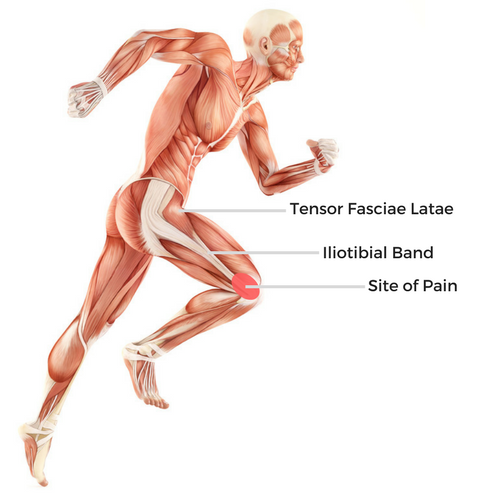
When we bend our leg, the IT Band moves anterior to, or forward, across the lateral condyle of the femur bone (SNAP!), then, when the knee nears 30 degrees of bend, it moves posteriorly, or back over the lateral condyle of the femur (SNAP!).
Now, think about how many steps you take on your average 5-mile run. If you have tightness in the hip musculature, namely the TFL and Glute Max muscles, they are pulling tension through the IT Band causing an up close and personal relationship between the band and the femoral condyle we just mentioned. When we work through the running gate cycle, we cross the 30 degrees of flexion and extend back out of it over and over….SNAP, SNAP, SNAP!
Take this friction, and add force. The force from each and every foot slap on the ground while running has to be dispersed through the muscles, ligaments, tendons, and joints. While not proven, my own personal ‘journey’ with IT Band Syndrome led me to find that when I trained on softer surfaces, my knee pain was less severe.
Either way, this force, friction, and the magic number of 30 degrees do not play well together. As you can see in this video, if you run with somewhat decent form, your foot strikes the ground somewhere between 20 and 30 degrees of knee flexion (SNAP!) and when you follow-through the gait cycle to push off and bring your leg forward, you near full extension (SNAP!) and back into bending of the knee (SNAP!).
COMMON RISK FACTORS & RUNNING MISTAKES
Common Risk Factor #1: Too Much, Too Hard, Too Soon
We have all done it…try to pick up where we left off either from an injury, vacation, or some much needed time off after a goal race. However, this typically affects the newer runner. You find a plan online, it looks fun, doable, but you soon find out it was too much. Increasing your intensity and volume at the same time spells disaster for the most veteran runner, for the newbies, this is the quickest way to stop running. Take it slow, slower than you want to. Build up your volume, EARN YOUR BASE, then maintain that volume and slowly increase your intensity. THERE IS NO OTHER WAY!
Common Risk Factor #2: Not Taking The ‘Road’ Less Traveled
Do you always run on the road? I mean ALWAYS? How about sticking to one side of the road on every run? We all know that roads are banked, but if you are always running on the right side, your body will adapt to that slight lean, causing problems down the road (pun intended there). With that, try the track, trails, aqua jogging, a treadmill. Just like shoes, you need variety. Note: Watch the video above, and look for pt 3, we talk on this more.
Common Risk Factor #3: “What Is Strength Training?” -Runners Everywhere
One of the most common causes of IT Band Syndrome is weakened hip muscles. It will come as no surprise when we discuss clinical and home care that strengthening the hips is a GIANT part of the rehab and future prevention process. It’s okay runners, I was scared of the weights at one point in time too!
Common Risk Factor #4: Who Has Time To Warm-Up?
The next significant change we make during care is the Warm-Up. If you just said, “The What?” Then we just found the cause of your IT Band Syndrome Pain. Warming up not only helps prevent injury, but it makes you a better runner. There, I said it, now start doing it.
Common Cause #5: Developmental & Gait Abnormalities
Overpronation, leg length discrepancies, bow-leggedness, poor hip mobility due to underlying causes. These are all challenging, and for most, they just add to the problem. A perfect example is that I personally found that I have a 1.5 cm short leg. I found this out when I was over 30, my body was adapted to it. Putting a lift in or selecting a supportive shoe would have only worsened my condition. I did, however, have to be strategic in my strength training, mobility work, and where and how I trained. If you fall into this category, call our office, or someone near you that understands running injuries as you do need help from a professional to find the right rehab exercise and mobility drills to help you run pain-free.
SUMMARY
Tight and weak hips lead to poor function and support of the IT Band. This allows the band to SNAP at the knee, producing overuse friction, and long-standing pain.
Risks come in all varieties, some you are doing every day. Take your training slow, work in strength training, vary your training surfaces, and warm up before running!
Dr. Reheisse is a Board Certified Chiropractic Sports Physician practicing in the Greater Salt Lake City Area of Utah. Revive Sport & Spine provides evidence-supported chiropractic care and conservative sports injury management.

Iliotibial Band Syndrome: Anatomy & Symptoms Of The Most Common Running Injury
You are out on another long run. It is a mid-Saturday morning, the weather is a cool 50 degrees, clear skies, and your focus is on the audiobook or podcast playing through your headphones. All of a sudden, out of nowhere, you get this sharp, STABBING, pain on the outside of your knee. Where did this come from? Did you do something wrong? What the heck is happening?
If this is your first time dealing with Iliotibial band syndrome, or you are remembering your first experience with it right now, the feeling is all too real. IT Band issues are a frequent occurrence for runners of all abilities, one of the most common conditions we relieve in our office and feel so prevalent that it is almost a ‘right of passage’ of sorts for new runners.
You are out on another long run. It is a mid-Saturday morning, the weather is a cool 50 degrees, clear skies, and your focus is on the audiobook or podcast playing through your headphones. All of a sudden, out of nowhere, you get this sharp, STABBING, pain on the outside of your knee. Where did this come from? Did you do something wrong? What the heck is happening?

If this is your first time dealing with Iliotibial band syndrome, or you are remembering your first experience with it right now, the feeling is all too real. IT Band issues are a frequent occurrence for runners of all abilities, one of the most common conditions we relieve in our office and feel so prevalent that it is almost a ‘right of passage’ of sorts for new runners.
In this series, we are going to dive into the details of IT band issues, what causes this dreaded running injury, what you can do about it when it happens to you (It Will!), and when you need to seek care to help get your training back on track. I can tell you from experience, as a past sufferer of IT band issues myself, it can be stubborn, frustrating, and damaging to your confidence as a runner…but it does not have to be.
I tell patients daily that IT Band syndrome is a relatively easy condition to treat…but it requires time, effort, and a change of routine. We start here today by understanding what it is and move through this series to self-treatment and prevention.
WHAT MAKES UP THE IT BAND…
… and why you can’t just stretch the Iliotibial band and make it better.
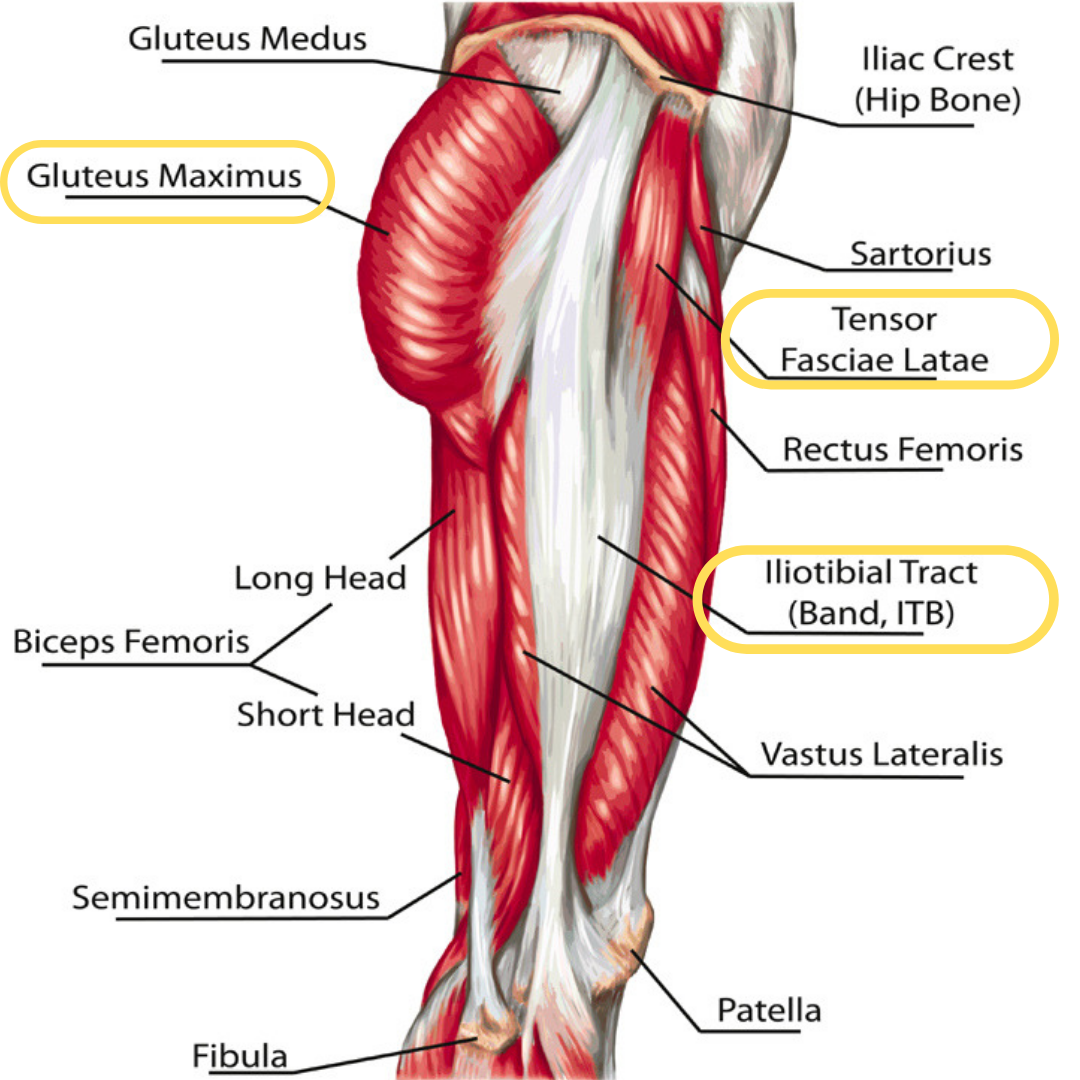
IMPORTANT ANATOMY:
Insertion Points: Iliac Crest, Knee
Muscles Involved & To Know:
Tensor Fascia Latae
Gluteus Maximus
Gluteus Medius
The Iliotibial tract runs from the hip (iliac crest) to the knee with insertion on the tibia at Gerdy’s Tubercle (trivia!) and is believed to also span some fibers to the outside of the kneecap and head of the fibula. The IT band itself acts as a stabilizer of the lateral knee while also extending, abduct, and laterally rotate the hip when the associated muscles are functioning properly.
If you notice, the band itself is fibrous, meaning…
it is not designed to stretch.
Attention must be given to the muscles that make up and act on the IT band. Those would be the Tensor Fascia Latae (TFL) and the Gluteus Maximus (G. Max). If attention is not given to these essential muscles for running that are involved in stability, pelvic balance, and propulsion, they will slowly tighten up, eventually leading to a - multiple month long - process to rid yourself of the stabbing knee pain it can cause. We will discuss the biomechanics and how to address these muscles later in this series, but this is the basics that you must know to help relieve Iliotibial band pain while running. Focus on the muscles…not the band and the site of pain.
SIGNS, SYMPTOMS, & PREVALENCE
As described at the beginning of this article, Iliotibial Band Syndrome has a very distinct presentation of pain and discomfort. While the hip tightness is often not recognized, appreciated, or correlated until after we exam someone and describe the nature of their injury, the pain at the side of the knee is unmistakable. So that we have a more tangible understanding of this pain, here is a more succinct description.
sharp or burning pain at the lateral joint line of the knee.
How common is Iliotibial Band Syndrome? With injury prevalence in runners nearly 50% (Studies suggest 25-65%), IT Band Syndrome is the most common lateral knee injury.
IT Band Syndrome makes up nearly 15% off all running injuries.
Studies suggest it is slightly more common in male runners, new runners, and higher volume runners.
Clinical experience suggests it is one of the most common injuries runners present to a sports chiropractic office with.
Now that we have some understanding of the anatomy and prevalence of Iliotibial Band Syndrome in runners, we will progress our conversation to risks, common causes, and the biomechanics associated with ITBS.
Dr. Reheisse is a Board Certified Chiropractic Sports Physician practicing in Cottonwood Heights Utah. Revive Sport & Spine provides evidence-supported chiropractic care and conservative sports injury management.