THOUGHTS ON:
Training, Rehabilitation,
&
Best Care Practices

Runner's Knee Part 2: Hip & Ankle Mobility - How It Relates To Patellofemoral Pain Syndrome
In part 1 of our runner’s knee series, we discussed the specific anatomy involved, how and why we experience pain over/in the front of the knee, and most importantly, how running, and specifically downhill running, can hasten your onset of patellofemoral pain syndrome. ->Read Part 1 Here <-
Today, in part 2, we are going to move away from the knee and look at the friendly joints above and below. As we know, and you will soon find out, the hip and the ankle are in control of the knee and more times than not, pain at the knee is caused by faulty mechanics, immobility, or strength and stability deficiencies at either or both of these joints. Read on!
In part 1 of our runner’s knee series, we discussed the specific anatomy involved, how and why we experience pain over/in the front of the knee, and most importantly, how running, and specifically downhill running, can hasten the onset of patellofemoral pain syndrome. ->Read Part 1 Here <-
Today, in part 2, we are going to move away from the knee and look at the friendly joints above and below. As we know, and you will soon find out, the hip and the ankle are in control of the knee, and more often than not, pain at the knee is caused by faulty mechanics, immobility, or strength and stability deficiencies at either or both of these joints. Read on!
HIP FUNCTION IN RUNNING AND ITS RELATION TO KNEE PAIN
So that we have a starting point, we are going to travel from the hip down. Mainly because it is more commonly the culprit of running-associated knee pain (my own clinical experience), but also because it is the bigger joint with more opportunity for complications.
To help explain how the hip acts on the knee, I commonly tell patients in the clinic that we have no ‘knee muscle’, but that everything controlling the knee comes from the hip. While this is not exactly true, we have some very important muscles, like the VMO and popliteus, that act strongly on the knee without originating from the hip. Hopefully, you can read through that and see my point here. Control at the knee is primarily governed by the hip.
When we encounter a runner with patellofemoral pain, we will ‘treat’ the knee… but the majority of our work is spent on improving hip mobility, strength, and stability. We find that issues here can lead to compensations, deficiencies, and imbalances that contribute to Runner’s Knee.
IT band tightness pulls on the patella causing it to track laterally, or to the outside.
Hip tightness can cause an anterior pelvic stance. This can inhibit and tighten the hamstrings causing an altered gait that is ‘quad heavy’. This tilt and tightening can lead to altered mechanics at the knee and also lead to patellofemoral pain.
Hip drop due to a weakness of the glute muscles can lead to what we are now calling the Miserable Malalignment Syndrome.
Let's talk about that last one for a minute as this is becoming more and more common in running associated knee pain. Miserable Malalignment Syndrome is the name now given to the cascading breakdown when the hip and ankle fail. Essentially, when our foot is planted, the glute medius muscle of the foot planted holds our pelvis level. When this weakens, the hip drops, causing the other side to respond. This response causes an inward rotation of the femur bone, an outward rotation of the tibia (shin bone) in an attempt to compensate, and lastly, a turning out of the foot resulting in a crashing in of the inside of the foot.
Guess which joint is in the middle taking all of that rotation torque?
I explain this in the video and picture below. Now, this condition got its name, not necessarily for runners, but for those who sit too much and exhibit the same pattern, but it fits here. If anything, this helps explain how important our hip mobility and strength is to the health of our knees. If you remember, as runners, we load the knee with 5-6 times our body weight with each and every step. Rotation in a joint NOT designed for rotation is destined to cause problems.
ANKLE FUNCTION IN RUNNING AND ITS RELATION TO KNEE PAIN

Now that we better understand the hip and its relation to knee pain, let's travel down the road a little to the ankle joint. Without getting into the kinematics of the ankle and the joints that make up this complex area of the body, let's just try to understand one thing...DORSIFLEXION.
Dorsiflexion is your ability to bring the top of your foot toward your shin. When we run, dorsiflexion allows us to strike the ground, react, and toe-off properly, pushing from our big and second toes. To help understand this, lets picture what poor dorsiflexion looks like. The next time you are walking around, look for someone who walks with their feet turned outward. What is usually happening here is that their hip tightness causes their posterior hip muscles (glutes, piriformis, etc.) to pull on the femur, resulting in an outward turned leg and foot. And...Unless they rode in on a horse, they are not walking with their kneecaps over their feet in this position which leads us to what we just discussed, the foot crashes inward, the kneecap points a different direction of the foot, and we now have pain. You can now imagine that there is no way this person is walking properly, meaning they are not actually toeing off correctly, but the inside of their foot, now...IMAGINE THIS PERSON RUNNING.
You may have realized that poor ankle dorsiflexion and the lack of hip mobility and stability can cause the same problem. The truth is, they tend to run together. While we will always treat any and all problems presented to us, it is my job to find the key that unlocks the whole system and more times than not, it is the hips!

TIME TO REVIEW WHAT WE LEARNED TODAY
Most of the muscular control of the knee comes from the hip. Lack of mobility and strength here can contribute to patellofemoral pain syndrome.
Lack of ankle dorsiflexion (the ability to bring the foot toward the shin) can cause outward rotation of the foot and undue rotational strain on the knee.
Issues at the hip and knee can lead to what we are now calling the Miserable Malalignment Syndrome. Essentially, when we run, our hips drop, causing an inward rotation of the femur, a counter-outward rotation of the shin bone, turning out of the foot, and caving in of the inner foot, leaving the stress on the knee.
To properly address runner’s knee, we must address these deficiencies at the hip and ankle.
Once you have digested the information we discussed in these last two articles, keep your eyes peeled for part 3 next week, as we will begin discussing what to do if you already have patellofemoral pain and when you should seek care so you can continue, or return to, training.
Dr. Reheisse is a Board-Certified Chiropractic Sports Physician practicing in Murray, Utah. Revive Sport & Spine provides evidence-supported chiropractic care and conservative sports injury management.

Runner's Knee Part 1: What Is Patellofemoral Pain Syndrome (PFPS) And Why Is It Common In Runners?
If you have been running for any period of time, then you have most likely had a run in with, or are currently battling, Patellofemoral Pain Syndrome (PFPS), or Runner’s Knee as is better known in the endurance community. PFPS is one of the most common causes of knee pain in runners but is also one of the most challenging conditions as the specific cause can be elusive. Furthering the challenge, Runner’s Knee itself has been used as a blanket diagnosis when runners present with any kind of knee pain, especially to clinicians unfamiliar with runners and running mechanics.
Our goal through this series is to help runners of all abilities better understand their knee pain, its cause, and how to self-treat and prevent future occurrences. Additionally, as a provider based in Utah, we are the land of abundance when it comes to downhill races. This causes a sharp increase in PFPS cases that come through our office during the fall marathon season.
If you have been running for any period of time, then you have most likely had a run-in with or are currently battling Patellofemoral Pain Syndrome (PFPS), or Runner’s Knee, as it is better known in the endurance community. PFPS is one of the most common causes of knee pain in runners, but is also one of the most challenging conditions, as the specific cause can be elusive. Furthering the challenge, Runner’s Knee itself has been used as a blanket diagnosis when runners present with any kind of knee pain, especially to clinicians unfamiliar with runners and running mechanics.
Our goal through this series is to help runners of all abilities better understand their knee pain, its cause, and how to self-treat and prevent future occurrences. Additionally, as a provider based in Utah, we are the land of abundance when it comes to downhill races. This causes a sharp increase in PFPS cases that come through our office during the fall marathon season.
What Is Patellofemoral Pain Syndrome?
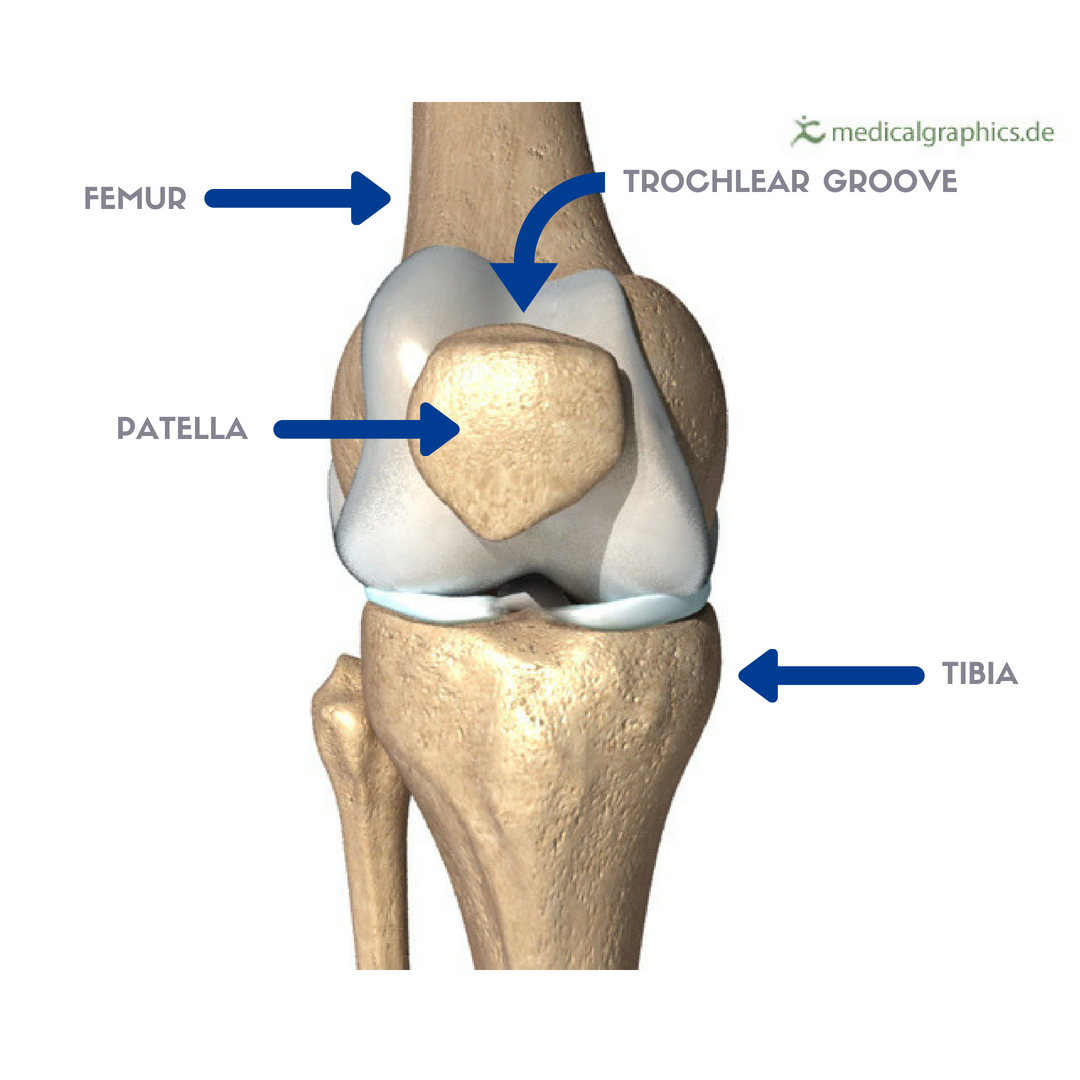
Let's start with basic anatomy. The Patellofemoral joint is made up of the Patella (Knee Cap) and the Femur. When we run, squat, or navigate stairs, the patella tracks, or glides, through a grove on the femur as the knee bends and straightens. Almost always, this is a pain-free movement.
Note: There are different shapes of this joint that can cause mal-tracking of the patella and abnormal wear patterns that can cause pain. Also, body mass plays a role in the loading of this joint as well. In an attempt to keep this article simple, we will not discuss this further as many resources are available on this topic.
Now that we understand the basic anatomy, let's define Patellofemoral Pain Syndrome.
According to the Patellofemoral pain consensus statement, given at the 4th international Patellofemoral Pain Research Retreat, PFPS can be defined as ‘Pain around of behind the patella, which is aggravated by activity that loads the patellofemoral joint during weight bearing on a flexed knee (as in running) and could included but not necessarily, crepitus, tenderness to palpation, effusion, and pain upon rising or straightening the leg after sitting.
While this sound very general and vague, it does help us eliminate some of the other common running knee injuries as most have their specific criteria for diagnosis. Simply put, Patellofemoral Pain Syndrome is a pain over, under, or around the kneecap that is aggravated by running.
How Common Is Runner's Knee & What Are The Signs And Symptoms?
How do you know if you are truly dealing with patellofemoral pain syndrome? Honestly, that is where physicians come in, but you can get a good idea yourself just by understanding its presentation. We have already discussed that it typically presents as pain over, under, or around the kneecap that is aggravated by bending of the knee, but who is at greater risk?
Those at risk include young adults, more commonly during times of growth or during activities that require repetitive movements (running). According to a 2016 issue of JSPT, 75% of patients have tenderness around the patella, the onset is usually gradual at the anterior, or front, of the knee, and pain occurs during movements that increase stress along the joint.
It should also be mentioned that Runner’s Knee is notoriously stubborn, meaning rest alone typically does not help. A structured treatment and rehabilitative action plan need to be in place to allow timely recovery and prevent future occurrences.
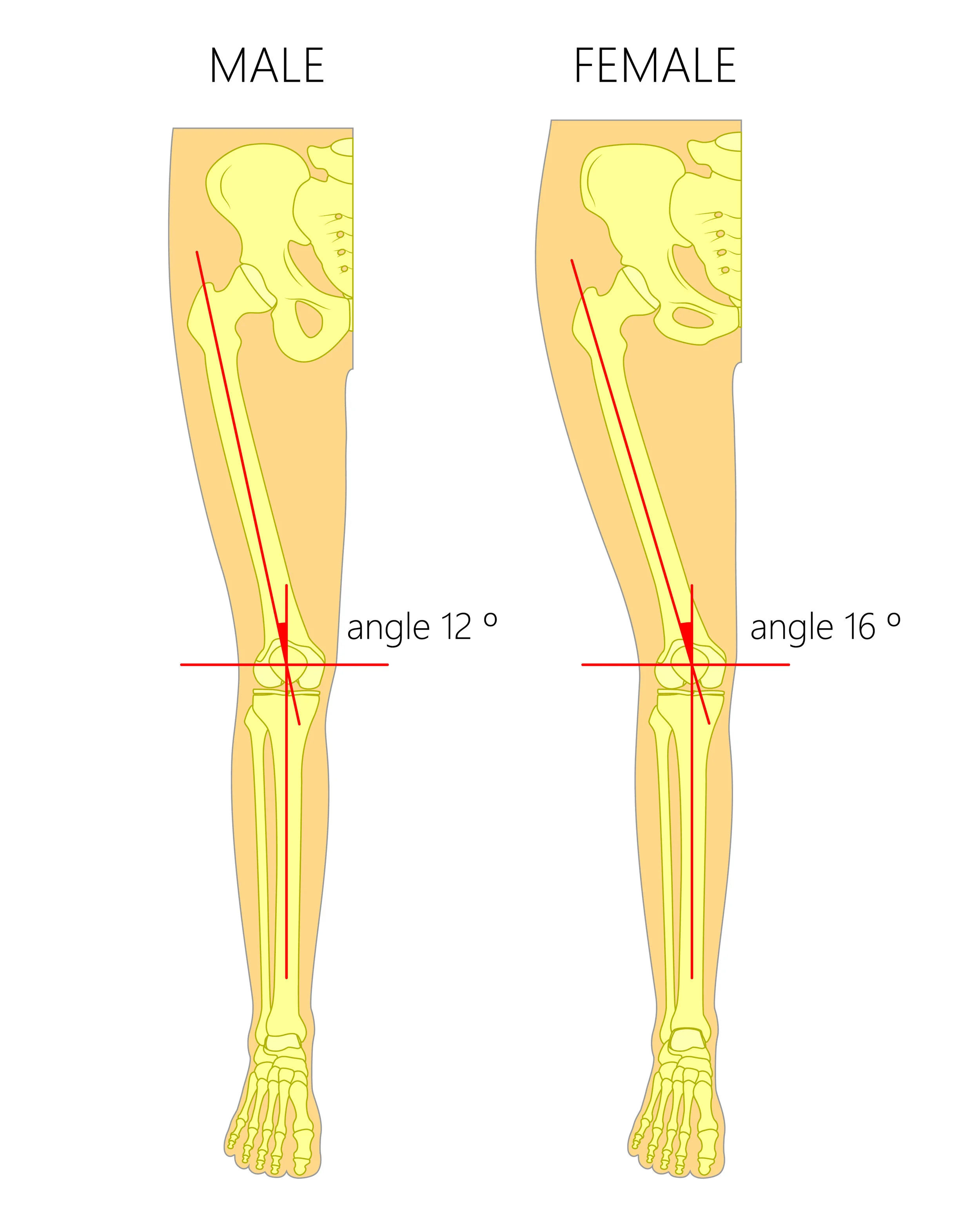
To better understand your risks as a runner, almost ¼ of all knee complaints presenting to an orthopedic, sports chiropractic, or PT office are PFPS with almost double the number of female cases as male, most likely due to Q-angle and knee valgosity during running.
What Causes Patellofemoral Pain Syndrome?
Deep breath...
Before we jump into how running relates to Patellofemoral pain syndrome, so much that it is called ‘Runner’s Knee’, let's talk about the normal stress of the joint. The patellofemoral joint is well designed and well suited to handle quite a bit of stress. Just think about the weightlifter who can squat a small truck or the guy down the street who seems to run an ultramarathon every other weekend. Our knees are designed for load, yet, as with many other things in life, genetics and self-care have a great impact on how well we recover from that load.
As we study patellofemoral pain syndrome, we understand that the load compounds and becomes too much. This excess in stress can wear away the protective layers around the joint, causing pain during common movements. As runners, we can understand that with each step, we load the knee joint thousands of times in each run.
We should mention that while running, we load the knee with 5-6 times our body weight each and every step.
Hopefully, something just clicked and you now realize why you need a day off each and every week….sometimes two, to allow for proper recovery and regeneration of your tissues. As runners, we can not continue to pound the pavement and climb the trails, day after day, and expect our bodies to cooperate.
Now, where does this stress come from? If we go back to our anatomy, we see that the powerful quadriceps muscle group attaches to the patella through a much smaller quadriceps tendon, which then dissipates load and tension through an even smaller patellar tendon on the bottom of the patella. Over time, the quadriceps can become tight, causing abnormal tension and movement of the patella over the femur. When we run, we drag the patella across this groove thousands of times, and if our movement is dysfunctional, this can cause a problem.
Another common cause of tracking issues is the all-too-familiar IT band tightness. If you are a runner who has had a quarrel or two with IT band syndrome, then chances are this could be a contributor to your Runner's Knee. To better understand this, we know that the IT band attaches to the lateral side of the knee (outside), with attachments directly to the patella and the lower leg. Tightness here can pull the patella laterally, resulting in maltracking through the groove, thereby worsening wear, breakdown, and pain. Now, we can’t just blame this on a tight IT band, as tracking to the outside could be due to weakness in the medial stabilizing muscles of the thigh.
Not to go into depth with running mechanics. The quadriceps should not be the primary driver in runners, but some have less than ideal form, while others just absolutely love downhill racing!
As a Utah based physician and now Utah based runner, downhill races are the thing.
As a side thought, I have shared with patients. I cringe but slightly enjoy talking with out-of-towners who think they are going to come here, run a race with a 3000 ft drop, and just breeze to a new marathon PR. I always give warning that if you do not control your tempo and stride, your quads are going to blow up and you will either have a terrible race or have terrible knee pain the following days and weeks….often both.
Back to the mechanics. During downhill running, our quadriceps no longer absorb shock and help move us forward; they begin to slow us down and perform a similar job of eccentrically bracing for impact and preventing the femur from translating too far forward over the tibia (shin bone) while maintaining some kind of control medially and laterally. This is very taxing on a muscle. Imagine doing 100 squats, but instead of just pushing up, you have to do a slow 20-second descent into the squat position, essentially what we call a ‘negative’ movement. This is a different strain on a muscle, one that has to be trained, and if you do not practice downhill running, some of the races we have will eat you alive!
Now that I’m off of my soapbox. The repetitive nature and load that running puts on the knee can quickly cause patellofemoral pain. Downhill running is a major catalyst for runner’s knee pain!

How Do We Address Runner's Knee To Keep You Running?
So, how do you treat patellofemoral pain syndrome? Well... we first have to determine the cause. If you are a runner, it is not as easy as saying running is the cause. The intricacies of the running mechanics are more likely to be at fault, this is where a thorough assessment comes in.
Depending on the providers, you could be told to stop running for a while, while another trained in treating runners will try to find the cause and develop a plan around you continuing to run. Either way, the easiest explanation of a patellofemoral pain treatment plan consists of 3 things: Offload, Rehabilitate, & Reload.
Offload: Is the pain so bad that you can not take more than a handful of steps without some kind of pain? This may require some time off from running. For most, if you address the pain early, a modification in your training program is usually necessary. Typically we will scale back your intensity, volume, or both while you are working through the rehabilitative phase.
Rehabilitate: What is the primary cause of your patellofemoral pain? Once we can determine your cause; running form, hip strength, ankle mobility, training volume, downhill running, etc., we can develop a plan around this, your goals, and your races.
Reload: While we don't want to completely offload an injury if possible, we find that maintaining some of the familiar load (in this case, pounding the pavement) placed on the muscles, joints, ligaments, and tendons can speed healing. As we work back up from an injury, care, caution, and discipline must be placed on progressing slowly, even in we are feeling great.
Let's Review What We Have Learned So Far.
Patellofemoral pain syndrome is one of the most common sources of knee pain in runners, so much so it is also called Runner’s Knee.
Patellofemoral pain syndrome is characterized by pain over, under, and around the patella, or kneecap, that is aggravated by activities such as running that load the patellofemoral joint in a repetitive manner.
Runner’s Knee is most commonly an overuse condition.
During bending of the knee, the patella glides, or tracks, through a groove in the femur. Tight muscles, excess load, overtraining, etc. can cause dysfunction of this movement, leading to patellofemoral pain.
Stay tuned for more information (than you could ever want or need) on Runner's Knee, its cause, what you can do for it, and when it is time to seek help so that you can continue to run toward your racing goals.
Dr. Reheisse is a Board Certified Chiropractic Sports Physician practicing in Murray, Utah. Revive Sport & Spine provides evidence-supported chiropractic care and conservative sports injury management.

How Often Should You Stretch?
The title of this post may confuse you and you may be asking, 'What has changed with stretching?' (To bypass my ramblings, scroll to the bullet points at the bottom).
That is a GREAT question! It seems that about every year or two, we change our opinion on stretching. Should we do it? Should we not do it? When? Where? How? After a while it all gets very confusing and we fall back on the ol', 'Well, if that works for you, then keep doing it' mentality.
Personally, and it comes as no surprise to those who know or have worked with me, that i'm a big proponent for foam rolling. I find it simple, effective, and a little safer when we are working with tendon and myotendinous injuries. But today, we are going to discuss some good, old fashioned stretching....and yes, there is still new research coming out about stretching.

Let's backtrack a little here and explain. Research has gone back and forth on whether stretching is beneficial to health, sports performance, avoiding injury...and just life in general. Over the last decade, we have found out that stretching (the static type you did in gym class) decreases immediate athletic performance, is not the best way to prevent injury, and does not lengthen, or change the structural makeup of our muscles. (Thanks research!)
However, if your goal is to become more flexible...or you NEED to be more flexible, this new article from the International Journal of Sports Medicine has you covered. In this article, they not only point out what is the best way to achieve long-term flexibility, but how long and how often you should do it!
While I have shared my ‘distaste’ for static stretching with many (especially for injury prevention/relief of posterior chain muscles...a later post), I have generally based that opinion on experience and what we know about its lack of injury prevention and the decrease in performance it causes if performed directly before an event. I still hold firmly my love of foam rolling and a more dynamic warm-up before any athletic event, but adding in some additional stretching, if flexibility is your need, may just be that extra bump to help you reach your goals.
So what does the article say?
Before we get to that, what if flexibility is not your issue? Often, we will work with patients who state they are ‘tight’, but they have a range of motion that is off the charts. I wish I had a megaphone for this….Stretching will not fix these issues, this is a stability problem. If this is you, get a proper work up and some clinical direction on improving your condition, it will most likely involve more strength and stability exercise.
Now, back to the article. Here is what they have to say.
For best results in long-term flexibility:

Static stretching > Dynamic Stretching
Stretches should be held for 30-60 seconds, holding for 1-2 minutes showed no additional value.
Consistency is Key - 5 days per week for 4 weeks showed the best results.
Weekly total time 5-10 min. More than 10 min provided no additional benefit and less than 5 min provided little benefit at all.
There is a lot of good here. Many of us feel pressed for time, don’t know what to do or how to do it, and could come up with another dozen excuses! Take 2 minutes before bed, Monday through Friday, and give your problem area a little extra attention.
Dr. Reheisse is a Board Certified Chiropractic Sports Physician practicing in Murray, Utah. Revive Sport & Spine provides evidence-supported chiropractic care and conservative sports injury management.

5 Warm-Up Exercises To Eliminate Low Back Pain From Your Golf Game
Golfer’s low back pain can be extremely frustrating. In fact, it is the number one ailment seen amongst golfers, even at the professional level. With that said, not many realize that low back pain isn’t the cause, it is just a symptom of a deeper issue. Often, lack of mobility in other areas like our hips and middle back lead to the excessive load placed on the low back. While our low back structure and muscles are strong, they are not built for that load, and in turn, pain ensues.
Low Back Pain…the CAUSE or the SOURCE?
Golfer’s low back pain can be extremely frustrating. In fact, it is the number one ailment seen amongst golfers, even at the professional level. With that said, not many realize that low back pain isn’t the cause; it is just a symptom of a deeper issue. Often, a lack of mobility in other areas, like our hips and middle back, leads to the excessive load placed on the low back. While our low back structure and muscles are strong, they are not built for that load, and in turn, pain ensues.
How do I Prevent Low Back Pain?
To put it simply, hips are built for mobility, and your low back is built for stability. When those roles reverse, we experience low back pain. So, our goal becomes more focused on achieving normal movement in those areas. We need our hips to normalize their movement, which will allow our low backs to be the stabilizer that they were built to be.
How does this apply to Golfers?
The golf swing requires substantial rotation and mobility to generate the power and energy we hope for. When our hips are not moving, our lower backs become the point of rotation (and stability) for our swing, and this leads to pain in that area. This is where a proper hip warm-up prior to a round of golf can really help.
Warm-Up Exercises
Warming up with hip exercises before a round of golf can really help the hips warm up and perform the way they were designed. There are several hip exercises you can do, but here is a focused look at 3 powerhouse moves that are easy to perform.
Bird Dog — the main focus is to have mobility through the hips while keeping a neutral and stable spine. In addition, you are engaging the core, which helps with maintaining that neutral spine and provides power during your drive and iron shots.
Posterior Hip Foam Roll — This is something that can be implemented into a daily routine, as well as prior to a round of golf. The focus here will be on the glutes and your external rotators of the hip. Foam rolling is simple and when done correctly can be a huge benefit. We encourage it 3-5 times a day, including prior to your round of golf, with about 10-20 rolls up and down for each session.
Band Exercise — This is something we utilize for many of our patients who come through as a good exercise prior an activity such as running, cycling, triathlon, weight lifting, tennis, soccer, etc. However, it can be just as helpful before a round of golf. One set of ten (1 x 10) of each exercise is plenty to get the hips fired up. In addition, this helps build strength, which will help with fatigue towards the end of a long round, or a long weekend of golf.
GLUTE BRIDGE
CLAMSHELL
LATERAL BAND WALKS
We have all experienced low back pain and discomfort; we all know the effect it has on our golf game and our enjoyment of it. Now, we understand the cause a little better. By implementing these simple exercises before a round of golf and as needed in our daily lives, we can help manage and prevent low back pain. Lastly, making this a part of your routine can help you sustain a higher level of play out on the golf course.
Janaye Freeman is a Certified Athletic Trainer & Lead Therapy Technician at Revive Sport & Spine in Murray, Utah. Revive Sport & Spine provides evidence-supported chiropractic care and conservative sports injury management for the Greater Salt Lake City, Utah Valley.

What The Cup?
Dynamic cupping and how it fits in to your sports recovery and pain relief.
Outside of a select few who actually had cupping therapy prior to 2012, most of us remember the first time we saw the little bruise circles - Michael Phelps, 2012 Olympics. Just as Kinesio taping sparked our curiosity during the prior Olympics with Volleyball megastars Kerri Walsh Jennings and Misty May-Treanor, as soon a Michael Phelps stepped on the starting platform for his first races, questions started to pop up on every major news outlet across the world.
Dynamic cupping and how it fits into your sports recovery and pain relief.
Outside of a select few who actually had cupping therapy prior to 2012, most of us remember the first time we saw the little bruise circles - Michael Phelps, 2012 Olympics. Just as Kinesio taping sparked our curiosity during the prior Olympics with Volleyball megastars Kerri Walsh Jennings and Misty May-Treanor, as soon as Michael Phelps stepped onto the starting platform for his first races, questions began popping up across every major news outlet worldwide.
So, What Is Cupping?
Cupping therapy is a form of ancient Chinese medical therapy dating back thousands of years. Basically, heat is used to create pressure inside the ‘cups’, now achievable through pressure valves without heat, which draws the superficial soft tissues (skin, fascia, and maybe muscles) up into the cups...all in the name of greater circulation and pain relief. While this practice has been around the block a few times, as manual therapists progress in knowledge and skill, so do our practices.
Enter A New Form Of Cupping Therapy.
Taking a tried-and-true form of therapy and adding movement, this is what the modern landscape of manual therapy looks like. With cupping, this is no different… Enter DYNAMIC CUPPING.
While cupping therapy has its benefits, clinically, we have found that incorporating movement, specifically, a full range of motion and sport-specific movements during cupping can help relieve pain and improve the needed movements to return to play and activity faster.
At Revive Sport & Spine, Dynamic cupping is utilized in 2 ways.
One is to place the cups in the desired area of injury. The practitioner will then glide and move the cups around with the intention of affecting the underlying tissue with improved circulation and adhesion release.
The second option is to affix the cups in the desired location and then have the patient progress through a series of movements and specific sports related actions.
While data is hard to come by for this practice, partly as it is difficult to study it against a sham treatment, clinically the results have been beneficial when used with other therapies such as active soft tissue release, dry needle therapy, and other chiropractic and physiotherapy modalities.
Conditions That Respond Well To Dynamic Cupping.
Treatment plans for care and actual therapies used should be case specific. That being said, dynamic cupping has shown to be beneficial in relieving pain and speeding recovery from low back pain, neck pain, hip pain, shin splints, IT band syndrome, Achilles tendonitis, rotator cuff strains, shoulder pain, as well as many other musculoskeletal complaints.
How Does Cupping Work?
Improved circulation.
Hallmarked by the circular bruise post-treatment, as the tissue is pulled up into the cup, capillary beds begin to swell and break (mildly), leading to an increase in blood flow.
Mild Inflammatory Response
Anytime tissue is damaged, intentionally or unintentionally, the body begins a cascading response that causes what we call inflammation. Inflammation carries the cells needed to heal damaged tissue and in this case, we intentionally apply suction to mildly damage capillary beds and move soft tissue, in turn causing a mild inflammatory response with the goal of increased recovery and shortened time.
Tissue Movement & Decompression
As a manual therapist, most treatment modalities utilize pressure or the pressing in on a tissue. Cupping is one of the few that is decompressive in nature as it pulls the skin and superficial tissue away from the body. While the debate is still out, utilizing dynamic cupping can help relieve pain and restricted motion by decompressing the tissues and moving them across each other. Further studies will hopefully begin looking into this.
Clinical Evidence
As a clinician that utilizes dynamic cupping therapy with runners, CrossFit athletes, and golfers as well as the low back pain, neck pain, and shoulder pain sufferers associated with desk sitting, it is a great adjunct to many other therapies. At Revive Sport & Spine, we typically utilize dynamic cupping after dry needling, while incorporating movement and IASTM practices with cups in place. We have found that creating the right mix of treatment for the right patient aimed at their specific goals often yield faster than expected results.
We look forward to more data being produced on dynamic cupping as a stand-alone therapy and in conjunction with joint manipulation, dry needling, and IASTM therapies. We have much to learn about the human body and every day is an opportunity to grow and improve. Dynamic cupping could be a great therapy for you and help you achieve your goals and recover faster...it could also just be another feel-good therapy. Either way, the risk is minimal so….If it makes you feel better and the risk is low, do what you need to do to stay in the game and out of pain.
Dr. Reheisse is a Board-Certified Chiropractic Sports Physician practicing in Murray, Utah. Revive Sport & Spine provides evidence-supported chiropractic care and conservative sports injury management.
Injury Prevention For Runners: Tips To Support Your Training
As runners, we really only have 2 goals...
Run faster/farther than we ever have before.
Remain injury free.
For the last 4 years, it has been our goal at Revive Sport & Spine to be the leading sports chiropractic clinic serving the greater Salt Lake City area when it comes to running-related injuries and prevention. Having aimed for the same goals mentioned above through my own running the last 20+ years, there are few endurance sport related injuries that I have not encountered either personally or clinically.
While we field questions about running form, injury prevention, running shoes, pre-race meals, training plans, strength training, etc., some questions are better answered by those who work in that arena day in and day out.
Over that last few months, we were able to sit down with a few local specialists in sports nutrition, mental skills training, strength training, and running shoes. Our goal was to find out how each component can aid runners with injury prevention.
As runners, we really only have 2 goals...
Run faster/farther than we ever have before.
Remain injury-free.
For the last 4 years, our goal at Revive Sport & Spine has been to be the leading sports chiropractic clinic serving the greater Salt Lake City area for running-related injuries and prevention. Having pursued the same goals mentioned above through my own running for the last 20+ years, I have not encountered many endurance-sport-related injuries, either personally or clinically.
While we field questions about running form, injury prevention, running shoes, pre-race meals, training plans, strength training, etc., some questions are better answered by those who work in that arena day in and day out.
Over the last few months, we were able to sit down with a few local specialists in sports nutrition, mental skills training, strength training, and running shoes. Our goal was to find out how each component can aid runners with injury prevention.
INTERVIEW 1: Nutrition Tips For Runners with Dietitian Tayla Russell.
INTERVIEW HIGHLIGHTS:
Runners and other endurance athletes are different from athletes who play soccer, football, baseball, etc., and therefore have higher specific nutritional needs that fluctuate depending on the distance and type of race. One must is that we need more carbs during our training cycles. Choose good carbs like grains, fresh fruit, and fresh vegetables.
As runners, injuries are inevitable. Know what foods can help during the healing cycles can speed up your recovery and get you back out on the road or trails quickly. Great Anti-Inflammatory foods include healthy fats like avocados, nuts, and seeds, high anti-inflammatory fruits like pineapple, and spices such as ginger and turmeric.
Myth: All runners must carb load before a race? False, while long-distance runners do need some extra for energy stores later in the race, most people just over-eat the night before a race. So if you are waking early the next morning for a 5k or 10k race, you are better served to have a light dinner of fresh veggies, lean protein, and a small amount of carbohydrates.
Contact: Tayla Russell - dietitiantayla@gmail.com - 435.553.5698 - Max Muscle Cottonwood
INTERVIEW 2: Mental Skills Training with Nate Last, M.S. from Mental Grit Consulting
INTERVIEW HIGHLIGHTS:
Negative Self Talk: Negative talk puts us in our own way on our path to our goals. Everyone does it and it is a major contributor to not performing at our best.
Ideal Mindset: We have an ideal mindset, we have to practice it just like everything else we are working on. Understand you can accomplish your goals, we can and will fail at things in the process, but use it as a building tool to strengthen your mindset.
Process Before Outcome: When training and racing, focus on the basics, focus on doing everything you can do RIGHT NOW, in the moment that will help you perform better in the future. It is okay to think ahead and dream about the future, but don't stay there! Bring yourself back to the process.
When Injured: Stay on track through an injury. Believe your body is capable of healing and training again. When you believe this, it will happen, and it will likely happen faster.
Contact: Nate Last - Mental Grit Consulting - 801.368.7564
INTERVIEW 3: Strength Training For Runners with Ryan Carver, CSCS from Leverage Fitness Solutions.
INTERVIEW HIGHLIGHTS:
Should Runners Weight Train: YES! Weight training can help prevent injury by building the strength of not just your muscle, but ligaments, tendons, and joints. Weight training can also make you faster by improving your overall economy and efficiency.
Increase The Weight Or Volume: As runners, we spend most of our time doing high volume training. So when it comes to weightlifting, increasing the weight and shift toward lower reps is ideal to obtain the most benefit. Also, just because we run or cycle, we still need to lift with our legs, don't shy away from the squats, lunges, and deadlifts.
Top Exercises For Runners: (1) Weighted Step-Ups (2) Nordic Curls - Hamstring (3) Hip-Hike (4) Shin Strength - Toes To Shin w/ Resistance (5) Stir-The-Pot Core Exercise.
Contact: Ryan Carver - Leverage Fitness Solutions - 385.985.3603
INTERVIEW 4: Running Shoes & Injury Prevention with Darrell Phippen from Wasatch Running Center.
INTERVIEW HIGHLIGHTS
New Technology: All name brands have great technology, but which one is best for you and your running style and goals? Shoes are lighter, have better and more comfortable uppers, and have more fits than ever before. Getting a correct fit, and finding the best shoe for YOU, is almost as important as your training plan.
Shoe Fitting: Trying a shoe on is not enough to make a decision. How does it feel with movement, walking and running? Working with the professionals who have been trained in shoe fitting can make all the difference in finding the right shoe to help you remain injury free.
How Many Shoes Do You Need: As runners, more shoes is always better. But when you look at the average mileage of shoes, 250-350, and how often you run, having multiple shoes has its advantages. Our suggestion is to have a minimum of 2 shoes if you are primarily a one surface runner, 3 if you mix trails with road running. This allows them to last longer, continually challenge your feet and allow them to adapt to a variety of surfaces, and help prevent injury.
Contact: Darrell Phippen - Wasatch Running Center - 801.566.8786
Dr. Reheisse is a Board Certified Chiropractic Sports Physician practicing in Murray, Utah. Revive Sport & Spine provides evidence-supported chiropractic care and conservative sports injury management.

Current Status: Low Back Pain Care
Low Back Pain is one of the most common reasons for an office visit and affects upwards of 540 MILLION people. Providers from all walks of healthcare encounter these patients daily, but have we made any headway in providing pain relief and direction for low back pain?
Low Back Pain is the leading cause of disability, missed time, and loss of wages due to injury worldwide. It is now estimated that over 540 MILLION people are affected each and every day. If we look at the glaring statistics, we find that low back pain is a normal part of life, with up to 80% of the population experiencing low back pain at some point and upwards of 40% experiencing low back pain each year… but the question is, have we made any headway in the CARE FOR LOW BACK PAIN over the past few decades?

It wasn’t too long ago that the go-to treatment suggestion/prescription was bed rest! On top of that, muscle relaxers and pain relieving narcotics were handed out almost haphazardly. Now don’t misunderstand, there is most certainly a time and place for pharmacology in the treatment of low back pain, but as we will soon discuss, it is near the end of available treatment options. What we truly have is a gap between current research and what is actually being offered inside Chiropractic, Physical Therapy, and Primary Care Clinics as well as Emergency Departments.

ACTIVE CARE
THE BIG 3 - AT HOME EXERCISES TO HELP WITH LOW BACK PAIN.
Too long have we relied upon passive care methods and anti-cohesive approaches in healthcare regarding musculoskeletal issues, especially low back pain. Fortunately, that is all changing. Recently, The Lancet released a series of papers focused on low back pain, our shortcomings in common care practices, and opens a new conversation on how we look at the treatment of low back pain. Their suggestions center around a cohesive care model between medical and conservative methods with an emphasis on a non-pharmacological, conservative, and active approach (such as chiropractic and physical therapy) to low back pain care in both early and late stages. Their suggestions are aimed to limit the use of injections and surgery early in the care process outside of rare and emergency situations.
These articles come on top of recent releases from the Journal of the American Medical Association, American College of Physicians, American Chiropractic Association, and other leading journals and medical institutions that are pressing hard to expand the conservative care options available for low back pain sufferers within the traditional medical model of care.
At Revive Sport & Spine, we aim to be Utah’s leading sports chiropractic and low back pain clinic. We fully support these papers as our aim is to always educate our patients, guide them back to the right path through soft tissue therapy, spinal manipulation, and active exercise rehabilitation that will enable them to be self-sufficient and take charge of their low back pain.

-----
Dr. Reheisse is a Board-Certified Chiropractic Sports Physician practicing in Murray, Utah. Revive Sport & Spine provides evidence-supported chiropractic care and conservative sports injury management.

Iliotibial Band Syndrome Pain - What You Need To Know & What You Can Do About It.
Runners in Utah and all over the country have expereinced that stabbing knee pain, during and after a run, that seems to come out of no where, leaving you sidelined and unsure what caused it or how to deal with it. Iliotibial Band Syndrome, or ITBS, is one of the most common injuries experienced by new and veteran runners alike. We discuss some of the basics and a few simple tools to help deal with it.
I can remember like it was yesterday. I was nearly halfway through Chiropractic school and roughly 1.5 years returned to frequent running. It was a cold morning race, cold enough to earn its race title of ‘Frostbite’ series. As I ran down a slight decline, 3 miles into a 10k jaunt, I felt this sudden STABBING on the side of my right knee. Unsure of what was happening, I was able to run another 400 meters before having to stop and walk...I had never done that before, stopping in a road race was absurd...but to my surprise, outside of a little tightness, the knee pain subsided, that is until I started running again. Within 100 meters, the stabbing pain was back. From there, I journeyed on my longest 10k race to date!
Of all the running injuries that come through the clinic, Iliotibial (IT) Band complaints take the cake. While few runners escape the stabbing grip that is an IT Band Syndrome injury, there is much confusion as to what is actually causing the pain, and even more about how to treat it. Nowadays, I encounter a handful of people every week who complain of this exact same thing, so let's take a simple look at what is going on as well as a few proven ways to take care of it.
5 THINGS YOU NEED TO KNOW ABOUT IT BAND SYNDROME
1. It is one of the most frustrating running injuries known to wo/man!
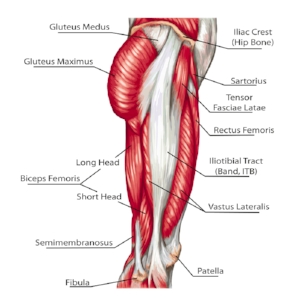
ITBS is a common overuse running injury. The IT band (who wrongly gets most of the attention) is a dense band, made of fibrous connective tissue, that connects the hip to the lower leg, while also crossing the lateral (outside) of the knee, providing stability in the process. The band is a continuation of the Tensor Fasciae Latae (TFL) muscle, acted on by the glute max, and assists in hip extension, abduction, and external rotation.
2. If you succeed in 'stretching' the band...it's called tearing! You Can't Stretch It!
Yes, you read that right, you can’t actually stretch the IT Band. Why? It’s a tendon! It’s Thick! Connective tissue is very strong….the band is like a truck tire! A few studies have attempted to measure some sort of stretch of the band itself, one going as far to harvest the band from cadavers, try to break it down by freezing and thawing the tendon and then put it under mechanical stretch to find that...NOPE, didn’t gain much more than a millimeter. If this is the case, how can you expect it to stretch by rolling the outside of your leg with a piece of foam, or by crossing one leg over the other and leaning into a wall?
3. Running causes this pain, how? Good question...It Depends!
The IT Band is tightest at 30-40 degrees of knee flexion, an angle many runners pass through multiple times in the gait cycle. In addition to this, it can help absorb ground reactive forces from each foot strike while also being required to provide more and more support of the lateral knee as the hip fatigues in the later stages of a run. This allows the hip to drop during the stance phase, causing a valgus knee, excessive foot pronation, pronation speed control, and rotation and friction at the lateral knee. Now, this is all just mechanical mumbo-jumbo. Running irritates it because it is a high-compression (no longer believed to be a friction issue), high-load spot of the lower extremity, and with movement and need for stability and function comes the opportunity for dysfunction. If you combine this with the capacity every runner has to overtrain, or that most new runners take up the sport with no coaching, we have created the perfect storm!
4. But it hurts RIGHT HERE! You mean that is NOT the cause?

We now know that the IT band courses from the outside of the hip/thigh region to the outside of the leg just below the knee, therefore the pain in on the outside of the knee. We bring this up as it is often confused with Runner’s Knee. While both interrupt our ability to enjoy running and racing, they have very different causes and presentations.
5. Treatment is relatively simple, sometimes aggressive, but simple. The commitment, on the other hand... runners don't do well with commitment.
So where do we focus our attention as we work to decrease the pain and get back to running? THE HIPS! Have you been listening? With runners, there is always a hip component of the problem; in the instance of IT Band complaints, it is a 95% hip problem. As we address how you can begin tackling this irritation on your own, remember that the sight of pain is not always...more like ‘rarely’....the site of the problem.
3 THINGS YOU CAN DO TO TREAT IT BAND SYNDROME A STARTING POINT
Self Treatment Phase 1: Foam Roll and Stretch The Cause
This should be expected, I love the foam roller. Mostly because it is simple to use and travels well, but when used correctly, it is honestly the best $20 you can spend. You are more than welcome to roll over the IT band itself, under 3 circumstances - 1. Know that it will hurt! 2. You admit you are not lengthening the IT band itself and are more addressing trigger points and just smashing the lateral quad into the femur. 3. As with any area, you do not to do it excessively.
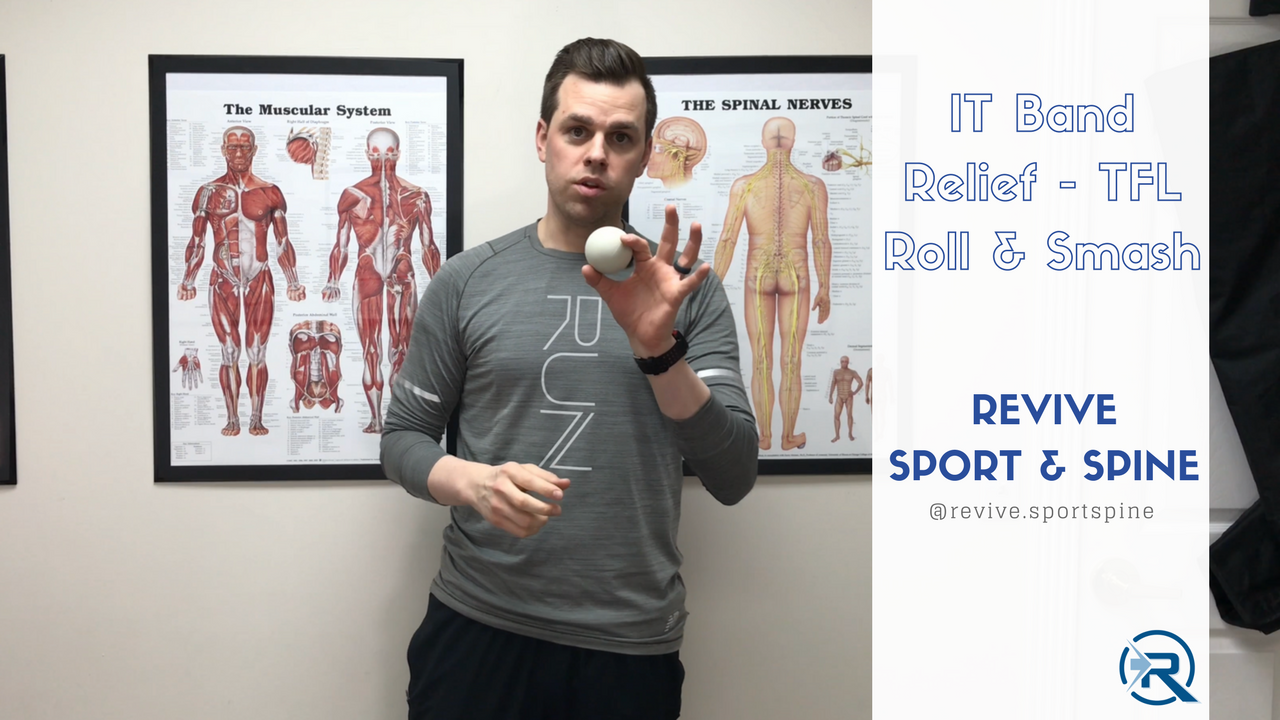
With that being said, we DO want to use the foam roller on the posterior hip to address the glutes and external rotators of the hip as well as the TFL muscle itself. Work through these videos, they are no more difficult than sitting on the roller and moving back and forth but I do suggest 3-5 sessions per day, no more than 10-25 rolls up and down on each area of the hip and leg
Self Treatment Phase 2: Strengthen The Hips
Once you have addressed the mobility of the hips and the flexibility of the associated muscles, it’s time to build strength. As we fatigue during running, our hips begin to dip and get sloppy. This not only causes us to be extremely inefficient, but it leads to mechanical breakdown and resulting IT band syndrome related lateral knee pain.
We have worked hard over the last few years to develop a warm-up routine that addresses many of the most common running injuries, and this particular injury is the one that started it all. Our suggestions here is to utilize strength bands in your warm up to ignite the posterior hip, as seen in our BANDS warm-up video. Start with 1 set of 10 for each exercise, PRIOR to running! Exercises: Clams, Bridges, Band Walks.
Self Treatment Phase 3: Increase Cadence/Change the Terrain/Work The Hills
Lastly, while we have little data on how ground reactive forces contribute to IT band complaints, clinically, it is a big enough factor for us to consider a few modifications while you run back to health. From personal experience and talking with 1000s of runners who have worked through their IT band problems in our office, the two things your IT band does not like are hard pavement and downhill running. If you are a runner in Utah, this just set off a huge signal in your brain, recalling every race you have run in the last 2 years and realizing they were ALL downhill road races!
Rarely do we shut runners down while we are working through an IT band issue, but I will suggest 3 ways to change up your running.
Increase your cadence by 10-20 steps per minute. While difficult at first, it helps relieve many common running complaints.
Check out some alternate terrain. In my book, it goes trails first, track is a close second, and lastly, the road. I get that it is easiest to run out the door and do a road run, but the track (rubber) and especially the trails are much more forgiving to your legs.
Work the hills - YES, UP! Not only is there less pounding going up a hill, but it also builds some great strength in the legs and hips!
Work on adding these simple steps to your running warm-up and cool-down. One thing I can attest to as a past ITBS sufferer, if you think that once the pain is gone, you can slack on your flexibility, your warm-up, strength training, post-run rolling session...you will be sorely mistaken
Dr. Reheisse is a Board Certified Chiropractic Sports Physician practicing in Murray, Utah. Revive Sport & Spine provides evidence-supported chiropractic care and conservative sports injury management.

The Best Running Warm-Up To Help Prevent Injury
If you are like SOME runners, you prepare for your run by completing two quick stretches. First, you bend over and touch your toes. Next, you stand up, grab your foot from behind, and pull it toward your butt.
If you are like MOST runners, you don't even do that! In place of a long-winded stance on why you should be doing this and how research shows that warming-up before exercise not only prevents injury but improves performance. We are going to cover the bases of a great running warm-up through our Bands, Balance, & Bounce Running Warm-Up Routine.
SHOULD YOU WARM-UP BEFORE RUNNING?
If you are like SOME runners, you prepare for your run by completing two quick stretches. First, you bend over and touch your toes. Next, you stand up, grab your foot from behind, and pull it toward your butt.
If you are like MOST runners, you don't even do that! In place of a long-winded stance on why you should be doing this and how research shows that warming-up before exercise not only prevents injury but improves performance. We are going to cover the bases of a great running warm-up through our Bands, Balance, & Bounce Running Warm-Up Routine.
Running Warm-Up Part 1: BANDS
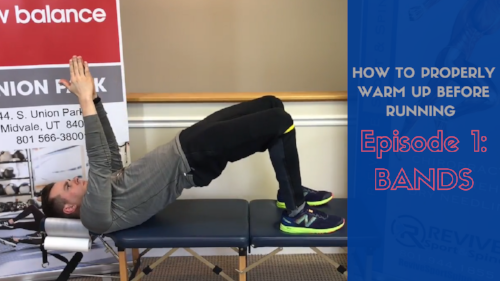
Clamshell
Glute Bridge
Band Walks
Low Row
Running Warm-Up Part 2: BALANCE

Plank
Dead Bug
Bird Dog
Single-Leg Stance
Leg Swing
Running Warm-Up Part 3: BOUNCE

Iron Cross
Scorpion
Mountain Climbers
Plank Twists
Butt Kickers
High Knees
A-Skips
Side Shuffle
Carioca
Reverse Shuffle Butt Kicker
Dr. Reheisse is a Board-Certified Chiropractic Sports Physician practicing in Murray, Utah. Revive Sport & Spine provides evidence-supported chiropractic care and conservative sports injury management.
(1) Fradkin, Zazryn, Smoliga. Effects of Warming-Up on Physical Performance: A Systematic Review With Meta-analysis. The Journal of Strength & Conditioning Research. January 2010.

R.I.C.E may have been A-L.I.E.
If you have ever rolled an ankle, pulled a hamstring, or thrown a ball too hard a few too many times you have probably heard of and used RICE. You remember...
Rest, Ice, Compression, and Elevation.
If you have ever rolled an ankle, pulled a hamstring, or thrown a ball too hard a few too many times you have probably heard of and used RICE. You remember...
Rest, Ice, Compression, and Elevation.

RICE was coined by Dr. Gabe Mirkin MD back in 1978 when it was first printed in ‘The Sports Medicine Book’. Since then, it has been the gold standard of care for just about every mild to moderate sports, and non-sports, injury…...despite the mountain of evidence against ice and complete rest.
Before we dive in, I will state that I am not totally against ice. In the acute phase of an injury it can aid in inflammation control...note I did not say complete elimination of inflammation, and can also help with pain control. What I will come out against is complete rest. We have evidence that continued cardiovascular effort speeds healing, training of the contralateral (other side) decreases recovery time, and continued activity in some way or another keeps our mind positive and focused on recovery.
Back to the topic of RICE. While many upon MANY of physicians, chiropractors, physical therapists, and athletic trainers still suggest RICE for an injury to this day, those of us who are progressive in our care methods, who look for safer, more effective ways to speed recovery have been pushing back for years. But, what does the creator have to say?
“When I wrote my best-selling Sportsmedicine Book in 1978, I coined the term RICE (Rest, Ice, Compression,Elevation) for the treatment of athletic injuries. Ice has been a standard treatment for injuries and sore muscles because it helps to relieve pain caused by injured tissue. Coaches have used my “RICE” guideline for decades, but now it appears that both Ice and complete Rest may delay healing, instead of helping.”
Before we go on, let's just address inflammation. Before you start popping NSAIDs day and night, know that inflammation is a natural process of the body to heal damaged tissues. Within inflammation are cells specifically designed with specific roles to clean up damaged tissue and accelerate repair. This could be its own LENGTHY post but for our purposes, NSAIDs block the pathway for these cells to do their job and should be used with caution, combine that with too much ice and complete rest and we have a perfect storm for mobility restriction and delayed healing.
So...what do you do with a strain/sprain injury? Ideally, if you are unsure of the severity, have it checked out. If we have no breaks, major tears, and have ligament integrity and joint stability, now is the time to stay active...to some extent.
After years of research, RICE may have been.... A-LIE.
SUGGESTIONS:

ACTIVE REST: If you are injured, rest for up to 24 hours is acceptable. After that, complete rest becomes detrimental. Under the guidance of a trained sports-medicine professional, activities such as joint range of motion, tissues stretching/flexibility, and tissues LOADing are necessary to speed healing. While we remain active, the rest component comes from decreased volume and/or intensity.
LOAD: What do we mean by load? Tissue (muscles, ligaments, tendons) and bone respond to load. In a less extreme version of the ‘what doesn’t kill you makes you stronger’ sort of way, what are you preparing your body for? If you are a runner, we need to get back to running, in some way, shape, or form...quickly. This allows your tissues to understand the LOAD they will encounter and that they need to grow, adapt, and strengthen.
ICE: Icing an injured area causes blood vessels to constrict, reducing the amount of blood that can travel to the area and, in turn, reducing the number of inflammatory cells and healing cells as well. While using ice is almost cult-like in a locker room, it would be wise to limit its use to 10 minutes at a time and only repeat 2-3 times after an injury.
EXERCISE: Lastly, general exercise helps us stay positive, stay focused, maintain our routine, and, most importantly, helps speed recovery. Cardiovascular exercise can help maintain your fitness base, decrease strength loss, and a host of other benefits that keep us on the right track during an injury.
Dr. Reheisse is a Board Certified Chiropractic Sports Physician practicing in Murray, Utah. Revive Sport & Spine provides evidence-supported chiropractic care and conservative sports injury management.