THOUGHTS ON:
Training, Rehabilitation,
&
Best Care Practices

Running Into The Ages
There are many myths about the effects of running on your body as we age, some positive, some negative, many rooted in hearsay. Most of the negative remarks we hear about running as we age often come from ‘non-runners’ - but do their comments have validity? I want to take a look at a few concerns and address what current literature has to say, give some suggestion on training, and just help you continue running... because any way you look at it, healthy and safe running is a fantastic way to maintain strength, mobility, and quality of life to age successfully!
There are many myths about the effects of running on your body as we age, some positive, some negative, many rooted in hearsay. Most of the negative remarks we hear about running as we age often come from ‘non-runners ’-but do their comments have validity? I want to take a look at a few concerns and address what current literature has to say, give some suggestions on training, and just help you continue running... because anyway you look at it, healthy and safe running is a fantastic way to maintain strength, mobility, and quality of life to age successfully!

Of the over 25+ million runners, 40% of all fall into the ‘Master’s’ category, or those over 40, with many more over 50 runners taking up running every year. As we age, our function, flexibility, and ability to withstand stress change and these considerations is where we need to focus our attention to stay healthy and prevent injury.
THE MOST COMMON MYTH
Let me know if you have heard this one... Running is BAD for your knees, don't do it!
We have all had one person or another say to us, ‘oh, running! That’s is bad for your knees, it will cause arthritis!” Really? According to numerous studies published in the American Journal of Sports Medicine and the Journal of Orthopedics and Sports Physical Therapy, running does NOT increase the incidence of osteoarthritis (OA). On the contrary, we now have evidence of higher rates of knee osteoarthritis in the sedentary population. Likewise, we have seen recently that long-term (10-20 years) of high mileage running (ambiguous but let's say 50-75, up to 100 miles per week) has been associated with increased ‘wear & tear’ or osteoarthritis...but, BUT, current data is limited in this area. I will say that this is likely as there is a small population of runners who have been charting high mileage for decades, many of which I have interacted with...some have knee/hip/ankle pain, some do not. Take it for what it is but running is better than not!
Just with any activity, running has risks related to overtraining, new to training, and accidents. While we know that running does not necessarily contribute to arthritis progression, we do have more common risks in the aging population. If you can envision yourself in 20 years, what do you think your mobility, strength, and speed will look like? If we are honest and familiar with the aging process, they all appear decreased. This poses a few problems as we run into our later years. As we age, our muscles and joints stiffen. This stiffness leads to a more ‘shuffle-like’ gait that has a decreased ability to absorb and attenuate or displace shock forces, basically how the ground fights back as we pound the pavement. This increased absorption of forces coupled with a mileage or intensity increase can cause a spike in stress fracture risk.
“...Running is not associated with accelerated radiographic OA”
While injuries are a real risk, often inevitable, measures to prevent should be one of the first and last things you do. Time must be given to the practices of warming up, cooling down, stretching, and strength training. Here, I want to share 3 very easy items you can add to your routine that can help reduce injury risk while improving your ability and enjoyment of running.

WARM-UP ROUTINE
Warming up is the best way to prepare your tissues and joints for the rigors of running and protect yourself from injury.
FOAM ROLLING
Foam rolling is a safe, somewhat comfortable, and very effective means to decrease muscle tightness without putting excess tension and stress through the tendon and attachment points.

SINGLE LEG WORK & BALANCE
One way to help prevent injury and fall risk is to improve balance and reaction time. This doesn't just include footwear type, this must include training, focus, core strength, etc.
As with other runners, progression rates must be addressed in aging runners. With the decrease in an older runner's adaptive ability, a few items may change. We have all been told to increase volume by no more than 10% from week to week, to decrease mileage by 25% every 4 weeks to allow recovery, and to strength train, cross-train, and eat, hydrate, and sleep adequately. This is all still true...but the one point I want to address and end with is RECOVERY. Whether it is sleep, cross-training, foam rolling, etc., recovery needs MORE focus in the aging runner. I truly believe that we slow down as we age, not mainly because of our ability, but because of our ability and our speed of recovery. Taking your recovery and injury-prevention measures seriously can greatly improve your running and racing abilities!
REVIEW:
There are risks associated with any sport; running is no different. Current research demonstrates that the cardiovascular, muscle, bone, and joint benefits of running far outweigh the risks.
Dr. Reheisse is a Board Certified Chiropractic Sports Physician practicing in Murray, Utah. Revive Sport & Spine provides evidence-supported chiropractic care and conservative sports injury management.

How 'The Big 3' Can Decrease Low Back Pain and Make You Stronger & Faster
If you are among the estimated 50% of all athletes who experience recurrent low back pain, don’t stress, there are exercises that can help…and a couple you should probably avoid.
Our ‘core’ is the link between our upper and lower bodies, and mastery of control here is the secret to improved strength, running efficiency, faster speed, and overall health and athleticism. In regards to back pain, our core needs to be solid to not only support a stable spine but provide for proper biomechanics when running, throwing, squatting, swimming, and even just walking.
From an anatomical perspective, our core is made up of the rectus abdominis, transversus abdominis, internal and external obliques, quadratus lumborum, glutes, and internally, the diaphragm and pelvic floor muscle. The goal of these muscles is not only to be strong but to provide a stable platform for our spine through any and all movements. Stability here has a dramatic impact on injury risk and should be a focal point in any sport and health training plan.

Lets use the example of a runner as the majority of our patient population are runners and almost every sport requires it. A strong core, one with ample endurance, allows for proper movement through our hips, legs, and upper body without excess expenditure of energy. If we are weak here, the late stages of a long run or race become challenging injury risk increase. As the core fatigues, the hips begin to dip, causing extension through the low back, excessive strain on the hamstrings, inward rotation of the femur causing excessive rotation of the tibia that can lead to excessive strain of the ligaments of the knee. This can travel down the chain and lead to poor pronation control causing shin splints, Achilles strains and plantar foot pain…you see where we are going here. Simply put, the core needs to function properly, or the whole system fails.
Most people understand parts of this and that core strength is important, but we still find people who lie on the floor, knock out 100 crunches, call it a day and then wonder why their low back hurts the next day. For this reason, I do not recommend sit-ups or crunches. These two exercises cause undue strain on the low back through repetitive flexion that stresses the discs, joints, and muscles of the lumbar spine.
While many finds these exercises easy to perform, and a staple in their routine, I want to introduce you to a more effective core routine. One that focuses on proper back support and overall functionality as an athlete, regardless of sport. These 3 exercises, termed ‘The Big 3’ were developed by Prof. Stuart McGill, rigorously studied, and proven to protect your back and improve core endurance.
The big 3 are made up of the Modified Curl-Up, Bird Dog, and Side Bridge.
1. Modified Curl-Up
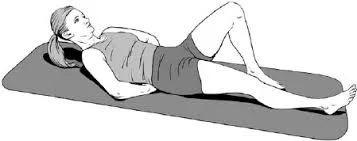
McGill Curl - Up. Low Back Pain Relief Utah.
Lying on your back, place one leg flat on the floor with the other bent. This position allows for a neutral pelvis during the movement and puts your core muscles in control of the movement without undue strain on the low back. Place your hands under the small of your low back to ensure a normal arch is maintained during the movement. Begin by bearing down to brace your abdomen, continue a normal breathing pattern throughout. If you have difficulty maintaining the brace while breathing, this is where you start. Now, pretend your neck, upper back, and low back are locked together and cannot move independent of one another (straight line from head to pelvis), slowly, lift your shoulders blades off the floor and return to the floor in a smooth pattern, only coming off the ground a couple inches. Take note of your posture, did your chin stick out, did your shoulders round forward from memories of doing endless crunches? Work through 2–3 sets of 10–15, slow and controlled.
2. Bird Dog

Bird Dog Ex. for Low Back Pain
Begin in a quadruped position with hands under shoulders and knees under hips, both about shoulder-width apart. Brace your abdominals while maintaining a neutral (straight) spine. While maintaining this posture, breath in and out, squeeze your glutes and begin moving your right arm up to a point position while also bringing your left leg to a straight position. Our goal here is to avoid rotation through the spine, maintain our posture and keeping the hips in line. Slowly return to the starting position and then perform with the opposite arm and leg. That is one repetition, perform 3 sets 10–15.
3. Side Bridge

Side Bridge - Core Stability
Lying on your side, prop yourself up on your elbow, hinge at the hips, and stack your knees on top of each other with a 90 degree bend. Maintaining a solid shoulder directly over the elbow on the ground, lift your hips up and push them forward, bringing your spine to a neutral position. Hold for a 5 count and then slowly return to the starting position. Be aware of head posture and hip extension, maintain a straight line from the head to the pelvis. Perform 3 sets of 10–15 on each side, holding each for a 5 count at the top.
Obviously, there are numerous other exercises that provide stability for the spine while strengthening the core, this is just a starting point. Focus and repetition will bring proficiency, and proficiency will bring improved performance! If you have any questions, please ask, I’m happy to answer what I can.
Until next time, train hard, train smart, and recover well.
Source: McGill, S. (2002). Low Back Disorders: Evidence Based Prevention and Rehabilitation. (2nd Ed).
Dr. Reheisse is a Board-Certified Chiropractic Sports Physician practicing in Murray, Utah. Revive Sport & Spine provides evidence-supported chiropractic care and conservative sports injury management.

7 Things You Need To Know About Dry Needling
The more we study dry needling, the more we understand its benefit and expand its use in the treatment of musculoskeletal injuries. Addressing everything from low back pain, migraines, and sports injuries; dry needling proves beneficial in the most common muscle, tendon, ligament, and joint issues seen in a physician's office.
As more practitioners utilize this technique, it is important to know the basics about dry needling, what to expect from treatment, and what conditions can benefit from this therapy. Below are seven important items to understand when seeking treatment.
The more we study dry needling, the more we understand its benefits and expand its use in the treatment of musculoskeletal injuries. Addressing everything from low back pain and migraines to sports injuries, dry needling is beneficial for the most common muscle, tendon, ligament, and joint issues seen in a sports chiropractor’s office.
As more practitioners utilize this technique, it is important to know the basics about dry needling, what to expect from treatment, and what conditions can benefit from this therapy. Below are seven important considerations to keep in mind when seeking treatment.
1. WHAT IS DRY NEEDLING?
Dry needling is a skilled technique performed by trained Chiropractic Physicians and Physical Therapists to manage neuromusculoskeletal injuries and pain and address movement dysfunction. Dry Needling utilizes a thin filiform needle to penetrate the skin, fascia, and muscles to address adhesions, trigger points, and connective tissue. This speeds healing and relieves pain by decreasing muscle hypertonicity, increasing joint range of motion, and correcting movement dysfunction by releasing a trigger-point adhesion.
2. DRY NEEDLING IS NOT ACUPUNCTURE.
Acupuncture is an ancient traditional Chinese technique that utilizes the knowledge of meridians. This focus allows an acupuncturist to work on a person's inner balance, energy, qi, and life force. Workup and exam include physical, tongue, and pulse examination. Traditional acupuncture has been widely studied and practiced for thousands of years.
Dry needling relies on the practitioner’s expanded knowledge of skeletal and neuroanatomy. This knowledge allows one to identify damaged and sensitive tissues, taut bands, trigger points, and injured and overused tissues. Dry needle practitioners perform an extensive examination that includes movement analysis, orthopedic evaluation, and a neurological workup with myotomal and dermatomal testing.
3. WHAT IS A TRIGGER POINT?
A trigger point is a spot of muscle/fascia that is hypersensitive, painful when compressed, composed of taut muscular/fascial bands that restrict oxygenated blood flow, and can refer pain and tenderness while causing motor dysfunction. According to a recent article in Current Pain and Headache Reports, muscle overtraining or direct trauma to the muscle can lead to the development of trigger points. Trigger points may develop during occupational, recreational or sports activities when muscle use exceeds the muscles capacity to handle stress, disturbing normal recovery. Dry needling differs from other types of therapy because it focuses on stimulating these trigger points and releasing the tension in order to alleviate pain.
4. WHAT IS A TWITCH RESPONSE
The twitch response is a localized, reflexive response of a dysfunctional area of muscle to palpation, or in our case, a dry needle. When needling a trigger point, this is one of our goals, as it leads to a rapid release of a taut muscle band, decreasing tightness and sensitivity of the surrounding area. A tight muscle, or one with a trigger point, will feel achy, with occasional twitching or cramping. This twitch response returns the muscle to a normal state by releasing inflammatory chemicals from the trigger point and restoring blood flow to the area. According to a recent study in the Journal of Orthopaedic & Sports Physical Therapy, The twitch may be a sign that the treatment will be successful. A local twitch response is a spinal cord reflex that produces an involuntary contraction, triggered by a snap on palpation or by needle penetration. When the patient has an involuntary twitch response, that suggests that the needle has hit the right spot.
5. IS DRY NEEDLING THERAPY PAINFUL?
Dry Needling uses a thin filiform needle to penetrate the skin, fascia, and muscles to address adhesions, trigger points, and connective tissue, thereby speeding healing and relieving pain. Often, patients will experience a mild, dull ache during treatment and up to 24 hours post-treatment. Some discomfort is experienced during the rapid ‘twitch response,’ but this discomfort is minimal and lasts only a few seconds. It is normal to have mild to moderate muscle soreness after dry needling treatment. Drinking lots of water, stretching, moving your body, and heating the sore muscles can reduce the duration of the soreness. Side effects include mild muscle soreness and bruising in some patients.
6. CONDITIONS COMMONLY TREATED WITH DRY NEEDLING.
Headaches
Knee Pain (Osteoarthritis)
Shoulder Dysfunction (adhesive capsulitis, impingement, rotator cuff strain)
Tennis & Golfer’s Elbow
Carpal Tunnel Syndrome
Hip Pain
Achilles Tendinopathy
Ankle Sprains
Muscle Strains
7. WHAT DOES CURRENT LITERATURE SAY & WHO CAN BENEFIT?
Dry Needling is an extremely effective treatment for acute and chronic pain, decreased flexibility, joint dysfunction, and recovery from physical activity and competition. Patients who undergo dry needling therapy experience less pain quickly, with most finding relief after their first treatment. According to reports published by the Journal of Orthopaedic & Sports Physical Therapy, patient function is restored much more quickly when dry needling is incorporated as part of the care plan.
Chronic upper-quarter (neck/upper back/shoulder) headaches and spinal movement dysfunction have all been associated with myofascial pain syndrome (trigger points). Kietrys et. al. published a meta-analysis on the effectiveness of dry needling on this syndrome. Based on their research and findings, they recommend dry needling as an effective option for the treatment of upper-quarter myofascial pain syndrome. They found that pain measures decreased for most patients immediately after treatment and at the four-week follow-up meeting. - Effectiveness of Dry Needling for Upper-Quadrant Myofascial Pain: A Systematic Review and Meta-analysis. http://www.jospt.org/doi/pdf/10.2519/jospt.2013.4668.
A 2015 study looking at ankle sprain rehabilitation found that adding trigger point dry needling, of the lateral lower leg peroneus muscle, to a rehabilitation plan of proprioceptive/strength exercise the four weeks following an acute lateral ankle sprain, had greater improvements in function and pain than the controlled group of just exercise. - Trigger Point Dry Needling and Proprioceptive Exercises for the Management of Chronic Ankle Instability: A Randomized Clinical Trial. http://dx.doi.org/10.1155/2015/790209
It is normal to take several dry needling therapy sessions before the muscle is fully functional again. This is because trigger points are located under deep layers of muscles, so it typically takes several sessions for the changes to take full effect. But patients will usually notice the difference right after each treatment.

What's The Deal With Hip Internal & External Rotation?
As I near my 2 year mark in clinical practice, you start to realize trends. Sometimes these trends solidify what we already know, align greatly with what we are already practicing, and allow us to continue down the beaten path. However, there are things we begin to see as key indicators on how an injury occurred, things that are so simple, they often get overlooked in a treatment plan. Today I want to briefly discuss an item that falls under both of these categories.
Hip range of motion (ROM) is often taken for granted, until that time comes where one side is severely restricted and we are unable get up off the floor without the use of our hand, or the assistance from another. As I have progressed clinically, hip ROM started as just something to jot down in a patients notes, but has quickly become one of the first areas I look to and address for nearly all of the low back pain** and lower extremity complaint (acute and overuse) patients that come into our clinic.
The problem we see is that the restriction is never symmetrical, causing compensatory patterns that quickly lead to injuries and confused patients. While getting you out of pain is our job, our goal is education and prevention. Below are some great stretches and mobility movements that are not only easy to perform, but effective is restoring symmetrical movement. Enjoy.
Learn, Practice, Perform!
Level 1 Hip Internal & External Rotation
Internal Rotation Hang
Setup: Lie flat on back with knees bent and feet about 6 inches wider than shoulder/hip width.
Step 1: Allow knees to ‘hang’ inward, letting gravity to do the work. We want to sit here for 1-2 minutes.
Step 2: If you get bored, slowly and gently, swing the legs/pelvis back and forth to induce some extra motion into internal rotation.
External Rotation/Mobilization Stretch
Setup: Lie flat on back with the leg being treated in a flexed hip position and the non-treated leg lying flat on the floor.
Step 1: Pull the foot of the flexed hip leg toward the mid-line and up toward the torso, you should begin to feel this over the posterior hip in the external rotators and glutes.
Step 2: Pull the knee toward the OPPOSITE shoulder and hold for a 3-5 count, release and repeat 10 times on each side.
Level 2 Hip Internal and External Rotation
Internal Rotation with band assistance.
Setup: Our setup is the same as the ER exercise in level one. This time with a band wrapped around the mid-foot and tracing the outside of the leg.
Step 1: The band provides a mechanical advantage and when pulled over the knee and across the body, provides assisted over-pressure into hip internal rotation.
External Rotation: Pigeon Pose
Setup: In a modified lunge position, externally rotate the treated leg and and sit back with the non-treated leg extended behind you.
Step 1: Begin with the foot of the treated leg near mid-line (easier) and begin to bring your torso closer to the ground while maintaining a straight spine.
Step 2: As this movement becomes easier, our goal is to get the treated lower leg perpendicular to your torso and away from the pelvis. Again, push the torso down toward the ground with a straight spine.
Level 3 Internal/External Rotation - 90/90 Get-up to 1/2 kneeling
Setup: Sitting up tall with a straight spine, the forward leg positioned in external hip rotation and the leg 'coming through' in internal hip rotation. The lead leg foot should be close to midline and near the other leg making this a closed position.
Step 1: Push into the ground with the outer knee of the forward leg and bring the rear leg around to the front, landing in a lunge/half kneeling position.
Step 2: In a slow and controlled manner, return to the starting position...enjoying the eccentric phase.
** A 2015 study out of the Shahid Beheshti University of Medical Sciences found that Asymmetrical and limited hip internal rotation ROM were a common finding in patients with LBP. Another study from The Sahmyook University Department of Physical Therapy found that hip mobilization brings positive effects on pain, function and psychological factors for patients with chronic low back pain, causing them to strongly recommend hip mobilization as an effective treatment method in treating chronic low back pain.
Break Up the Endurance Training With Some Strength!
Endurance athletes, especially runners, tend to shy away from strength training due to what I would consider a misunderstanding of what it can provide. After working with hundreds, probably thousands by now, of runners and triathletes over the last few years, I find very few have a regular strength plan. Some are afraid of getting hurt, some do not know how to effectively strength train, and some still have the ridiculous notion that if they lift weights they will get so bulky, the can no longer run!
Endurance athletes, especially runners, tend to shy away from strength training due to what I would consider a misunderstanding of what it can provide. After working with hundreds, probably thousands by now, of runners and triathletes over the last few years, I find very few have a regular strength plan. Some are afraid of getting hurt, some do not know how to effectively strength train, and some still have the ridiculous notion that if they lift weights they will get so bulky, the can no longer run!
Let’s address these, shall we?
STRENGTH TRAINING SAFETY
As with every sport, there is a calculated risk of injury when strength training. What will surprise some is that it is often much lower than the risk associated with training for an endurance sport. This can depend on whether you are single sport athlete (running only!) or have taken to the range that triathlon offers.
More can be read about sports specialization HERE from Dr. Greg Schiable. While this article is focused on sports specialization in children, the same can be shown for adult athletes who only participate, practice, and focus on one sport….an explanation why overuse injury rates are lower in triathletes compared to strict runners.
This morning, I read a great post from Chris Beardsley discussing the relative safety of strength training, especially when compared to endurance sports. This article launched me into, again, thinking about strength training for endurance athletes, and puts another feather in the cap of it being a great cross option to break up the often monotonous droning on that running provides.
We can show that single sport athletes are more prone to overuse injuries and burnout, as well as demonstrate the benefits strength training gives to endurance, injury prevention and movement efficiency.
An interesting point made...Beardsley writes,
“In comparison to the overall rate of injury in strength sports of between 0.24 – 5.5 injuries per 1,000 hours of training, the rate of injury during long-distance running is around 2.5 – 12.1 injuries per 1,000 hours and the rate during triathlon is around 1.4 – 5.4 injuries per 1,000 hours training.”
He goes on to state that many studies put running injuries on the higher side of the stated rate.
GETTING SWOLE
Let’s talk about getting bulky, to the point where you start to lose speed and endurance because you are just too massive to run efficiently. It used to be that this conversation was primarily had with female athletes, but more and more we find male runners of the same belief. In short, this is non-sense! Why is that you ask?
GENETICS:
As a younger male, I spend countless hours, day after day, month after month, for a number of years, trying to pack on muscle and reach the elusive 200 lb mark. It was a stage in my life….enjoyable and very educational… I have since returned to my love of endurance training, but strength training remains a big part of what keeps me fit, injury free, and happy.
ENERGY & FOCUS:
I never made it to that 200 lbs mark. Mainly because I could not eat, sleep, and breath lifting weights and energy intake. To go from a slim and trim 155 to 200 is a feat which requires a lifestyle shift and not much time for anything else. As runners, we simply can not consume enough, or slow down enough to really pack on muscle. To make that shift, one would have to take all the time invested in putting in the miles...almost completely stop...and replace it with lifting weights...Not going to happen! Stop worrying about getting bulky and think of what a 10-20% increase in strength could do for you during those last miles of a long run or how you can conserve energy by moving more efficiently.
BUT GYMS ARE SCARY
Many endurance athletes just don’t know what to do when they end up in a gym. Fortunately, popular running sites and magazines have jumped aboard the strength train (locomotive type), and there are countless exercises and routines available if one simply does a Google search.
My personal advice is to first master your body weight, which allows you to more comfortably perform exercise at home or on a track after a run. Begin with push-ups, pull-ups, squats, lunge variations and jumps. Once you reach a point where sets of 10, 20 or even 50 feel ‘easy’, it may be time to add in some weighted movements like kettlebell swings (my #2), deadlifts (my #1), and overhead press and pull variations.
If you feel like you have been in a rut this summer or have had more than your share of injuries lately, maybe it is time to try something new? Change up the routine a little...it is likely that you will enjoy the change and be surprised by the outcome.

What Do My Hands Do When Running?
Every runner has been through this, and most of us have tried more styles than Tiger Woods has swings, but seriously…what the heck do I do with my hands when I am running?
Lets get something straight from the start, when we are on our long run or are racing, wasted energy is just pure evil. With that, being relaxed up top while running is the name of the game. There should be no clinched fists, shoulders floating up around your ears, violent rotation from side to side or veins popping out of your face and neck like you are trying to pass a block of cheese. Everything above your waist should be relaxed and fluid…like a breeze blowing through a meadow (I don’t know…it sounds relaxing, just go with it).
If you find you are always having side stitches, cramps in you upper back, headaches, numbness in your hands and fingers or are just uncomfortable when you run, here are a few easy tips for your next run. Try them out, you really have nothing to lose.
Step 1: Shoulders down and back, head up with ears over shoulders looking ahead. Until you get this, your arm swing is lost and so is a ton of energy.
Step 2: Keep your elbows bent somewhere between 45–90 degrees. As you run, work on lightly driving your elbows back, letting gravity bring them back forward.
Step 3: Keep those hands loose. Pretend you are holding something delicate in your hands (a flower, really small animal, whatever) and the last thing you want to do is squeeze it too tight.
Step 4: About every 100–200 steps, shake your arms and hands out. Allow your shoulders to relax if they went back up to visit your ears, pick your eyes up from the ground, reset and push forward.
Finding what works for you, as I have outlined what works for me, can allow you to run more comfortable….allowing you to run further and faster!
Dr. Reheisse is a Board Certified Chiropractic Sports Physician practicing in Cottonwood Heights Utah. Revive Sport & Spine provides evidence-supported chiropractic care and conservative sports injury management.

A Quick Take on Running Form
As our last article, stretching, went well, lets keep on the controversial topics and take a brief look at another that gets runners all up in a huff, because my technique/form is better than yours! SPOILER — it IS the best…for you!
As our last article, stretching, went well, lets keep on the controversial topics and take a brief look at another that gets runners all up in a huff, because my technique/form is better than yours! SPOILER — it IS the best…for you!
When you talk about running form, there are many different camps: Newton Running, Chi, Good Form, Pose, etc., all preaching less injury, better efficiency and faster times. Who is right? What do we know about form anyway? Is the barefoot movement the right way to go or is maximal best?
Well….Yes.
Yes? What do you mean? What I mean is that yes, with all those things you could experience less injury, better efficiency, and faster running, but why?
If you choose any one of the above listed running camps and stick to the plan, have patience and work through the changes, you would come out a better runner most of the time. I am not saying you are not going to hit some injury set backs, but all of these plans focus on two things: (1) Drills that make you stronger and develop better neuromuscular control (2) Running, and lots of it! Both of those things will make you a better runner. All come with their pros and cons, but here is what we know (below) as well as an interesting look at the foot strike of the fastest distance runners on the planet.
Forefoot/Mid-foot Strike vs. Heel Strike Runners
Here are the simple facts to this debate. While one might find comfort, balance and efficiency with one and another person the other…it basically comes down to what works for you. If you spend months (and it takes MONTHS to make any kind of change to your form) and are met with pain and discomfort while running, is that drop of 5 seconds per mile worth it? I would personally rather enjoy my run! Now, the injuries associated with each as NEITHER are injury free.
FOREFOOT RUNNERS
Decreased ground reactive forces = less ankle/knee/hip joint pain.
Increased risk of foot stress fractures as the metatarsals experience more force. Beware of march fractures or even a neuroma as your feet adjust.
Increased tension taken on by the Achilles = Higher risk of Achilles tendon injuries or soleus/gastroc strain. Though that Achilles is designed to absorb that shock and provide some recoil, if you have never run this way, it must be slowly introduced to the drastic change in work load. (BEMS, 2013).
HEEL STRIKERS
The American College of Sports Medicine showed that Heel Strikers experience more ankle/knee/hip related injuries as well as a higher rate of stress fractures of the tibia and femur.
With the advent of shoes, especially the newly formed maximal movement, increased padding can decrease forces in heel strikers allowing a more comfortable run.
Both forms of running injuries can be prevented with adequate strength and mobility as well as allowing your body to rest, recover, and adapt to the stress that running provides. I have personally worked through a few running form programs and have not adopted one style, but parts from each through drills and exercises that ALLOW ME TO RUN MORE COMFORTABLE. That is what is most important because if you do not enjoy your run, it will feel like work….and who likes being at work? Below are some basic tips to help you run more comfortable. If that equals better efficiency and faster times, well good for you, I’m about enjoying my run and taking in the vast adventures around us. Happy Running!
Easy Tips to Run More Comfortably
Cadence: Higher cadence (steps per minute) has been shown to decrease ground reactive forces, shoot for 170–180 per minute.
Posture: Neutral spine with a slight lean forward (5-ish degrees) coming from the ankles, not the hips. Keep the hips tucked under you, remember ‘Without Limits’?…like that. Also, don’t let your head get ahead of you, chin tucked back with ears over shoulders and arms relaxed.
Foot Landing: Posture will help with this one as well. Simple goal here, your foot strike should land as centered under your body as possible
Rest & Recovery: You will not get stronger, adapt to the stresses of training or get faster if you do not take rest days and allow your body to recover. You recover when you sleep….ahh the dream life, just running and sleeping…if only.
Trails: Run on trails as much as possible. Not only does the challenging terrain develop strength and stability but the ground does not fight back like the road does. Trails will absorb a lot of the force you put into it with little kick back, making for a much more comfortable day after. More on trail running to come later but just thought I would throw this in last minute.
Dr. Reheisse is a Board Certified Chiropractic Sports Physician practicing in Cottonwood Heights Utah. Revive Sport & Spine provides evidence-supported chiropractic care and conservative sports injury management.

S T R E T C H I N G
Do you stretch? When? How? More importantly WHY? This will be brief, and there are many sides to this table, but where do you sit on this topic? When the discussion about stretching arises, it is sort of like the old saying on religion and politics; no matter what you have to say or how compelling your argument, you will never change the views of the other person and will usually walk away further apart on the subject than when you began.
Do you stretch? When? How? More importantly WHY? This will be brief, and there are many sides to this table, but where do you sit on this topic? When the discussion about stretching arises, it is sort of like the old saying on religion and politics; no matter what you have to say or how compelling your argument, you will never change the views of the other person and will usually walk away further apart on the subject than when you began.
Lets start the conversation…shall we?
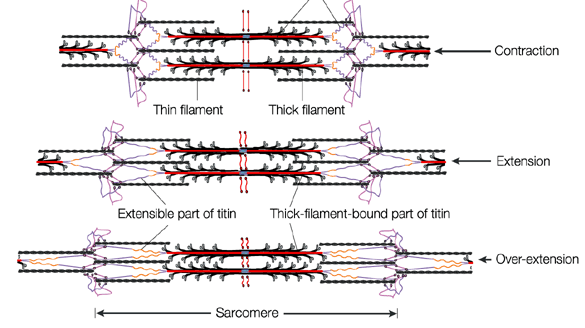
When you stretch, what are you trying to accomplish? Are you trying to lengthen a muscle, increase range of motion or are you just reaching and praying that one day you can wrap your fingers around those toes down there? Truth is, you can elongate a muscle, kind of, and only temporarily. What you are actually stretching is the sarcomere, the contractile unit of the muscle, causing it to elongate but also decreasing its ability to contract. The sarcomere at rest, has quite a bit of overlap between the actin and myosin filaments. As you stretch, it creates less overlap and leaves the muscle with not much to grab on to when it is called on to work, decreasing its power and increasing risk for injury.
When a sarcomere is stretched, there is less myosin and actin overlap causing less power and increasing risk for strain.
In January 2014, The Journal of Strength and Conditioning Research studies the effects of static and dynamic stretching, revealing that static stretching had a negative impact on performance for up to 24 hours while dynamic stretching improved measures in power movements such as jumping. (Haddad et al.)
I do not despise stretching, just stretching of the static type before activity. I cringe when I see someone hop on to the field, or out of their car at a race and reach for their toes, pull their heel to their butt and off they go. I refer to this as the ‘stretching the cold rubber band trick’, it may work once or twice but eventually it is going to pop.
Some Non-Stretching (Static) Ideas
Before exercise: Activate and be Dynamic! Activate the muscles you are going to use, increase blood flow and ease into your exercise. Before running, activate the glutes, hips and core followed by some dynamic movement such as skips, leg swings and sport specific drills.
Foam Rolling provides a much better option to stretching as it allows trigger point work, reduced tension at the myotendinous junction and helps with circulation of fresh, oxygenated blood to flush out H+ buildup from lactate* breakdown, decreasing DOMS.
Mobility: Some may confuse mobility and stretching but the key difference here is that it not only works with muscle flexibility but joint mobility as well. Exercise or not, mobility should be addressed daily with focus on your trouble areas, which, depending on your sport and job, probably includes hips and thoracic spine.
This is the side of the table I sit on when it comes to stretching. This position comes from recent literature but mostly from personal & professional experience. Take it for what it is but if you are suffering from injury and you just can’t get it to loosen up, maybe stretching is the problem, not the answer.
Dr. Reheisse is a Board Certified Chiropractic Sports Physician practicing in Cottonwood Heights Utah. Revive Sport & Spine provides evidence-supported chiropractic care and conservative sports injury management.

Hamstring: Proximal Strain & Tendinopathy
Hamstring injuries can be a beast; they drag you down mentally and physically as treatment tends to draw out and disrupt your training plans and goals. They present with pain and tenderness near the gluteal fold and over the posterior thigh, making it sometimes difficult to run, ride, walk and even sit. What I would like to do here today is briefly (as a longer post is to come later) give you some basic suggestions based on research findings, what patients have responded positively to, as well as what to do about your training and overall fitness.
As the weather cools down, a thought of last year comes to mind. During this time I was beginning my sports residency in St. Louis under one of the best conservative care sports physicians I have had the pleasure to work with. Of all the cases we encountered, one injury (many actually) sticks out as a very common occurrence this time of the year….Proximal Hamstring Strain & Tendinopathy.
Hamstring injuries can be a beast; they drag you down mentally and physically as treatment tends to draw out and disrupt your training plans and goals. They present with pain and tenderness near the gluteal fold and over the posterior thigh, making it sometimes difficult to run, ride, walk and even sit. What I would like to do here today is briefly (as a longer post is to come later) give you some basic suggestions based on research findings, what patients have responded positively to, as well as what to do about your training and overall fitness.
There are many misconceptions out there about hamstring tightness and what can be done about it. What we do know is that stretching, and stretching, and stretching the hamstrings some more, trying your hardest to touch the floor is not very effective, even counterproductive (1). It may lengthen the muscle for a short period of time but the stress it places on the enthesis and the myotendinous junction could set you up for further injury if care is not taken.
In the acute or reactive phase of a hamstring tendinopathy, there are a few key thoughts to consider that can aid in recovery. At REVIVE Sport & Spine we focus on treating our athletes while keeping them active in sport but sometimes a decrease in activity is needed while a select few may need to shut down for a few weeks. When working with tendinopathy issues, offloading the tendon from compressive and tensile loads is key (2). Compressive loads are just what they sound like, anything that can compress the muscle or tendon such as sitting. Tensile loads on the other hand are more dynamic in nature including activities like running and jumping. Our goal in maintaining activity during treatment is to decrease both compressive and tensile loads while completely eliminating movements that combine the two such as hill running, static stretching and over striding (common with treadmill running, one reason I dislike this winter running option and also what I believe causes so many proximal hamstring issues in the winter months). What can you do for activity during treatment? Running on flat, soft surfaces at a decreased intensity and lower volume is one option. Begin strengthen the hamstrings, gently with slow progression, utilizing isometric and eccentric type exercises (3) while also decreasing the time spent compressing the tendon in activities like sitting and static stretching. Besides, too much sitting is just not good for your health in general!
While this is just the tip of the iceberg, we will dive deeper into hamstring issues in the near future focusing more on possible causes and some ideas as to what you can do to speed up your progress. We will look at glute strength, hamstring exercise progression, the effect of tight hip flexors and weak abdominals as well as anterior pelvic tilt and poor lumbopelvic stability.
As always, be sure to consult your personal physician before taking on any exercise or self prevention plan, self diagnosis and treatment is never a good option. If you feel you are developing a hamstring issues and want to get ahead of it quickly, the team at REVIVE Sport & Spine is ready to help you build and get the most out of your winter training. Happy Holidays and Happy Movement!
Resources:
Sole G, Milosavlijevic S, Nicholson H, Sullivan J. Selective Strength Loss and Decreased Muscle Activity in Hamstring Injury. J Orthop Sports Phys Ther 2011;41(5):354–363, Epub2 February 2011. doi:10.2519/jospt.2011.3268
Cook JL, Purdam C. Is Compressive Load a factor in the Development of Tendinopathy? Br J Sports Med. 2012 Mar;46(3):163-8. doi: 10.1136/bjsports-2011-090414.
Jayaseelan DJ, Moats N, Ricardo CR. Rehabilitation of Proximal Hamstring Tendinopathy utilizing eccentric training, lumbopelvic stabilization, and trigger point dry needling. Journal of Orthopaedic and Sports Physical Therapy. 2014 Mar;44(3):198-205. doi: 10.2519/jospt.2014.4905. Epub 2013 Nov 21.