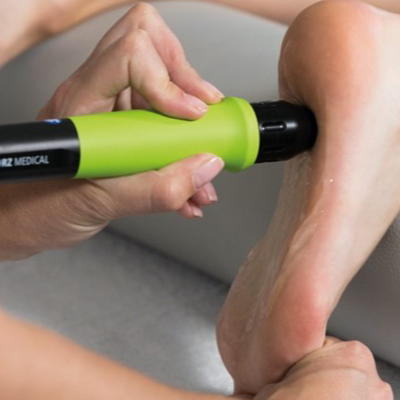
Shockwave Therapy

Shockwave Therapy for Rotator Cuff Tendinopathy and Calcific Tendinitis in Murray, UT: A Non-Surgical Treatment Option for Persistent Shoulder Pain.

Shoulder pain that flares when you reach overhead, sleep on your side, or lift a bag can make everyday life exhausting. Rotator cuff tendinopathy, and especially calcific tendinitis, is a leading cause of persistent shoulder pain in active adults. The encouraging news is that many patients can find relief without surgery, and shockwave therapy is one of the best-supported tools for getting there.

The Anatomy: Your Rotator Cuff
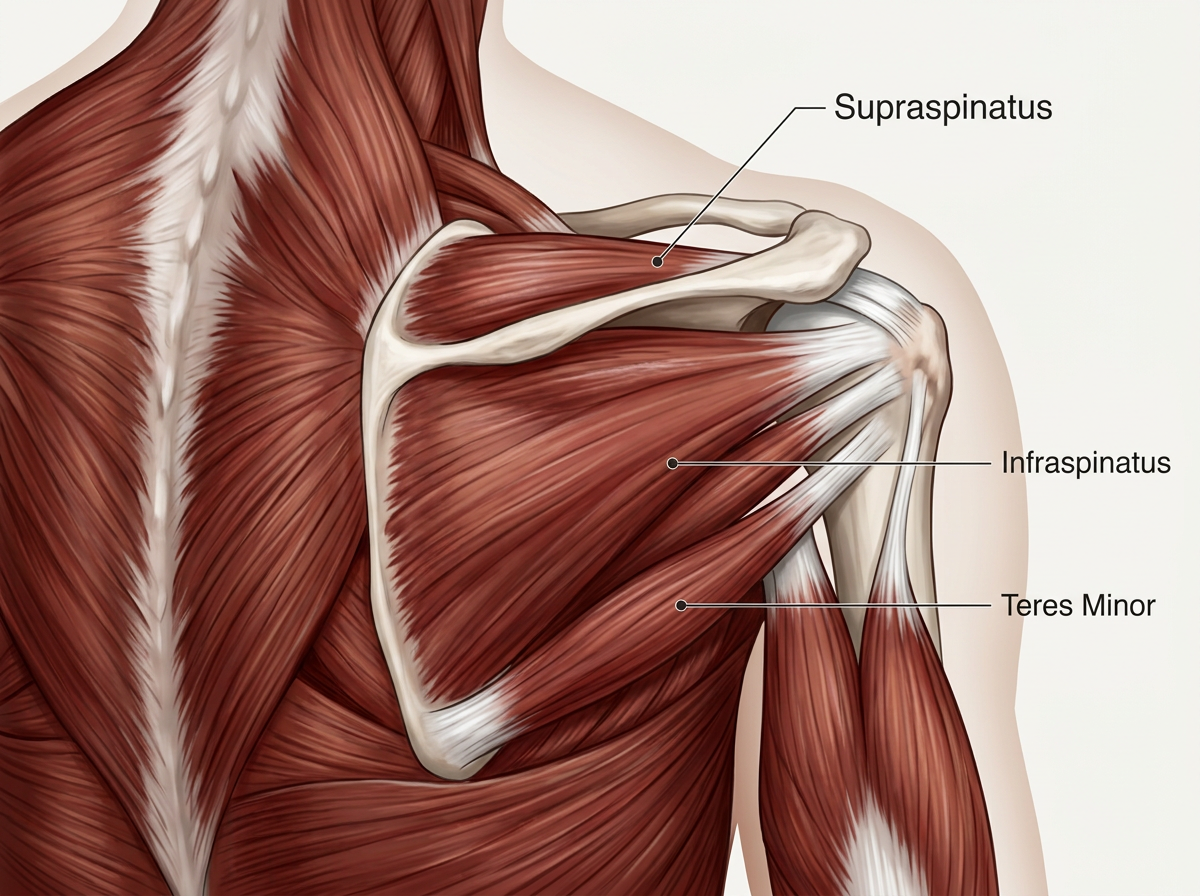
The rotator cuff is a group of four muscles, the supraspinatus, infraspinatus, teres minor, and subscapularis, whose tendons wrap around the head of the upper arm (humerus) and attach it to the shoulder blade (scapula). Together they stabilize the shoulder and control its wide range of motion, keeping the ball centered in the socket while you reach, lift, and rotate. The supraspinatus, which runs across the top of the shoulder, is the most commonly affected tendon.

Rotator cuff tendinopathy is a degenerative overload condition of these tendons. In some cases, calcium deposits form within the tendon, a condition called calcific tendinitis. These chalky deposits can irritate the surrounding tissue and cause intense, sometimes debilitating pain, particularly during the phase when the body attempts to reabsorb them. [1]

Common Causes of Shoulder Pain & Rotator Cuff Tendinopathy

Rotator cuff problems develop from a mix of overuse, age, and mechanics. Common causes include repetitive overhead activity in sports such as swimming, tennis, and throwing, or in occupations like painting and construction; sudden increases in lifting or training; poor shoulder-blade mechanics and posture; weakness or imbalance in the rotator cuff and surrounding muscles; and age-related tendon degeneration and reduced blood supply. Calcific tendinitis is most common between ages 30 and 60 and, for reasons not fully understood, occurs more often in women.

How Rotator Cuff Tendinopathy Can Limit Your Activities

The condition typically causes pain with overhead reaching, weakness when lifting or rotating the arm, and night pain that disrupts sleep, especially when lying on the affected shoulder. For active people, the impact is broad: swimmers lose their stroke, weightlifters cannot press overhead, and everyday tasks like reaching a shelf, fastening a seatbelt, or putting on a jacket become painful. Calcific tendinitis can produce sudden, severe pain that sharply limits all shoulder use. Because the shoulder is involved in so much of daily life, an unresolved rotator cuff problem can be genuinely disabling and can lead to stiffness and further loss of function over time.

Why Shockwave Therapy Is a Leading Option for Shoulder Injuries

For rotator cuff tendinopathy, especially calcific tendinitis, extracorporeal shockwave therapy (ESWT) is one of the best-supported non-surgical treatments available. ESWT delivers acoustic pressure waves into the tendon that stimulate new blood vessel formation, promote collagen production and tissue remodeling, reduce pain by influencing local nerve activity, and, importantly, help break down and encourage reabsorption of calcium deposits.
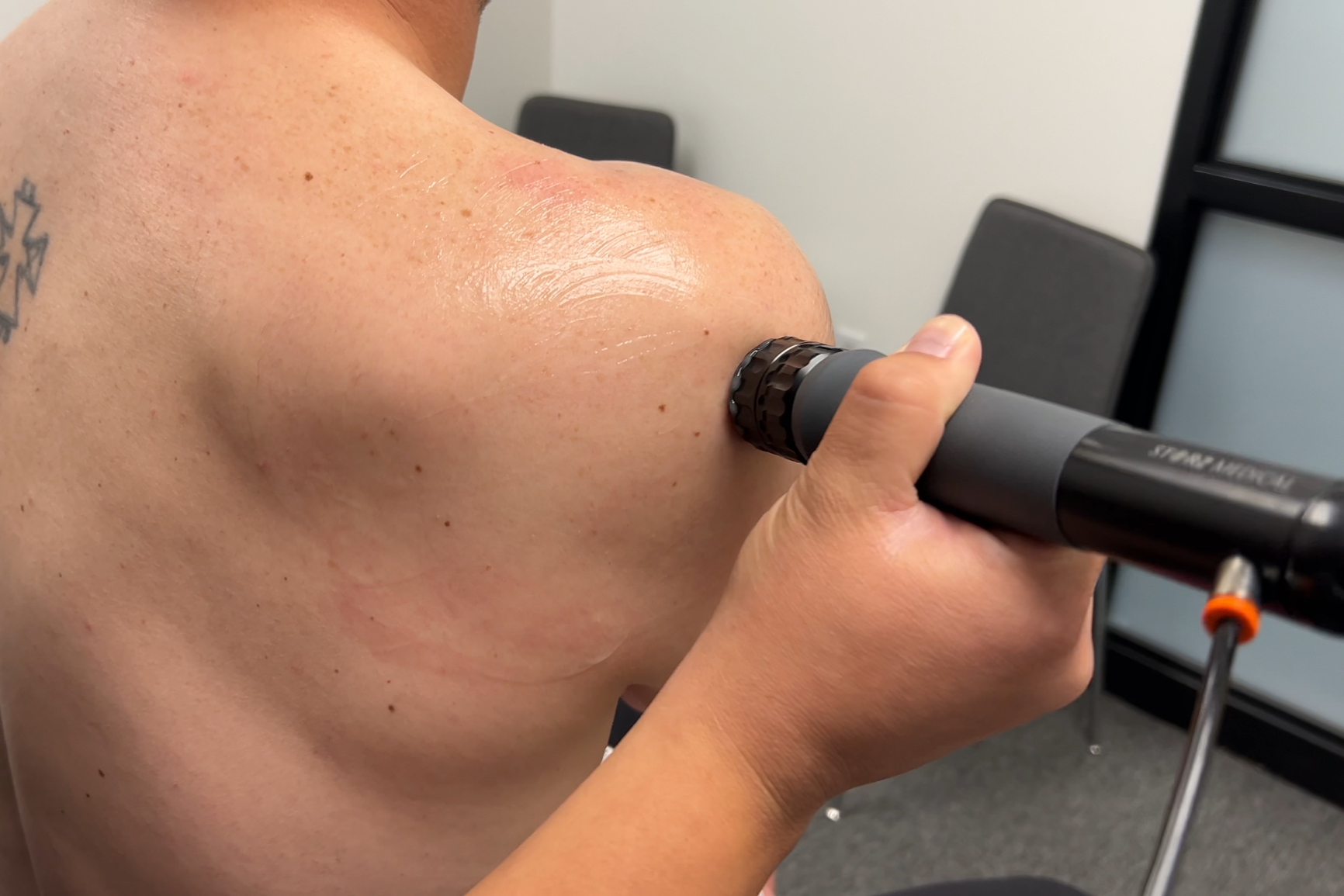
Demonstration of shockwave therapy for shoulder pain, rotator cuff tendinopathy, and shoulder calcific tendinopathy by Dr. Reheisse at Revive Sport & Spine in Murray, Utah.

The evidence for calcific tendinitis is especially strong. In a landmark randomized controlled trial published in JAMA, Gerdesmeyer and colleagues showed that shockwave therapy significantly improved shoulder pain and function and reduced or eliminated calcium deposits compared with placebo, with higher-energy treatment outperforming lower-energy treatment. [1] A systematic review in the Annals of Internal Medicine concluded that high-energy shockwave is effective for chronic calcific tendinitis [2], and a meta-analysis found clinical improvement alongside resorption of calcific deposits at six-month follow-up. [3] A network meta-analysis comparing non-surgical options supports shockwave among the effective treatments [4], while a Cochrane review offers a more thorough read of the overall evidence, a useful reminder that results vary and treatment should be individualized. [5]

As with all tendinopathies, shockwave works best alongside rehabilitation. At Revive Sport & Spine, we combine Shockwave Therapy with a progressive rotator cuff and scapular strengthening program, mobility work, and posture and mechanics retraining. This dual approach addresses the immediate problem while rebuilding long-term shoulder stability and strength.

What to Expect During Shockwave Therapy For Shoulder Pain

Each session lasts about 5 to 15 minutes, requires no anesthesia, and involves no downtime. Most patients complete a series of 6-12 sessions spaced about a week apart, with continued improvement over the following weeks as the tendon heals and deposits reabsorb. You may feel a firm tapping over the shoulder during treatment, with intensity adjusted to your tolerance. Studies recommend avoiding anti-inflammatory medication and icing for 48 hours after each session so your natural healing response can proceed. (Always consult with your PCP before adding or changing any medications).

KEY TAKEAWAYS

✓ The rotator cuff is four muscles and tendons that stabilize the shoulder; the supraspinatus is most often affected.

✓ Calcium deposits can form within the tendon (calcific tendinitis), causing intense shoulder pain.

✓ A landmark JAMA trial showed shockwave reduced calcium deposits and improved pain and function versus placebo. [1]

✓ Systematic reviews confirm high-energy shockwave promotes resorption of deposits and improves function. [2] [3]

Don't let shoulder pain keep you up at night or hold you back from the activities you love. Call Revive Sport & Spine at 801-944-1855 or schedule online to find out whether shockwave therapy is right for you. We are located at 1996 E 6400 S, Suite 260, in Murray, Utah, serving Salt Lake City, Holladay, Midvale, Sandy, Cottonwood Heights, Millcreek, and the greater Salt Lake Valley.


Frequently Asked Questions About Shockwave Therapy, Shoulder Pain, and Rotator Cuff Tendinopathy

Does shockwave therapy work for rotator cuff tendinopathy?

Shockwave therapy may help reduce pain and improve shoulder function in some patients with rotator cuff tendinopathy, but the evidence is strongest when calcium deposits are present. For non-calcific rotator cuff tendinopathy, shockwave is generally best used as an addition to progressive strengthening, mobility, and activity modification rather than as a stand-alone treatment.

What is the difference between rotator cuff tendinopathy and calcific tendinitis of the shoulder?

Rotator cuff tendinopathy involves irritation and degenerative changes within one or more rotator cuff tendons, most commonly the supraspinatus. Calcific tendinitis, also called calcific rotator cuff tendinopathy, occurs when calcium deposits develop within a rotator cuff tendon. Both can cause pain with reaching, lifting, overhead activity, and sleeping on the affected shoulder, but calcific tendinitis may also cause episodes of sudden and severe shoulder pain.

How long does it take shockwave therapy to work for shoulder pain?

Some patients notice improvement within the first few treatments, but shockwave therapy is designed to stimulate a biological healing and remodeling response rather than provide an immediate fix. Pain and function can continue to improve for several weeks or months after treatment. In calcific tendinopathy, changes in the calcium deposit may also continue after the treatment series has been completed.

Does shockwave therapy for the shoulder hurt?

Shockwave therapy usually feels like a series of firm, rapid taps over the painful tendon. Treatment intensity can be adjusted based on your tolerance, and most sessions last only a few minutes. Temporary soreness, tenderness, redness, or mild bruising can occur afterward, but patients can typically continue most normal daily activities.

Should I do shoulder exercises while receiving shockwave therapy?

Yes. Shockwave therapy should usually be combined with an appropriate rehabilitation program. Rotator cuff and shoulder-blade strengthening, mobility exercises, and gradually rebuilding tolerance to lifting and overhead activity address the shoulder's underlying capacity while shockwave targets the painful tendon or calcific deposit. Recent research continues to support combining appropriate rehabilitation with treatments such as ESWT rather than relying on a passive treatment alone.

Where can I get shockwave therapy for rotator cuff or shoulder pain in Murray, Utah?

Revive Sport & Spine in Murray, Utah provides focused shockwave therapy for appropriate cases of persistent shoulder pain, including rotator cuff tendinopathy and calcific rotator cuff tendinopathy. Treatment is combined with an individualized rehabilitation plan to improve shoulder mobility, rebuild rotator cuff and scapular strength, and help you return to lifting, sports, work, and normal daily activities.

Can shockwave really dissolve calcium deposits?

Shockwave therapy can help the body break down and reabsorb calcium deposits within the rotator cuff tendon. Rather than literally “dissolving” the calcium during treatment, the acoustic waves stimulate a biological response that can promote fragmentation and gradual resorption of the deposit over time. High-quality randomized trials have shown that ESWT can significantly reduce or completely eliminate calcific deposits while also improving shoulder pain and function. 11 These changes may continue for several weeks or months after the treatment series is completed.

Will shockwave therapy help me avoid shoulder surgery?

For many patients with calcific tendinitis or chronic rotator cuff tendinopathy, shockwave therapy combined with progressive rehabilitation may improve pain and function enough that surgery is not necessary. This can be especially valuable when symptoms have persisted despite rest, medication, physical therapy, or activity modification. However, results depend on factors such as the type and severity of the tendon problem, the size and location of any calcium deposit, how long symptoms have been present, and whether there is a significant rotator cuff tear or other structural injury. Shockwave is generally considered a non-surgical treatment option before more invasive procedures are considered.

How many shockwave therapy sessions will I need for shoulder pain?

Most patients complete a short series of shockwave treatments rather than a single session. A typical plan may include approximately 6 to 12 treatments spaced about one week apart, although the exact number depends on your diagnosis, symptom severity, treatment response, and whether calcium deposits are present. Improvement is often gradual, and the shoulder may continue to feel better for several weeks after the final treatment as the tendon remodels and, in cases of calcific tendinitis, the calcium deposit continues to be reabsorbed. Shockwave also works best when paired with an appropriate rotator cuff and shoulder-strengthening program.

Who should not have shockwave therapy for shoulder pain?

Shockwave therapy is safe for most appropriately screened patients, but it is not right for everyone. Treatment may need to be avoided or modified when certain conditions are present, including a tumor in the treatment area, significant bleeding or clotting disorders, certain implanted medical devices near the treatment area, or other medical conditions that could make shockwave inappropriate. The location and intensity of treatment also matter, particularly with higher-energy focused shockwave therapy. Before starting treatment, we review your medical history, shoulder symptoms, and examination findings to determine whether shockwave therapy is an appropriate and safe option for you.


REFERENCES

[1] Gerdesmeyer L, Wagenpfeil S, Haake M, et al. Extracorporeal shock wave therapy for the treatment of chronic calcifying tendonitis of the rotator cuff: a randomized controlled trial. JAMA. 2003;290(19):2573-2580. https://pubmed.ncbi.nlm.nih.gov/14625334/

[2] Bannuru RR, Flavin NE, Vaysbrot E, Harvey W, McAlindon T. High-energy extracorporeal shock-wave therapy for treating chronic calcific tendinitis of the shoulder: a systematic review. Annals of Internal Medicine. 2014;160(8):542-549. https://pubmed.ncbi.nlm.nih.gov/24733195/

[3] Ioppolo F, Tattoli M, Di Sante L, et al. Clinical improvement and resorption of calcifications in calcific tendinitis of the shoulder after shock wave therapy at 6 months' follow-up: a systematic review and meta-analysis. Archives of Physical Medicine and Rehabilitation. 2013;94(9):1699-1706. https://pubmed.ncbi.nlm.nih.gov/23499780/

[4] Wu YC, Tsai WC, Tu YK, Yu TY. Comparative effectiveness of nonoperative treatments for rotator cuff calcific tendinopathy: a network meta-analysis of randomized controlled trials. Archives of Physical Medicine and Rehabilitation. 2017;98(8):1633-1640. https://pubmed.ncbi.nlm.nih.gov/27554465/

[5] Surace SJ, Deitch J, Johnston RV, Buchbinder R. Shock wave therapy for rotator cuff disease with or without calcification. Cochrane Database of Systematic Reviews. 2020;3:CD008962. https://pubmed.ncbi.nlm.nih.gov/32128761/
How We Treat Knee Osteoarthritis: Soft Tissue Therapy, Joint Manipulation, and Shockwave

By now you know the theme of this series: knee osteoarthritis (OA) is a whole-joint condition, and the goal of care is to restore the joint’s capacity to move and load comfortably. Hands-on care plays an important role, especially early on, by calming pain and stiffness enough that you can move, strengthen, and get back to the things you value. At Revive Sport & Spine in Murray, UT, three tools feature prominently in our management of knee OA: soft-tissue therapy, joint manipulation and mobilization, and shockwave therapy. Here’s what each does and what the research says.

Soft Tissue Therapy for Knee Osteoarthritis

An arthritic knee rarely hurts in isolation. The muscles and connective tissue that cross the joint (the quadriceps, hamstrings, calf, and the iliotibial band and hip muscles above) often become tight, guarded, and tender as the body protects a sore and irritated joint. That protective tension changes how the knee tracks and loads, and it can become a source of pain in its own right.

Soft tissue therapy, including targeted muscle release techniques, instrument-assisted work, and myofascial techniques, aims to reduce muscular guarding, improve tissue mobility, and reduce pain sensitivity, allowing the joint to move more freely. Soft tissue approaches have been shown to improve pain and function in knee OA and are low-risk.4 We use soft tissue work not as a stand-alone ‘fix’ but as a way to make movement and loading more comfortable, which sets up everything else we do.

Joint Manipulation and Mobilization for Knee Osteoarthritis

Osteoarthritic knees frequently feel stiff and restricted, and that restriction isn’t only in the main hinge of the knee; it often involves the kneecap, the small tibiofibular joint, and the neighboring hip and ankle. Skilled joint manipulation and mobilization apply controlled, specific movement to these joints to restore glide, reduce stiffness, and improve range of motion.

The evidence here is encouraging, particularly when manual therapy is combined with exercise. A systematic review with meta-analysis found that adding manual therapy to an exercise program produced greater improvements in pain and function for people with knee or hip OA than exercise alone. 1 Broader overviews conclude that manual therapy for the knee is generally clinically effective and safe, while noting that the quality of individual studies varies, a good reason to use it as one part of a comprehensive plan rather than the whole plan. 2 In practice, we use manipulation and mobilization to open up comfortable movement quickly, then reinforce those gains with rehab so they last.

Shockwave therapy for Knee Osteoarthritis

Extracorporeal shockwave therapy (ESWT) delivers focused acoustic pressure waves to the tissues around the knee. It is thought to work by stimulating local blood flow, modulating pain signaling, and encouraging the body’s tissue-repair responses. It is non-invasive, performed in the office in a few minutes, and requires no medication or downtime.

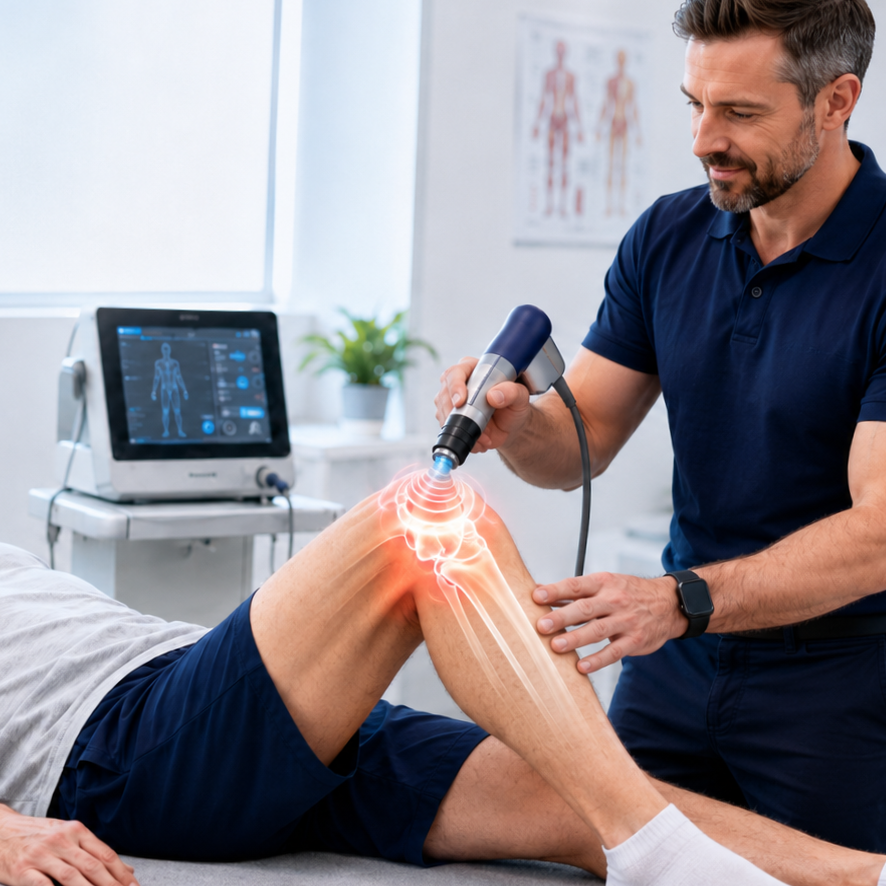
Shockwave Therapy for Knee osteoarthritis pain relief. Sports chiropractor providing shockwave therepy to the knee.

The research on shockwave for knee OA is genuinely promising. A systematic review and meta-analysis of randomized trials found that ESWT significantly improved pain and function in people with knee osteoarthritis, with an average pain reduction on the VAS scale, meaningful improvements in WOMAC function scores, and better range of motion, all with few minor side effects. 3 The strongest effects were seen in the short to medium term, which fits how we use it: as a way to reduce pain enough that you can engage fully in strengthening and return to activity.

Best Knee OA Treatment: Why We Combine These and Always Add Exercise

Each of these tools can reduce pain and improve movement, but none of them, on their own, rebuilds the strength and capacity an arthritic knee needs for the long haul. That’s why we treat them as a bridge. Soft tissue therapy, joint manipulation, and shockwave therapy calm the joint and restore comfortable motion; exercise rehab then builds the durable strength and control that keep symptoms down and help reduce future flare-ups. International guidelines are clear that active, exercise-based management belongs at the center of knee OA care, with hands-on modalities as valuable supporting players. 5

This combination of treatment modalities to relieve, restore, and rebuild is the backbone of how we approach knee osteoarthritis at Revive Sport & Spine. In Part 4, the final article in this series, we get specific about the exercise rehab that manages the condition long-term and keeps you doing what you love.

Key Takeaways Before We Progress to Part 4

✓  Our in-clinic care targets the painful, sensitized tissues around an arthritic knee to restore comfortable movement.

✓  Adding manual therapy to exercise improves pain and function more than exercise alone for knee OA. 1

✓  Manual therapy for the knee appears clinically effective and safe, though study quality varies, which is why we pair it with exercise. 2

✓  Shockwave therapy can improve pain, function, and range of motion in knee OA in the short term with few side effects. 3

✓  These hands-on tools work best as a bridge into the active rehab plan covered in Part 4.

Ready to get your knee moving with less pain? We’ll assess your knee, explain which of these tools fit your situation, and combine them with a rehab plan built around your goals. Stop waiting for the pain to just ‘go away’; schedule your appointment today


Frequently Asked Questions About Knee Osteoarthritis

Can a chiropractor help with knee osteoarthritis?

Yes. Sports chiropractic care for knee OA typically combines soft tissue therapy, joint manipulation and mobilization, and often shockwave therapy, all paired with exercise rehab. Adding hands-on manual therapy to exercise improves pain and function more than exercise alone. 1

Does shockwave therapy work for knee arthritis?

Evidence from randomized trials shows that extracorporeal shockwave therapy can significantly reduce pain and improve function and range of motion in knee osteoarthritis in the short- to medium-term, with few minor side effects. 3 It works best combined with a strengthening program.

Is joint manipulation safe for an arthritic knee?

Manual therapy, including joint manipulation for the knee, is considered generally safe and clinically effective, especially when combined with exercise. We tailor the techniques to your comfort and stage of osteoarthritis. 1 2

How is soft tissue therapy helpful if the problem is the joint?

An arthritic knee is guarded by tight, tender muscles and connective tissue that increase pain and alter how the joint loads. Soft tissue therapy reduces that guarding and sensitivity, making movement and strengthening more comfortable. 4

Will these treatments cure my osteoarthritis?

No treatment reverses established osteoarthritis, but this combination can substantially reduce pain, improve function, and, alongside exercise, help you manage the condition and prevent flare-ups long term. 5


REFERENCES

1. Anwer S, et al. The Benefits of Adding Manual Therapy to Exercise Therapy for Improving Pain and Function in Patients With Knee or Hip Osteoarthritis: A Systematic Review With Meta-analysis. JOSPT. 2022. https://www.jospt.org/doi/10.2519/jospt.2022.11062

2. Feng Q, et al. Effectiveness and safety of manual therapy for knee osteoarthritis: An overview of systematic reviews and meta-analyses. Frontiers in Public Health. 2023;11:1081238. https://www.frontiersin.org/journals/public-health/articles/10.3389/fpubh.2023.1081238/full

3. Avendaño-Coy J, et al. Extracorporeal shockwave therapy improves pain and function in subjects with knee osteoarthritis: A systematic review and meta-analysis of randomized clinical trials. International Journal of Surgery. 2020;82:64-75. https://pubmed.ncbi.nlm.nih.gov/32798759/

4. Xu Y, et al. The Efficacy of Manual Therapy in Patients with Knee Osteoarthritis: A Systematic Review. Medicina (Kaunas). 2021;57(7):696. https://pmc.ncbi.nlm.nih.gov/articles/PMC8304320/

5. Bannuru RR, et al. OARSI guidelines for the non-surgical management of knee, hip, and polyarticular osteoarthritis. Osteoarthritis and Cartilage. 2019;27(11):1578-1589. https://pubmed.ncbi.nlm.nih.gov/31278997/

Shockwave Therapy for Plantar Fasciitis in Murray, UT: The Anatomy, the Causes, and How to Get Back on Your Feet

If your first steps in the morning feel like stepping on a nail, you are not alone. Plantar fasciitis is one of the most common causes of heel pain, affecting roughly one in ten people at some point in their lives. Most patients who walk or run into our Murray, Utah, sports chiropractic office have already tried rest, new shoes, and stretching, only to find the pain keeps coming back or really never left. The good news is that heel pain is highly treatable once you understand what is actually happening in the tissue, what actions can help you improve and get back to your favorite activities, and where extracorporeal shockwave therapy (ESWT) fits in the care plan.

The Anatomy: What Is the Plantar Fascia?

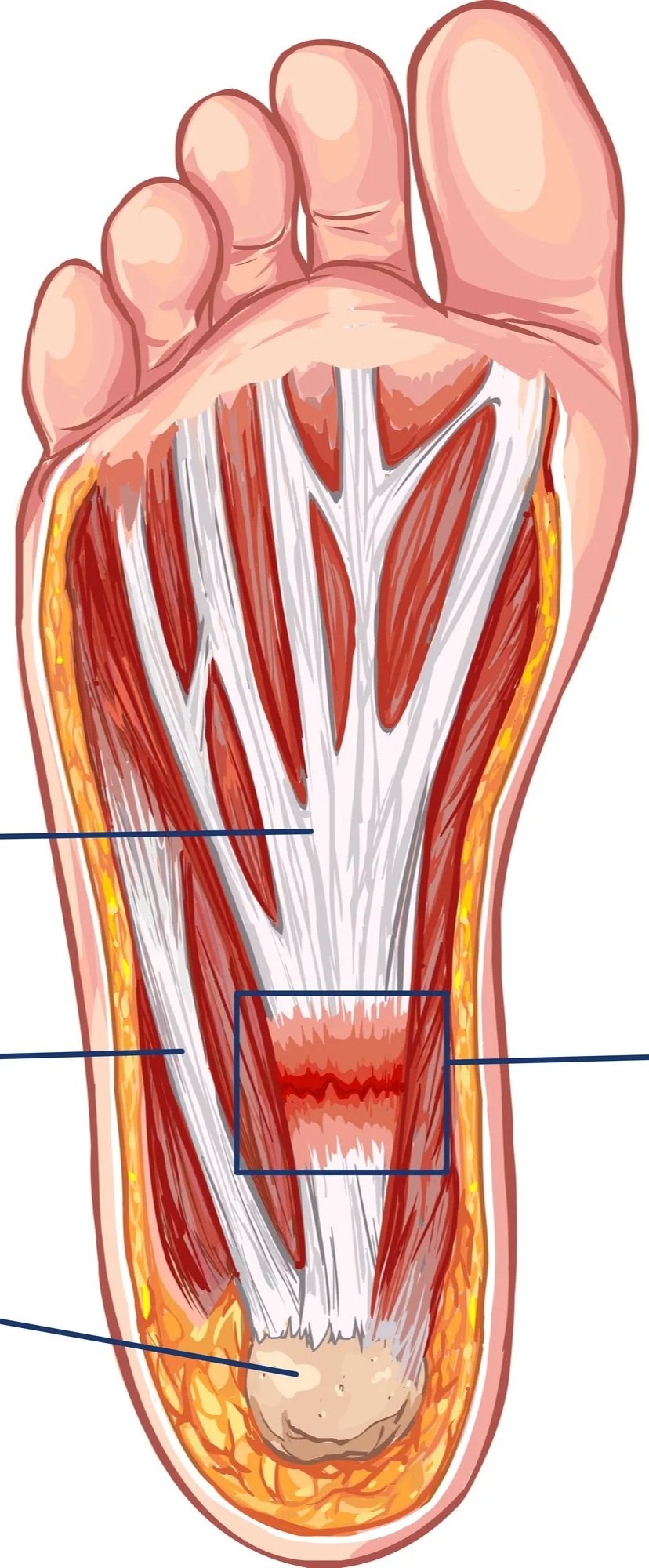
Plantar fascia anatomy and how shockwave therapy can help decrease pain and heal damage.

Before we start to attack this common issue, knowing the anatomy involved is important. The plantar fascia is a thick, fibrous band of connective tissue that runs along the sole of your foot, connecting your heel bone (the calcaneus) to the base of your toes. Think of it as a strong bowstring that supports the arch of your foot and absorbs shock every time your foot strikes the ground. When you walk, run, or jump, this tissue stretches and recoils thousands of times a day, storing and releasing energy to make each step efficient.


Despite the "-itis" in its name, plantar fasciitis is now understood to be less about acute inflammation and more about degeneration and disorganized tissue repair. Under repeated overload, tiny tears form where the fascia attaches to the heel, and the body's healing response falls behind the damage. Because this is a degenerative process rather than a simple inflammatory one, researchers increasingly use the term "plantar fasciopathy." [2] That distinction matters because it explains why anti-inflammatory measures alone often fail and why treatments that stimulate healing and increase tissue capacity tend to work better.


Common Causes of Plantar Fasciitis

Plantar fasciitis develops when the repetitive load on the fascia outpaces its ability to recover. Common contributors include a sudden increase in running or walking mileage, spending long hours on your feet on hard surfaces, tight calf muscles and Achilles tendons that limit ankle mobility, flat feet or high arches that change how load is distributed across the foot, unsupportive footwear, and carrying extra body weight. Age plays a role too, with cases peaking between 40 and 60 years old. Often it is not one factor but several stacking together over weeks or months.

How Plantar Fasciitis Limits Your Favorite Activities

The hallmark of plantar fasciitis is sharp, stabbing heel pain with your first steps in the morning or after sitting for a while, which may ease as you warm up and then return later in the day. For active people, the impact goes far beyond discomfort. Runners find their mileage cut short or their training halted entirely. Hikers hesitate before tackling the trails in the Wasatch. Parents, nurses, teachers, and tradespeople who are on their feet all day dread the end-of-shift ache. Many people unconsciously alter their gait to avoid the pain, which can trigger new problems in the knees, hips, and lower back. Left unaddressed, plantar fasciitis can linger for a year or more, quietly eroding the activities that keep you healthy and happy.

Why Shockwave Therapy Is a Leading Option for Plantar Fasciitis Relief

When rest, stretching, and orthotics have not solved the problem, extracorporeal shockwave therapy has emerged as one of the best-supported non-surgical treatments for chronic plantar fasciitis. ESWT delivers focused acoustic pressure waves into the affected tissue. These mechanical pulses are thought to work by stimulating new blood vessel formation (neovascularization), triggering collagen production and tissue remodeling, and disrupting the pain signals that keep the cycle going, essentially prompting a stalled healing process to restart.

Shockwave Therapy for Plantar Fasciitis Relief

The evidence is strong. In a landmark randomized, placebo-controlled, multicenter trial, Gerdesmeyer and colleagues found that shockwave therapy produced significantly greater improvements in heel pain and function than placebo in patients with chronic recalcitrant plantar fasciitis. [1] Multiple systematic reviews and meta-analyses of randomized controlled trials have since confirmed that ESWT is both effective and safe for chronic plantar fasciitis. [3] [4] Compared with corticosteroid injections, shockwave delivers similar or better relief without the risk of fascia thinning or rupture that comes with repeated steroids. [5]

Importantly, shockwave works best as part of a comprehensive plan. At Revive Sport & Spine, ESWT is combined with progressive loading exercises, targeted calf and plantar fascia stretching, and gait retraining. The research is consistent on this point: addressing the underlying tissue capacity through loading, alongside shockwave to jump-start healing, gives the most durable results, far greater than rest alone. [4]

What to Expect with Shockwave Therapy for Plantar Fasciitis

A typical shockwave session lasts about 5 to 15 minutes, requires no anesthesia, and lets you walk out the door immediately. Most patients complete a series of 4 to 8 sessions spaced 7 to 10 days apart, with continued improvement often seen up to 12 weeks after treatment as the tissue remodels. You may feel a deep tapping or mild discomfort during the session, and the intensity is adjustable to your comfort. To support your body's natural healing response, research recommends limiting anti-inflammatory medication (as directed by your PCP; do not stop prescribed medications without talking with your doctor) and icing for 48 hours after each session.

Take the First Step Toward Relief from Plantar Fasciitis

You do not have to let heel pain sideline your runs, hikes, and daily life. Call Revive Sport & Spine at 801-944-1855 or schedule online to find out whether shockwave therapy is right for you. We are located at 1996 E 6400 S, Suite 260, in Murray, Utah, proudly serving Salt Lake City, Holladay, Midvale, Sandy, Cottonwood Heights, Millcreek, and the greater Salt Lake Valley.


Frequently Asked Questions

Does shockwave therapy for plantar fasciitis hurt?

Most patients describe it as a tolerable deep tapping sensation. Intensity is adjusted to your comfort, and there is no downtime afterward.


How many sessions will I need?

Most people benefit from 4 to 8 sessions, though your exact plan depends on how long you have had symptoms and how you respond.


Is shockwave therapy for plantar fasciitis better than a cortisone shot?

Research shows shockwave delivers comparable or better long-term relief without the risk of fascia thinning or rupture associated with repeated steroid injections. [5]


How does shockwave therapy work for plantar fasciitis?

Shockwave therapy uses focused acoustic pressure waves at the painful plantar fascia and its attachment to the heel. The goal is to reduce pain sensitivity and support tissue remodeling without an injection or surgery. Because plantar fasciitis is often related to the tissue’s ability to tolerate load, shockwave therapy is usually paired with exercises and activity changes rather than used alone.


Is shockwave therapy appropriate for acute plantar fasciitis, or is it mainly for chronic heel pain?

Shockwave therapy is most commonly considered for persistent or chronic plantar fasciitis that has not improved with an appropriate conservative care plan. New heel pain may first respond to reduced aggravating activity, progressive foot and calf exercises, and footwear changes. An evaluation is important because not every case of heel pain is plantar fasciitis. Your evaluation will allow us to best determine a care plan that fits your individual circumstances and goals.


How long does it take for shockwave therapy to relieve plantar fasciitis pain?

Some patients notice improvement during the treatment series, but results are not always immediate. Improvement may continue for several weeks after treatment as the tissue adapts and remodels. Your timeline depends on how long you have had symptoms, your daily activity level, exercise participation, and other factors identified during the evaluation.


Can I walk or run after shockwave therapy for plantar fasciitis?

Most patients can walk immediately after a shockwave therapy session. Returning to running or other high-impact activity should depend on your symptoms and individualized loading plan. We suggest taking a rest day after treatment, giving your body 24 hours to adjust and adapt to the healing process. You may need to temporarily adjust mileage, speed, hills, or jumping while the plantar fascia builds tolerance.


Is shockwave therapy for plantar fasciitis safe, and what side effects can occur?

Shockwave therapy is generally well tolerated, but temporary tenderness, soreness, redness, or bruising can occur around the treatment area. Treatment intensity can be adjusted during the session. Before treatment, a clinician should review your symptoms, medical history, medications, and whether another condition could be causing your heel pain.


How do I know whether my heel pain is plantar fasciitis?

Plantar fasciitis commonly causes pain on the bottom or inside of the heel with the first steps after waking or sitting. It may also worsen with prolonged standing, walking, or running. Stress injuries, nerve irritation, Achilles problems, and other conditions can feel similar. Severe swelling, numbness, fever, night pain, or an inability to bear weight warrants prompt medical evaluation.


References

[1] Gerdesmeyer L, Frey C, Vester J, et al. Radial extracorporeal shock wave therapy is safe and effective in the treatment of chronic recalcitrant plantar fasciitis: results of a confirmatory randomized placebo-controlled multicenter study. The American Journal of Sports Medicine. 2008;36(11):2100-2109. https://pubmed.ncbi.nlm.nih.gov/18832341/

[2] Rompe JD, Furia J, Weil L, Maffulli N. Shock wave therapy for chronic plantar fasciopathy. British Medical Bulletin. 2007;81-82:183-208. https://pubmed.ncbi.nlm.nih.gov/17456546/

[3] Sun J, Gao F, Wang Y, Sun W, Jiang B, Li Z. Extracorporeal shock wave therapy is effective in treating chronic plantar fasciitis: a meta-analysis of RCTs. Medicine (Baltimore). 2017;96(15):e6621. https://pubmed.ncbi.nlm.nih.gov/28403111/

[4] Lou J, Wang S, Liu S, Xing G. Effectiveness of extracorporeal shock wave therapy without local anesthesia in patients with recalcitrant plantar fasciitis: a meta-analysis of randomized controlled trials. American Journal of Physical Medicine & Rehabilitation. 2017;96(8):529-534. https://pubmed.ncbi.nlm.nih.gov/27977431/

[5] Xiong Y, Wu Q, Mi B, et al. Comparison of efficacy of shock-wave therapy versus corticosteroids in plantar fasciitis: a meta-analysis of randomized controlled trials. Archives of Orthopaedic and Trauma Surgery. 2019;139(4):529-536. https://pubmed.ncbi.nlm.nih.gov/30426211/