

Shoulder pain that flares when you reach overhead, sleep on your side, or lift a bag can make everyday life exhausting. Rotator cuff tendinopathy, and especially calcific tendinitis, is a leading cause of persistent shoulder pain in active adults. The encouraging news is that many patients can find relief without surgery, and shockwave therapy is one of the best-supported tools for getting there.
The Anatomy: Your Rotator Cuff
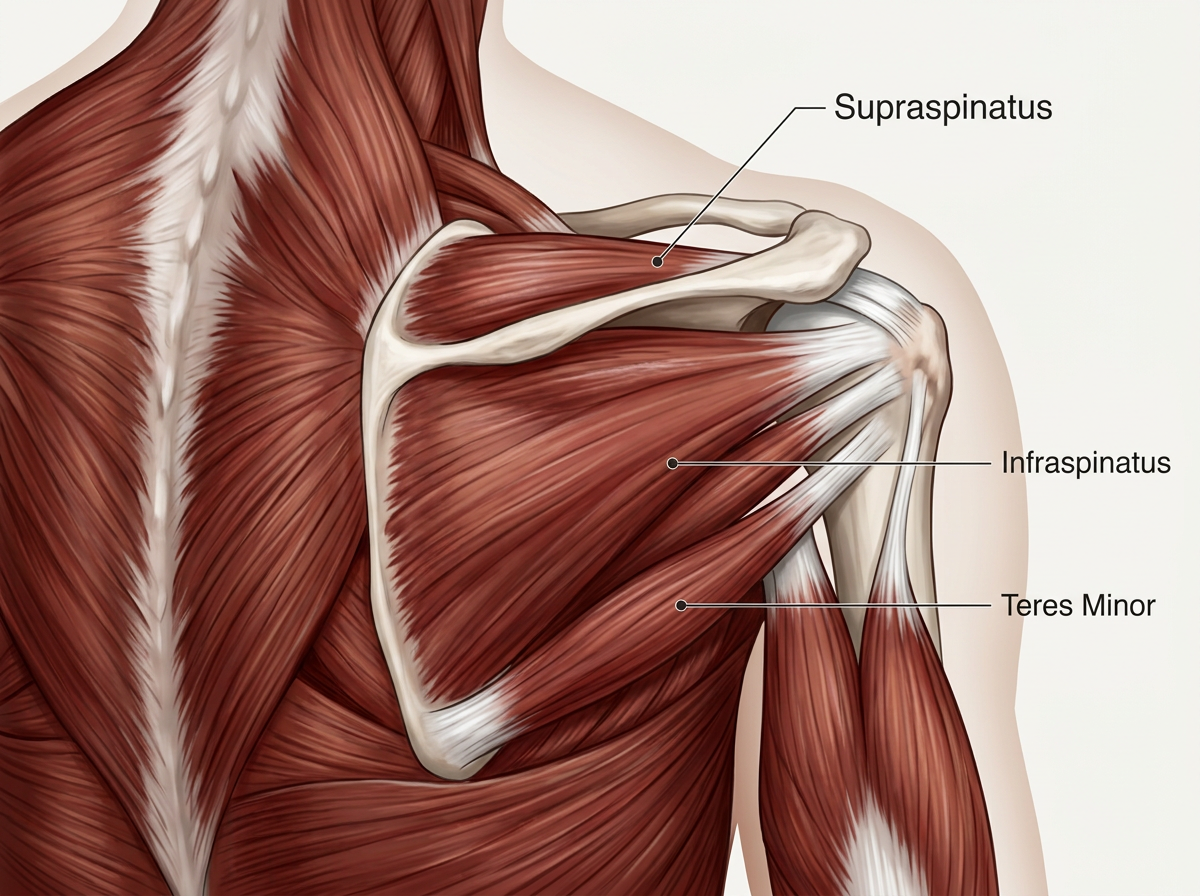
The rotator cuff is a group of four muscles, the supraspinatus, infraspinatus, teres minor, and subscapularis, whose tendons wrap around the head of the upper arm (humerus) and attach it to the shoulder blade (scapula). Together they stabilize the shoulder and control its wide range of motion, keeping the ball centered in the socket while you reach, lift, and rotate. The supraspinatus, which runs across the top of the shoulder, is the most commonly affected tendon.
Rotator cuff tendinopathy is a degenerative overload condition of these tendons. In some cases, calcium deposits form within the tendon, a condition called calcific tendinitis. These chalky deposits can irritate the surrounding tissue and cause intense, sometimes debilitating pain, particularly during the phase when the body attempts to reabsorb them. [1]
Common Causes of Shoulder Pain & Rotator Cuff Tendinopathy
Rotator cuff problems develop from a mix of overuse, age, and mechanics. Common causes include repetitive overhead activity in sports such as swimming, tennis, and throwing, or in occupations like painting and construction; sudden increases in lifting or training; poor shoulder-blade mechanics and posture; weakness or imbalance in the rotator cuff and surrounding muscles; and age-related tendon degeneration and reduced blood supply. Calcific tendinitis is most common between ages 30 and 60 and, for reasons not fully understood, occurs more often in women.
How Rotator Cuff Tendinopathy Can Limit Your Activities
The condition typically causes pain with overhead reaching, weakness when lifting or rotating the arm, and night pain that disrupts sleep, especially when lying on the affected shoulder. For active people, the impact is broad: swimmers lose their stroke, weightlifters cannot press overhead, and everyday tasks like reaching a shelf, fastening a seatbelt, or putting on a jacket become painful. Calcific tendinitis can produce sudden, severe pain that sharply limits all shoulder use. Because the shoulder is involved in so much of daily life, an unresolved rotator cuff problem can be genuinely disabling and can lead to stiffness and further loss of function over time.
Why Shockwave Therapy Is a Leading Option for Shoulder Injuries
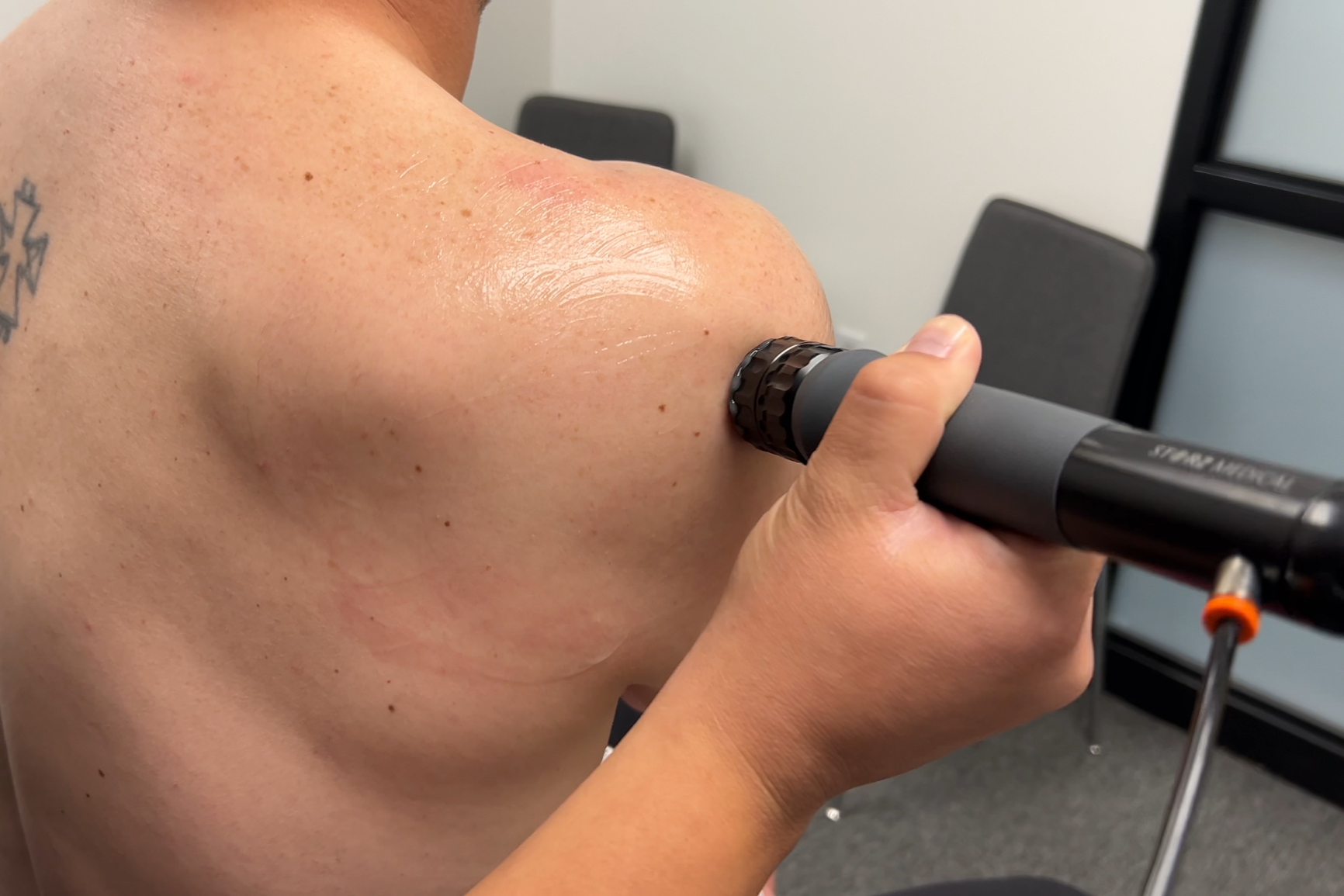
For rotator cuff tendinopathy, especially calcific tendinitis, extracorporeal shockwave therapy (ESWT) is one of the best-supported non-surgical treatments available. ESWT delivers acoustic pressure waves into the tendon that stimulate new blood vessel formation, promote collagen production and tissue remodeling, reduce pain by influencing local nerve activity, and, importantly, help break down and encourage reabsorption of calcium deposits.
The evidence for calcific tendinitis is especially strong. In a landmark randomized controlled trial published in JAMA, Gerdesmeyer and colleagues showed that shockwave therapy significantly improved shoulder pain and function and reduced or eliminated calcium deposits compared with placebo, with higher-energy treatment outperforming lower-energy treatment. [1] A systematic review in the Annals of Internal Medicine concluded that high-energy shockwave is effective for chronic calcific tendinitis [2], and a meta-analysis found clinical improvement alongside resorption of calcific deposits at six-month follow-up. [3] A network meta-analysis comparing non-surgical options supports shockwave among the effective treatments [4], while a Cochrane review offers a more thorough read of the overall evidence, a useful reminder that results vary and treatment should be individualized. [5]
As with all tendinopathies, shockwave works best alongside rehabilitation. At Revive Sport & Spine, we combine Shockwave Therapy with a progressive rotator cuff and scapular strengthening program, mobility work, and posture and mechanics retraining. This dual approach addresses the immediate problem while rebuilding long-term shoulder stability and strength.
What to Expect During Shockwave Therapy For Shoulder Pain
Each session lasts about 5 to 15 minutes, requires no anesthesia, and involves no downtime. Most patients complete a series of 6-12 sessions spaced about a week apart, with continued improvement over the following weeks as the tendon heals and deposits reabsorb. You may feel a firm tapping over the shoulder during treatment, with intensity adjusted to your tolerance. Studies recommend avoiding anti-inflammatory medication and icing for 48 hours after each session so your natural healing response can proceed. (Always consult with your PCP before adding or changing any medications).
KEY TAKEAWAYS
✓ The rotator cuff is four muscles and tendons that stabilize the shoulder; the supraspinatus is most often affected.
✓ Calcium deposits can form within the tendon (calcific tendinitis), causing intense shoulder pain.
✓ A landmark JAMA trial showed shockwave reduced calcium deposits and improved pain and function versus placebo. [1]
✓ Systematic reviews confirm high-energy shockwave promotes resorption of deposits and improves function. [2] [3]
Don't let shoulder pain keep you up at night or hold you back from the activities you love. Call Revive Sport & Spine at 801-944-1855 or schedule online to find out whether shockwave therapy is right for you. We are located at 1996 E 6400 S, Suite 260, in Murray, Utah, serving Salt Lake City, Holladay, Midvale, Sandy, Cottonwood Heights, Millcreek, and the greater Salt Lake Valley.
Frequently Asked Questions About Shockwave Therapy, Shoulder Pain, and Rotator Cuff Tendinopathy
Does shockwave therapy work for rotator cuff tendinopathy?
Shockwave therapy may help reduce pain and improve shoulder function in some patients with rotator cuff tendinopathy, but the evidence is strongest when calcium deposits are present. For non-calcific rotator cuff tendinopathy, shockwave is generally best used as an addition to progressive strengthening, mobility, and activity modification rather than as a stand-alone treatment.
What is the difference between rotator cuff tendinopathy and calcific tendinitis of the shoulder?
Rotator cuff tendinopathy involves irritation and degenerative changes within one or more rotator cuff tendons, most commonly the supraspinatus. Calcific tendinitis, also called calcific rotator cuff tendinopathy, occurs when calcium deposits develop within a rotator cuff tendon. Both can cause pain with reaching, lifting, overhead activity, and sleeping on the affected shoulder, but calcific tendinitis may also cause episodes of sudden and severe shoulder pain.
How long does it take shockwave therapy to work for shoulder pain?
Some patients notice improvement within the first few treatments, but shockwave therapy is designed to stimulate a biological healing and remodeling response rather than provide an immediate fix. Pain and function can continue to improve for several weeks or months after treatment. In calcific tendinopathy, changes in the calcium deposit may also continue after the treatment series has been completed.
Does shockwave therapy for the shoulder hurt?
Shockwave therapy usually feels like a series of firm, rapid taps over the painful tendon. Treatment intensity can be adjusted based on your tolerance, and most sessions last only a few minutes. Temporary soreness, tenderness, redness, or mild bruising can occur afterward, but patients can typically continue most normal daily activities.
Should I do shoulder exercises while receiving shockwave therapy?
Yes. Shockwave therapy should usually be combined with an appropriate rehabilitation program. Rotator cuff and shoulder-blade strengthening, mobility exercises, and gradually rebuilding tolerance to lifting and overhead activity address the shoulder's underlying capacity while shockwave targets the painful tendon or calcific deposit. Recent research continues to support combining appropriate rehabilitation with treatments such as ESWT rather than relying on a passive treatment alone.
Where can I get shockwave therapy for rotator cuff or shoulder pain in Murray, Utah?
Revive Sport & Spine in Murray, Utah provides focused shockwave therapy for appropriate cases of persistent shoulder pain, including rotator cuff tendinopathy and calcific rotator cuff tendinopathy. Treatment is combined with an individualized rehabilitation plan to improve shoulder mobility, rebuild rotator cuff and scapular strength, and help you return to lifting, sports, work, and normal daily activities.
Can shockwave really dissolve calcium deposits?
Shockwave therapy can help the body break down and reabsorb calcium deposits within the rotator cuff tendon. Rather than literally “dissolving” the calcium during treatment, the acoustic waves stimulate a biological response that can promote fragmentation and gradual resorption of the deposit over time. High-quality randomized trials have shown that ESWT can significantly reduce or completely eliminate calcific deposits while also improving shoulder pain and function. 11 These changes may continue for several weeks or months after the treatment series is completed.
Will shockwave therapy help me avoid shoulder surgery?
For many patients with calcific tendinitis or chronic rotator cuff tendinopathy, shockwave therapy combined with progressive rehabilitation may improve pain and function enough that surgery is not necessary. This can be especially valuable when symptoms have persisted despite rest, medication, physical therapy, or activity modification. However, results depend on factors such as the type and severity of the tendon problem, the size and location of any calcium deposit, how long symptoms have been present, and whether there is a significant rotator cuff tear or other structural injury. Shockwave is generally considered a non-surgical treatment option before more invasive procedures are considered.
How many shockwave therapy sessions will I need for shoulder pain?
Most patients complete a short series of shockwave treatments rather than a single session. A typical plan may include approximately 6 to 12 treatments spaced about one week apart, although the exact number depends on your diagnosis, symptom severity, treatment response, and whether calcium deposits are present. Improvement is often gradual, and the shoulder may continue to feel better for several weeks after the final treatment as the tendon remodels and, in cases of calcific tendinitis, the calcium deposit continues to be reabsorbed. Shockwave also works best when paired with an appropriate rotator cuff and shoulder-strengthening program.
Who should not have shockwave therapy for shoulder pain?
Shockwave therapy is safe for most appropriately screened patients, but it is not right for everyone. Treatment may need to be avoided or modified when certain conditions are present, including a tumor in the treatment area, significant bleeding or clotting disorders, certain implanted medical devices near the treatment area, or other medical conditions that could make shockwave inappropriate. The location and intensity of treatment also matter, particularly with higher-energy focused shockwave therapy. Before starting treatment, we review your medical history, shoulder symptoms, and examination findings to determine whether shockwave therapy is an appropriate and safe option for you.
REFERENCES
[1] Gerdesmeyer L, Wagenpfeil S, Haake M, et al. Extracorporeal shock wave therapy for the treatment of chronic calcifying tendonitis of the rotator cuff: a randomized controlled trial. JAMA. 2003;290(19):2573-2580. https://pubmed.ncbi.nlm.nih.gov/14625334/
[2] Bannuru RR, Flavin NE, Vaysbrot E, Harvey W, McAlindon T. High-energy extracorporeal shock-wave therapy for treating chronic calcific tendinitis of the shoulder: a systematic review. Annals of Internal Medicine. 2014;160(8):542-549. https://pubmed.ncbi.nlm.nih.gov/24733195/
[3] Ioppolo F, Tattoli M, Di Sante L, et al. Clinical improvement and resorption of calcifications in calcific tendinitis of the shoulder after shock wave therapy at 6 months' follow-up: a systematic review and meta-analysis. Archives of Physical Medicine and Rehabilitation. 2013;94(9):1699-1706. https://pubmed.ncbi.nlm.nih.gov/23499780/
[4] Wu YC, Tsai WC, Tu YK, Yu TY. Comparative effectiveness of nonoperative treatments for rotator cuff calcific tendinopathy: a network meta-analysis of randomized controlled trials. Archives of Physical Medicine and Rehabilitation. 2017;98(8):1633-1640. https://pubmed.ncbi.nlm.nih.gov/27554465/
[5] Surace SJ, Deitch J, Johnston RV, Buchbinder R. Shock wave therapy for rotator cuff disease with or without calcification. Cochrane Database of Systematic Reviews. 2020;3:CD008962. https://pubmed.ncbi.nlm.nih.gov/32128761/