THOUGHTS ON:
Training, Rehabilitation,
&
Best Care Practices

Resolve Low Back Issues Part 2: Tips For Traveling
We all have experienced sitting for long periods of time or sleeping on different beds while traveling, and we have all experienced the low back pain that comes from it. This can be frustrating especially for those who travel often. With that said we have some easy tips that can help alleviate the low back pain, we experience while traveling.
How To Survive Travel With Low Back Pain
We all have experienced sitting for long periods of time or sleeping on different beds while traveling, and we have all experienced the low back pain that comes from it. This can be frustrating especially for those who travel often. With that said we have some easy tips that can help alleviate the low back pain, we experience while traveling.
Before we go on, if you haven’t read Part 1 of our ‘Fix Your Low Back’ series, check that out here!
TIP #1:
When traveling, do your best to move around as much as you can. If you are on a plane, take the time to stand up and walk around. If you are in a car, stop a few times while driving and get out to stretch and walk around. This may mean planning a little extra time for travel, but you will find it to be well worth it. Your ability to stretch out your legs, and allow your hip flexors and glutes to get some relief will increase the relief you feel in your low back. This small, and simple tip can really help our low backs and can make your trip more enjoyable.
TIP #2:
Take something you can roll out with. Now I am not suggesting that you take the largest foam roller in your checked bag. I am, however, suggesting you take a lacrosse ball or a travel version of a foam roller. Things like the lacrosse ball can be used while flying and driving. Sitting on them and rolling the best you can, can be beneficial. In addition, if you fly with a smaller foam roller, you can roll out while on your trip. Foam rolling while traveling is an easy exercise that can be done each morning and evening, and it is one that can really help our low back pain.
TIP #3:
Find time to stretch or do mobility exercises when traveling, any way you can. Our tendency is to throw our normal routine to the wind. Things like a hip flexor lunge stretch or a hip mobility routine in the morning can keep you on track when you are out for work or pleasure. When you have been sleeping in hotel beds that our bodies are not accustomed to, our low backs take the brunt of it. For this, it is important to give some extra care to our hips and glutes in the morning to get our bodies going. These aren’t exercises that take long and can be done within about 3-5 minutes, and that small amount of time can keep you out of the fire while traveling.
These exercises are not the end all be all to your low back pain when traveling, but they can be extremely beneficial in helping ease your pain. More often than not, it is the simple things that we all need to get back to that can help with the care of our bodies when we are out pushing it to its limits. Stay active and maintian your rehab and mobility routine as best as possible when traveling.
Janaye Freeman is a Certified Athletic Trainer & Lead Therapy Technician at Revive Sport & Spine in Cottonwood Heights Utah. Revive Sport & Spine provides evidence-supported chiropractic care and conservative sports injury management for the Greater Salt Lake City Utah Valley.

Resolve Low Back Issues Part 1: What Is Low Back Pain?
Low back issues are one of the most common causes of disability worldwide, responsible for BILLIONS of dollars spent on health care and lost time at work annually. If you have ever experienced low back pain, you know that it can not only impact your hobbies and ability to remain active, but it can make even the most common of daily activities challenging. Our goal with this series is to help you better understand the cause of your low back pain, provide real solutions to help you manage it, and show you that there are many care options out there, some you can do at home, that allow you to remain free of prescription drugs and surgery.
Back pain is not a one-size-fits-all problem, there are most commons, but your approach to care needs to be as individual as you. Without a proper and thorough assessment, it is hard to say which approach will work best for you, but through the experience of helping hundreds of people alleviate their low back pain every day, we can focus on a few of the most common causes and their proven strategies for relief.
What Is Low Back Pain?
Low back issues are one of the most common causes of disability worldwide, responsible for BILLIONS of dollars spent on health care and lost time at work annually. If you have ever experienced low back pain, you know that it can not only impact your hobbies and ability to remain active, but it can make even the most common of daily activities challenging. Our goal with this series is to help you better understand the cause of your low back pain, provide real solutions to help you manage it, and show you that there are many care options out there, some you can do at home, that allow you to remain free of prescription drugs and surgery.
Back pain is not a one-size-fits-all problem, there are most commons, but your approach to care needs to be as individual as you. Without a proper and thorough assessment, it is hard to say which approach will work best for you, but through the experience of helping hundreds of people alleviate their low back pain every day, we can focus on a few of the most common causes and their proven strategies for relief.
HOW COMMON IS LOW BACK PAIN?
When we talk about low back pain and its prevalence, you are more like to experience low back pain multiple times in your life than to never experience it at all. That being said, the presentation can vary from stabbing, shooting, and radiating type pain to a more dull, achy, and feeling of tightness. However you choose to describe this feeling, the trust is that it can and will disrupt your sleep, daily routines, and your desired recreational activities. There is good news at the end of this rope, and this is that the majority of low back pain sufferers have pain related to posture, overtraining, muscle tightness and is usually our body’s protective response to something it does not like, meaning it is treatable and preventable!
To lay some foundation for our low back pain discussion, here are a few current statistics:
Low Back Pain is the leading cause of disability worldwide, costing nearly $100 Billion in heatlhcare cost and lost wages.
It is estimated that 80% of people will expereience back pain during their life with over 50% having an episode this year.
Over 90% of low back pain complaints are mechanical in nature and do NOT require drugs or surgery.
Of those who have back surgery, around 27% will require another surgery within 5 years.
It is estimated that 60-75% of back pain is preventable through exercise, education, and proper work ergonomics.
WHAT CAUSES LOW BACK PAIN?
Back pain, although extremely common, is a somewhat complicated complaint where one very important thing must be understood before we move forward...
…back pain is a SYMPTOM, not a diagnosis.
Back pain can be debilitating, but the real goal here is to understand the cause of your back pain so that we can determine what factors need to be modified in your life to prevent future episodes.
To look at this through a simple analogy, let’s say you go out to your car tomorrow and it doesn’t start. Now, if you called your spouse, friend, or mechanic, you would tell them your car won’t start (I have back pain), but the real question is WHY doesn’t your car start? It could be from a dead battery, empty gas tank, or something more severe and deep within the engine. Regardless, your car still will not start. Using this analogy, would you treat each of the above-mentioned problems the same? No! Now, does it make sense to take the same approach when treating low back pain?
Looking at back pain, we typically break it down into 3 categories: Functional, Structural, and Pathological.
Functional: Simply put, how you move, or don’t move at all, is causing repeated stress and now you are pain sensitive, stiff, and infrequent or constant pain. This is the most common group. Letting a condition in this category go unaddressed too long can cause it to spill over into our structural category.
Structural: Structural conditions include the things you can see on x-rays and MRI’s. This is the category that includes arthritis (we all get it, you’re not special), disc bulges and disc herniations. These can absolutely cause pain but are usually the result of some long term dysfunction. NOTE: As we will discuss later, just because something shows up on an x-ray or MRI, does not mean it is the cause of your pain!
Pathological: This is the least common of the group, making up about 1-1.4% of back pain complaints. This is often the result of bowel diseases, kidney stones, long term unhealthy habits, and cancer. These are very rare and should not get your attention at first. Dr. Google will lead you this way but he is very deceptive!
These groups interact with each other frequently. For example, let’s say you sit at a desk 8 hours each and every day of the week. From here, you like to lift weights. It has been shown that repeatedly lifting heavy objects with a rounded spine (functional), can lead to disc bulges (structural).
IMPORTANT ANATOMICAL FEATURES OF THE LOW BACK
When we look at the structures of the low back, it is easy to get lost in what all is there. Once we take into account how the core and hip muscles interact and support the low back, it can get pretty complicated.

Most are familiar with the vertebrae, and even more with the disc between each vertebrae. Each of these form a pseudo-joint, and along with the pillars of facet joints down each side, we have the vertebral collumn. We know that muscles move and stabilize joints and restriction, tightness, or a strain/sprain type injury to these tissue can cause a cycle of pain, one caused by the other, and so on.

Looking at the muscles, there are too many to mention for our purposes here, but as mentioned above, when looking at low back pain, you must include the core and hip musculature in the conversation and not just the commonly blamed errector spinae and multifidi muscles of the low back. Honestly, there is so much more to low back pain than this, but to stay on track and address the most commons, understanding where the facet joints are, how the hip muscles and core muscles support the low back complex will suffice for our lesson.
LET’S REVIEW WHAT WE LEARNED HERE IN PART 1:
Low Back Pain is one of the most common reasons a person presents to a doctors office and results in over $100 Billion in healthcare costs and lost work time.
Of all the structurs associated with the low back, we can break most complaints down into 3 categories: Structural, Functional, Pathological.
Low Back Pain is NOT a diagnosis, it is a SYMPTOM!
Not that we have the basics down, look out for part 2 of our Low Back Pain series where we will cover the most common causes and basic self-treatment options. -> Part 2 <-
Dr. Reheisse is a Board Certified Chiropractic Sports Physician practicing in Cottonwood Heights Utah. Revive Sport & Spine provides evidence-supported chiropractic care and conservative sports injury management.

How Often Should You Stretch?
The title of this post may confuse you and you may be asking, 'What has changed with stretching?' (To bypass my ramblings, scroll to the bullet points at the bottom).
That is a GREAT question! It seems that about every year or two, we change our opinion on stretching. Should we do it? Should we not do it? When? Where? How? After a while it all gets very confusing and we fall back on the ol', 'Well, if that works for you, then keep doing it' mentality.
Personally, and it comes as no surprise to those who know or have worked with me, that i'm a big proponent for foam rolling. I find it simple, effective, and a little safer when we are working with tendon and myotendinous injuries. But today, we are going to discuss some good, old fashioned stretching....and yes, there is still new research coming out about stretching.

Let's backtrack a little here and explain. Research has gone back and forth on whether stretching is beneficial to health, sports performance, avoiding injury...and just life in general. Over the last decade, we have found out that stretching (the static type you did in gym class) decreases immediate athletic performance, is not the best way to prevent injury, and does not lengthen, or change the structural makeup of our muscles. (Thanks research!)
However, if your goal is to become more flexible...or you NEED to be more flexible, this new article from the International Journal of Sports Medicine has you covered. In this article, they not only point out what is the best way to achieve long-term flexibility, but how long and how often you should do it!
While I have shared my ‘distaste’ for static stretching with many (especially for injury prevention/relief of posterior chain muscles...a later post), I have generally based that opinion on experience and what we know about its lack of injury prevention and the decrease in performance it causes if performed directly before an event. I still hold firmly my love of foam rolling and a more dynamic warm-up before any athletic event, but adding in some additional stretching, if flexibility is your need, may just be that extra bump to help you reach your goals.
So what does the article say?
Before we get to that, what if flexibility is not your issue? Often, we will work with patients who state they are ‘tight’, but they have a range of motion that is off the charts. I wish I had a megaphone for this….Stretching will not fix these issues, this is a stability problem. If this is you, get a proper work up and some clinical direction on improving your condition, it will most likely involve more strength and stability exercise.
Now, back to the article. Here is what they have to say.
For best results in long-term flexibility:

Static stretching > Dynamic Stretching
Stretches should be held for 30-60 seconds, holding for 1-2 minutes showed no additional value.
Consistency is Key - 5 days per week for 4 weeks showed the best results.
Weekly total time 5-10 min. More than 10 min provided no additional benefit and less than 5 min provided little benefit at all.
There is a lot of good here. Many of us feel pressed for time, don’t know what to do or how to do it, and could come up with another dozen excuses! Take 2 minutes before bed, Monday through Friday, and give your problem area a little extra attention.
Dr. Reheisse is a Board Certified Chiropractic Sports Physician practicing in Murray, Utah. Revive Sport & Spine provides evidence-supported chiropractic care and conservative sports injury management.

What The Cup?
Dynamic cupping and how it fits in to your sports recovery and pain relief.
Outside of a select few who actually had cupping therapy prior to 2012, most of us remember the first time we saw the little bruise circles - Michael Phelps, 2012 Olympics. Just as Kinesio taping sparked our curiosity during the prior Olympics with Volleyball megastars Kerri Walsh Jennings and Misty May-Treanor, as soon a Michael Phelps stepped on the starting platform for his first races, questions started to pop up on every major news outlet across the world.
Dynamic cupping and how it fits into your sports recovery and pain relief.
Outside of a select few who actually had cupping therapy prior to 2012, most of us remember the first time we saw the little bruise circles - Michael Phelps, 2012 Olympics. Just as Kinesio taping sparked our curiosity during the prior Olympics with Volleyball megastars Kerri Walsh Jennings and Misty May-Treanor, as soon as Michael Phelps stepped onto the starting platform for his first races, questions began popping up across every major news outlet worldwide.
So, What Is Cupping?
Cupping therapy is a form of ancient Chinese medical therapy dating back thousands of years. Basically, heat is used to create pressure inside the ‘cups’, now achievable through pressure valves without heat, which draws the superficial soft tissues (skin, fascia, and maybe muscles) up into the cups...all in the name of greater circulation and pain relief. While this practice has been around the block a few times, as manual therapists progress in knowledge and skill, so do our practices.
Enter A New Form Of Cupping Therapy.
Taking a tried-and-true form of therapy and adding movement, this is what the modern landscape of manual therapy looks like. With cupping, this is no different… Enter DYNAMIC CUPPING.
While cupping therapy has its benefits, clinically, we have found that incorporating movement, specifically, a full range of motion and sport-specific movements during cupping can help relieve pain and improve the needed movements to return to play and activity faster.
At Revive Sport & Spine, Dynamic cupping is utilized in 2 ways.
One is to place the cups in the desired area of injury. The practitioner will then glide and move the cups around with the intention of affecting the underlying tissue with improved circulation and adhesion release.
The second option is to affix the cups in the desired location and then have the patient progress through a series of movements and specific sports related actions.
While data is hard to come by for this practice, partly as it is difficult to study it against a sham treatment, clinically the results have been beneficial when used with other therapies such as active soft tissue release, dry needle therapy, and other chiropractic and physiotherapy modalities.
Conditions That Respond Well To Dynamic Cupping.
Treatment plans for care and actual therapies used should be case specific. That being said, dynamic cupping has shown to be beneficial in relieving pain and speeding recovery from low back pain, neck pain, hip pain, shin splints, IT band syndrome, Achilles tendonitis, rotator cuff strains, shoulder pain, as well as many other musculoskeletal complaints.
How Does Cupping Work?
Improved circulation.
Hallmarked by the circular bruise post-treatment, as the tissue is pulled up into the cup, capillary beds begin to swell and break (mildly), leading to an increase in blood flow.
Mild Inflammatory Response
Anytime tissue is damaged, intentionally or unintentionally, the body begins a cascading response that causes what we call inflammation. Inflammation carries the cells needed to heal damaged tissue and in this case, we intentionally apply suction to mildly damage capillary beds and move soft tissue, in turn causing a mild inflammatory response with the goal of increased recovery and shortened time.
Tissue Movement & Decompression
As a manual therapist, most treatment modalities utilize pressure or the pressing in on a tissue. Cupping is one of the few that is decompressive in nature as it pulls the skin and superficial tissue away from the body. While the debate is still out, utilizing dynamic cupping can help relieve pain and restricted motion by decompressing the tissues and moving them across each other. Further studies will hopefully begin looking into this.
Clinical Evidence
As a clinician that utilizes dynamic cupping therapy with runners, CrossFit athletes, and golfers as well as the low back pain, neck pain, and shoulder pain sufferers associated with desk sitting, it is a great adjunct to many other therapies. At Revive Sport & Spine, we typically utilize dynamic cupping after dry needling, while incorporating movement and IASTM practices with cups in place. We have found that creating the right mix of treatment for the right patient aimed at their specific goals often yield faster than expected results.
We look forward to more data being produced on dynamic cupping as a stand-alone therapy and in conjunction with joint manipulation, dry needling, and IASTM therapies. We have much to learn about the human body and every day is an opportunity to grow and improve. Dynamic cupping could be a great therapy for you and help you achieve your goals and recover faster...it could also just be another feel-good therapy. Either way, the risk is minimal so….If it makes you feel better and the risk is low, do what you need to do to stay in the game and out of pain.
Dr. Reheisse is a Board-Certified Chiropractic Sports Physician practicing in Murray, Utah. Revive Sport & Spine provides evidence-supported chiropractic care and conservative sports injury management.

Current Status: Low Back Pain Care
Low Back Pain is one of the most common reasons for an office visit and affects upwards of 540 MILLION people. Providers from all walks of healthcare encounter these patients daily, but have we made any headway in providing pain relief and direction for low back pain?
Low Back Pain is the leading cause of disability, missed time, and loss of wages due to injury worldwide. It is now estimated that over 540 MILLION people are affected each and every day. If we look at the glaring statistics, we find that low back pain is a normal part of life, with up to 80% of the population experiencing low back pain at some point and upwards of 40% experiencing low back pain each year… but the question is, have we made any headway in the CARE FOR LOW BACK PAIN over the past few decades?

It wasn’t too long ago that the go-to treatment suggestion/prescription was bed rest! On top of that, muscle relaxers and pain relieving narcotics were handed out almost haphazardly. Now don’t misunderstand, there is most certainly a time and place for pharmacology in the treatment of low back pain, but as we will soon discuss, it is near the end of available treatment options. What we truly have is a gap between current research and what is actually being offered inside Chiropractic, Physical Therapy, and Primary Care Clinics as well as Emergency Departments.

ACTIVE CARE
THE BIG 3 - AT HOME EXERCISES TO HELP WITH LOW BACK PAIN.
Too long have we relied upon passive care methods and anti-cohesive approaches in healthcare regarding musculoskeletal issues, especially low back pain. Fortunately, that is all changing. Recently, The Lancet released a series of papers focused on low back pain, our shortcomings in common care practices, and opens a new conversation on how we look at the treatment of low back pain. Their suggestions center around a cohesive care model between medical and conservative methods with an emphasis on a non-pharmacological, conservative, and active approach (such as chiropractic and physical therapy) to low back pain care in both early and late stages. Their suggestions are aimed to limit the use of injections and surgery early in the care process outside of rare and emergency situations.
These articles come on top of recent releases from the Journal of the American Medical Association, American College of Physicians, American Chiropractic Association, and other leading journals and medical institutions that are pressing hard to expand the conservative care options available for low back pain sufferers within the traditional medical model of care.
At Revive Sport & Spine, we aim to be Utah’s leading sports chiropractic and low back pain clinic. We fully support these papers as our aim is to always educate our patients, guide them back to the right path through soft tissue therapy, spinal manipulation, and active exercise rehabilitation that will enable them to be self-sufficient and take charge of their low back pain.

-----
Dr. Reheisse is a Board-Certified Chiropractic Sports Physician practicing in Murray, Utah. Revive Sport & Spine provides evidence-supported chiropractic care and conservative sports injury management.

How 'The Big 3' Can Decrease Low Back Pain and Make You Stronger & Faster
If you are among the estimated 50% of all athletes who experience recurrent low back pain, don’t stress, there are exercises that can help…and a couple you should probably avoid.
Our ‘core’ is the link between our upper and lower bodies, and mastery of control here is the secret to improved strength, running efficiency, faster speed, and overall health and athleticism. In regards to back pain, our core needs to be solid to not only support a stable spine but provide for proper biomechanics when running, throwing, squatting, swimming, and even just walking.
From an anatomical perspective, our core is made up of the rectus abdominis, transversus abdominis, internal and external obliques, quadratus lumborum, glutes, and internally, the diaphragm and pelvic floor muscle. The goal of these muscles is not only to be strong but to provide a stable platform for our spine through any and all movements. Stability here has a dramatic impact on injury risk and should be a focal point in any sport and health training plan.

Lets use the example of a runner as the majority of our patient population are runners and almost every sport requires it. A strong core, one with ample endurance, allows for proper movement through our hips, legs, and upper body without excess expenditure of energy. If we are weak here, the late stages of a long run or race become challenging injury risk increase. As the core fatigues, the hips begin to dip, causing extension through the low back, excessive strain on the hamstrings, inward rotation of the femur causing excessive rotation of the tibia that can lead to excessive strain of the ligaments of the knee. This can travel down the chain and lead to poor pronation control causing shin splints, Achilles strains and plantar foot pain…you see where we are going here. Simply put, the core needs to function properly, or the whole system fails.
Most people understand parts of this and that core strength is important, but we still find people who lie on the floor, knock out 100 crunches, call it a day and then wonder why their low back hurts the next day. For this reason, I do not recommend sit-ups or crunches. These two exercises cause undue strain on the low back through repetitive flexion that stresses the discs, joints, and muscles of the lumbar spine.
While many finds these exercises easy to perform, and a staple in their routine, I want to introduce you to a more effective core routine. One that focuses on proper back support and overall functionality as an athlete, regardless of sport. These 3 exercises, termed ‘The Big 3’ were developed by Prof. Stuart McGill, rigorously studied, and proven to protect your back and improve core endurance.
The big 3 are made up of the Modified Curl-Up, Bird Dog, and Side Bridge.
1. Modified Curl-Up
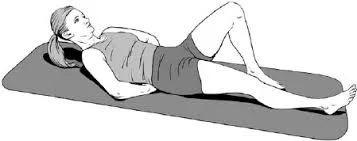
McGill Curl - Up. Low Back Pain Relief Utah.
Lying on your back, place one leg flat on the floor with the other bent. This position allows for a neutral pelvis during the movement and puts your core muscles in control of the movement without undue strain on the low back. Place your hands under the small of your low back to ensure a normal arch is maintained during the movement. Begin by bearing down to brace your abdomen, continue a normal breathing pattern throughout. If you have difficulty maintaining the brace while breathing, this is where you start. Now, pretend your neck, upper back, and low back are locked together and cannot move independent of one another (straight line from head to pelvis), slowly, lift your shoulders blades off the floor and return to the floor in a smooth pattern, only coming off the ground a couple inches. Take note of your posture, did your chin stick out, did your shoulders round forward from memories of doing endless crunches? Work through 2–3 sets of 10–15, slow and controlled.
2. Bird Dog

Bird Dog Ex. for Low Back Pain
Begin in a quadruped position with hands under shoulders and knees under hips, both about shoulder-width apart. Brace your abdominals while maintaining a neutral (straight) spine. While maintaining this posture, breath in and out, squeeze your glutes and begin moving your right arm up to a point position while also bringing your left leg to a straight position. Our goal here is to avoid rotation through the spine, maintain our posture and keeping the hips in line. Slowly return to the starting position and then perform with the opposite arm and leg. That is one repetition, perform 3 sets 10–15.
3. Side Bridge

Side Bridge - Core Stability
Lying on your side, prop yourself up on your elbow, hinge at the hips, and stack your knees on top of each other with a 90 degree bend. Maintaining a solid shoulder directly over the elbow on the ground, lift your hips up and push them forward, bringing your spine to a neutral position. Hold for a 5 count and then slowly return to the starting position. Be aware of head posture and hip extension, maintain a straight line from the head to the pelvis. Perform 3 sets of 10–15 on each side, holding each for a 5 count at the top.
Obviously, there are numerous other exercises that provide stability for the spine while strengthening the core, this is just a starting point. Focus and repetition will bring proficiency, and proficiency will bring improved performance! If you have any questions, please ask, I’m happy to answer what I can.
Until next time, train hard, train smart, and recover well.
Source: McGill, S. (2002). Low Back Disorders: Evidence Based Prevention and Rehabilitation. (2nd Ed).
Dr. Reheisse is a Board-Certified Chiropractic Sports Physician practicing in Murray, Utah. Revive Sport & Spine provides evidence-supported chiropractic care and conservative sports injury management.

What's The Deal With Hip Internal & External Rotation?
As I near my 2 year mark in clinical practice, you start to realize trends. Sometimes these trends solidify what we already know, align greatly with what we are already practicing, and allow us to continue down the beaten path. However, there are things we begin to see as key indicators on how an injury occurred, things that are so simple, they often get overlooked in a treatment plan. Today I want to briefly discuss an item that falls under both of these categories.
Hip range of motion (ROM) is often taken for granted, until that time comes where one side is severely restricted and we are unable get up off the floor without the use of our hand, or the assistance from another. As I have progressed clinically, hip ROM started as just something to jot down in a patients notes, but has quickly become one of the first areas I look to and address for nearly all of the low back pain** and lower extremity complaint (acute and overuse) patients that come into our clinic.
The problem we see is that the restriction is never symmetrical, causing compensatory patterns that quickly lead to injuries and confused patients. While getting you out of pain is our job, our goal is education and prevention. Below are some great stretches and mobility movements that are not only easy to perform, but effective is restoring symmetrical movement. Enjoy.
Learn, Practice, Perform!
Level 1 Hip Internal & External Rotation
Internal Rotation Hang
Setup: Lie flat on back with knees bent and feet about 6 inches wider than shoulder/hip width.
Step 1: Allow knees to ‘hang’ inward, letting gravity to do the work. We want to sit here for 1-2 minutes.
Step 2: If you get bored, slowly and gently, swing the legs/pelvis back and forth to induce some extra motion into internal rotation.
External Rotation/Mobilization Stretch
Setup: Lie flat on back with the leg being treated in a flexed hip position and the non-treated leg lying flat on the floor.
Step 1: Pull the foot of the flexed hip leg toward the mid-line and up toward the torso, you should begin to feel this over the posterior hip in the external rotators and glutes.
Step 2: Pull the knee toward the OPPOSITE shoulder and hold for a 3-5 count, release and repeat 10 times on each side.
Level 2 Hip Internal and External Rotation
Internal Rotation with band assistance.
Setup: Our setup is the same as the ER exercise in level one. This time with a band wrapped around the mid-foot and tracing the outside of the leg.
Step 1: The band provides a mechanical advantage and when pulled over the knee and across the body, provides assisted over-pressure into hip internal rotation.
External Rotation: Pigeon Pose
Setup: In a modified lunge position, externally rotate the treated leg and and sit back with the non-treated leg extended behind you.
Step 1: Begin with the foot of the treated leg near mid-line (easier) and begin to bring your torso closer to the ground while maintaining a straight spine.
Step 2: As this movement becomes easier, our goal is to get the treated lower leg perpendicular to your torso and away from the pelvis. Again, push the torso down toward the ground with a straight spine.
Level 3 Internal/External Rotation - 90/90 Get-up to 1/2 kneeling
Setup: Sitting up tall with a straight spine, the forward leg positioned in external hip rotation and the leg 'coming through' in internal hip rotation. The lead leg foot should be close to midline and near the other leg making this a closed position.
Step 1: Push into the ground with the outer knee of the forward leg and bring the rear leg around to the front, landing in a lunge/half kneeling position.
Step 2: In a slow and controlled manner, return to the starting position...enjoying the eccentric phase.
** A 2015 study out of the Shahid Beheshti University of Medical Sciences found that Asymmetrical and limited hip internal rotation ROM were a common finding in patients with LBP. Another study from The Sahmyook University Department of Physical Therapy found that hip mobilization brings positive effects on pain, function and psychological factors for patients with chronic low back pain, causing them to strongly recommend hip mobilization as an effective treatment method in treating chronic low back pain.
Break Up the Endurance Training With Some Strength!
Endurance athletes, especially runners, tend to shy away from strength training due to what I would consider a misunderstanding of what it can provide. After working with hundreds, probably thousands by now, of runners and triathletes over the last few years, I find very few have a regular strength plan. Some are afraid of getting hurt, some do not know how to effectively strength train, and some still have the ridiculous notion that if they lift weights they will get so bulky, the can no longer run!
Endurance athletes, especially runners, tend to shy away from strength training due to what I would consider a misunderstanding of what it can provide. After working with hundreds, probably thousands by now, of runners and triathletes over the last few years, I find very few have a regular strength plan. Some are afraid of getting hurt, some do not know how to effectively strength train, and some still have the ridiculous notion that if they lift weights they will get so bulky, the can no longer run!
Let’s address these, shall we?
STRENGTH TRAINING SAFETY
As with every sport, there is a calculated risk of injury when strength training. What will surprise some is that it is often much lower than the risk associated with training for an endurance sport. This can depend on whether you are single sport athlete (running only!) or have taken to the range that triathlon offers.
More can be read about sports specialization HERE from Dr. Greg Schiable. While this article is focused on sports specialization in children, the same can be shown for adult athletes who only participate, practice, and focus on one sport….an explanation why overuse injury rates are lower in triathletes compared to strict runners.
This morning, I read a great post from Chris Beardsley discussing the relative safety of strength training, especially when compared to endurance sports. This article launched me into, again, thinking about strength training for endurance athletes, and puts another feather in the cap of it being a great cross option to break up the often monotonous droning on that running provides.
We can show that single sport athletes are more prone to overuse injuries and burnout, as well as demonstrate the benefits strength training gives to endurance, injury prevention and movement efficiency.
An interesting point made...Beardsley writes,
“In comparison to the overall rate of injury in strength sports of between 0.24 – 5.5 injuries per 1,000 hours of training, the rate of injury during long-distance running is around 2.5 – 12.1 injuries per 1,000 hours and the rate during triathlon is around 1.4 – 5.4 injuries per 1,000 hours training.”
He goes on to state that many studies put running injuries on the higher side of the stated rate.
GETTING SWOLE
Let’s talk about getting bulky, to the point where you start to lose speed and endurance because you are just too massive to run efficiently. It used to be that this conversation was primarily had with female athletes, but more and more we find male runners of the same belief. In short, this is non-sense! Why is that you ask?
GENETICS:
As a younger male, I spend countless hours, day after day, month after month, for a number of years, trying to pack on muscle and reach the elusive 200 lb mark. It was a stage in my life….enjoyable and very educational… I have since returned to my love of endurance training, but strength training remains a big part of what keeps me fit, injury free, and happy.
ENERGY & FOCUS:
I never made it to that 200 lbs mark. Mainly because I could not eat, sleep, and breath lifting weights and energy intake. To go from a slim and trim 155 to 200 is a feat which requires a lifestyle shift and not much time for anything else. As runners, we simply can not consume enough, or slow down enough to really pack on muscle. To make that shift, one would have to take all the time invested in putting in the miles...almost completely stop...and replace it with lifting weights...Not going to happen! Stop worrying about getting bulky and think of what a 10-20% increase in strength could do for you during those last miles of a long run or how you can conserve energy by moving more efficiently.
BUT GYMS ARE SCARY
Many endurance athletes just don’t know what to do when they end up in a gym. Fortunately, popular running sites and magazines have jumped aboard the strength train (locomotive type), and there are countless exercises and routines available if one simply does a Google search.
My personal advice is to first master your body weight, which allows you to more comfortably perform exercise at home or on a track after a run. Begin with push-ups, pull-ups, squats, lunge variations and jumps. Once you reach a point where sets of 10, 20 or even 50 feel ‘easy’, it may be time to add in some weighted movements like kettlebell swings (my #2), deadlifts (my #1), and overhead press and pull variations.
If you feel like you have been in a rut this summer or have had more than your share of injuries lately, maybe it is time to try something new? Change up the routine a little...it is likely that you will enjoy the change and be surprised by the outcome.

S T R E T C H I N G
Do you stretch? When? How? More importantly WHY? This will be brief, and there are many sides to this table, but where do you sit on this topic? When the discussion about stretching arises, it is sort of like the old saying on religion and politics; no matter what you have to say or how compelling your argument, you will never change the views of the other person and will usually walk away further apart on the subject than when you began.
Do you stretch? When? How? More importantly WHY? This will be brief, and there are many sides to this table, but where do you sit on this topic? When the discussion about stretching arises, it is sort of like the old saying on religion and politics; no matter what you have to say or how compelling your argument, you will never change the views of the other person and will usually walk away further apart on the subject than when you began.
Lets start the conversation…shall we?
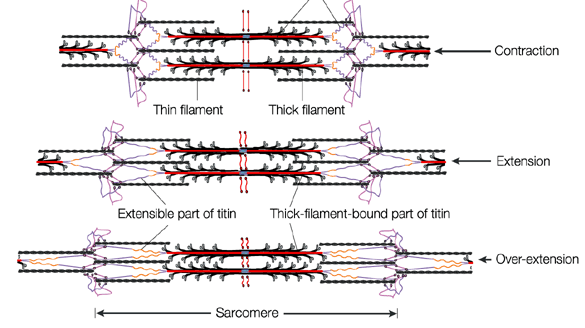
When you stretch, what are you trying to accomplish? Are you trying to lengthen a muscle, increase range of motion or are you just reaching and praying that one day you can wrap your fingers around those toes down there? Truth is, you can elongate a muscle, kind of, and only temporarily. What you are actually stretching is the sarcomere, the contractile unit of the muscle, causing it to elongate but also decreasing its ability to contract. The sarcomere at rest, has quite a bit of overlap between the actin and myosin filaments. As you stretch, it creates less overlap and leaves the muscle with not much to grab on to when it is called on to work, decreasing its power and increasing risk for injury.
When a sarcomere is stretched, there is less myosin and actin overlap causing less power and increasing risk for strain.
In January 2014, The Journal of Strength and Conditioning Research studies the effects of static and dynamic stretching, revealing that static stretching had a negative impact on performance for up to 24 hours while dynamic stretching improved measures in power movements such as jumping. (Haddad et al.)
I do not despise stretching, just stretching of the static type before activity. I cringe when I see someone hop on to the field, or out of their car at a race and reach for their toes, pull their heel to their butt and off they go. I refer to this as the ‘stretching the cold rubber band trick’, it may work once or twice but eventually it is going to pop.
Some Non-Stretching (Static) Ideas
Before exercise: Activate and be Dynamic! Activate the muscles you are going to use, increase blood flow and ease into your exercise. Before running, activate the glutes, hips and core followed by some dynamic movement such as skips, leg swings and sport specific drills.
Foam Rolling provides a much better option to stretching as it allows trigger point work, reduced tension at the myotendinous junction and helps with circulation of fresh, oxygenated blood to flush out H+ buildup from lactate* breakdown, decreasing DOMS.
Mobility: Some may confuse mobility and stretching but the key difference here is that it not only works with muscle flexibility but joint mobility as well. Exercise or not, mobility should be addressed daily with focus on your trouble areas, which, depending on your sport and job, probably includes hips and thoracic spine.
This is the side of the table I sit on when it comes to stretching. This position comes from recent literature but mostly from personal & professional experience. Take it for what it is but if you are suffering from injury and you just can’t get it to loosen up, maybe stretching is the problem, not the answer.
Dr. Reheisse is a Board Certified Chiropractic Sports Physician practicing in Cottonwood Heights Utah. Revive Sport & Spine provides evidence-supported chiropractic care and conservative sports injury management.